Categories
Game Development Marketing/Business Personal Development

The Third Ludum Dare October Challenge

Ludum Dare was originally a 48-hour game development competition. Given a theme, you have 48 hours to create an entire game using no pre-existing assets. In recent years it has grown into a huge phenomenon, expanding into a dual-event that occurs three times annually. There are also Mini LDs each month between the major events. And of course, there’s the awesome community that drives it that seems to get bigger and bigger.

Two years ago, PoV launched The October Challenge, which pushed developers to do more than simply create a game. Your task for this challenge was to take your game project, finish it, and put it on the market before the end of the month. Then, when you’ve earned your first dollar, you’ve completed the challenge.

The third October Challenge is here, and it’s a good opportunity for you to learn what it takes to “go pro” in game development.

When the first October Challenge was announced, it came at a perfect time for me. I had recently quit my day job to go full-time, but I had no real plan for how to proceed. I was thinking about how much time I should spend on any one game. Do I try to release lots of small games over the next year, or should I concentrate on making one or two really great games? I didn’t want to churn out crap, but I also didn’t want to put all of my eggs in one basket. After all, I only had so much savings, and the larger the game, the more time I would have to spend on it, which meant the more money I’d burn through. Where’s the optimal balance?

It was also immediately after August’s Ludum Dare #18. The theme was “Enemies as Weapons” and I had created my most ambitious LD48 game, “Stop That Hero!”

I really liked what I had come up with, even though it took me 72 hours to finish so I had to submit it to the LD Jam instead of the main compo, which meant less people played it. Still, the feedback was pretty good, and I was already thinking about polishing the game up and selling it as my first major commercial project. The question was how long I should spend on the updated/better version?

The October Challenge helped answer the question for me. I had a month to finish the game and get it out there.

Unfortunately, I made some major mistakes. I completely rewrote the game from scratch, attempting to learn how to create component-based game objects. I had never written a full-fledged game architecture before, and I was using up a big part of my month building an engine rather than a game. I was trying to make it as data-driven as possible, which made it difficult to settle on a solid vision for the game. And due to my lack of progress, I hit a real funk that I couldn’t shake for awhile. You can read more about what went right and wrong in the Stop That Hero! October Challenge post mortem.

I was determined to sell my first copy, but it clearly wasn’t happening that October. That month, 20 people submitted entries in which they earned their first dollar through pre-orders, ads, or sales. Over the next year, I continued to work on the game, and I sold my first pre-order and earned my first $1 on September 30th, 2011, one day before the next October. I’m still working on it, and you can try out (and purchase!) the current version of Stop That Hero! today.

It took a lot longer than I originally expected, but without this challenge, I don’t know how long I would have gone before figuring out my real strengths and weaknesses as a game developer. I clearly had a lot to learn, and I still do.

So if you’re interested in running your own indie game development business, I would highly recommend participating in this year’s October Challenge. There’s more to running a game development business than developing games, and this challenge is an excuse to find out what’s involved.

Are you participating?

Categories
Game Design Game Development Geek / Technical Linux Game Development Personal Development

LD24: Development Timelapse, or The Evolution of My Game #LD48

48 hours of game development has been condensed into a little over a minute and a half of video.

It looks as if a lot of the creating parts happened in small bursts of a few seconds, done around IRC and eating. B-)

Categories
Game Design Game Development Geek / Technical Linux Game Development Personal Development

LD24: FINISHED! #LD48

It is done.

It doesn’t have nearly as much as I wanted. I had design notes for different enemies with different movement patterns, weapon types, power-ups evolutionary upgrades, and bosses.

What I do have is a basic enemy that gets more and more health and moves faster and faster in each wave. You have three lives. And each killed enemy gives you 10 points.

It has some basic sound effects.

Evolution Game

And you can get the files here:

Windows .zip 5.2 MB
Linux tar.gz 4.7 MB
Source .zip 4.0 MB

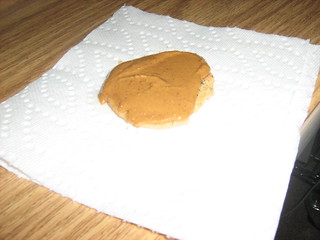
And now, I will celebrate with a peanut butter covered chocolate chip cookie.

Peanut butter covered chocolate chip cookie

Categories
Game Design Game Development Geek / Technical Linux Game Development Personal Development

LD24: Bug-killing Game Play #LD48

I managed to get a lot accomplished in a couple of hours.

– get the player’s character in the game
– make it controllable
– add obstacles (most likely boulders)
– make collisions between the player and obstacles deadly
– make collisions between bullets and boulders result in bullets disappearing
– add an enemy
– make collisions between bullets and enemies result in damaged enemies
– make collisions between player and enemies result in killed player
– create a wave of enemies
– create a way to modify the wave of enemies so each enemy evolves in some way

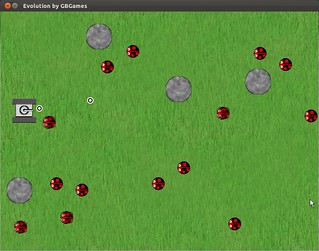
Right now, you can shoot enemies as they approach, and when they die, they become harmless and visibly destroyed. If you crash into an enemy that is still alive, you both die.

Evolution Game Play

Enemies are mindless right now. They simply move forward in a straight line to the left. While I have a bunch of random enemies that looks like a wave, I don’t really have waves as a concept in the game. And with less than four hours left, I don’t think I’ll be adding lots of visibly different enemies and power-ups. We’ll see.

Oh, and my wife was nice enough to bring me something to snack on.

Got any gwapes?

Grapes

Categories
Game Design Game Development Geek / Technical Linux Game Development Personal Development

LD24: Sub Sandwich and Enemies #LD48

I woke up with a sore back. I was lying down on the floor with my legs up on the ottoman since that’s supposed to help your muscles relax if you do it for about 30 minutes. Then I went back to bed, and I didn’t wake up for a few hours. Then it was time to go to church with my wife, and we had lunch:

Planet Veggie Sub sandwich

That’s a Planet Veggie from Planet Sub. It has provolone, cheddar, fresh red peppers, artichoke hearts, sun-dried tomatoes, and a tangy olive spread. I washed it down with lemonade.

I wish I can say I’ve made progress, but sitting at the computer has been incredibly uncomfortable. But lying on the floor seemed to have helped, so I’ll be back at this project today.

A reminder of what I’m doing:
– get the player’s character in the game
– make it controllable
– add obstacles (most likely boulders)
– make collisions between the player and obstacles deadly
– make collisions between bullets and boulders result in bullets disappearing
– add an enemy
– create a wave of enemies
– create a way to modify the wave of enemies so each enemy evolves in some way

There’s a little over 6 hours left in the compo. I can do this.

Categories
Game Design Game Development Geek / Technical Linux Game Development Personal Development

LD24: Deadly Boulders #LD48

The player can control the tank, including firing bullets. I’ve also added boulders.

They are randomly placed in the environment, and when the player passes them, they are removed from the game. If there are no boulders left, more are generated.

Collision between the player and a boulder is deadly, as demonstrated by the randomly controlled tank in this video:

I had some difficulty with handling bullet collisions with the boulders. Right now, they shoot right through them. I want them to disappear. Boulders are not affected by bullets. I have plans for boulders interacting with enemies and explosives, though. If an enemy hits a boulder, I think it would make for an interesting mechanic if the boulder starts to move towards the player. Explosives should be the only thing that destroys boulders.

My current plan:
– get the player’s character in the game
– make it controllable
– add obstacles (most likely boulders)
– make collisions between the player and obstacles deadly
– make collisions between bullets and boulders result in bullets disappearing
– add an enemy
– create a wave of enemies
– create a way to modify the wave of enemies so each enemy evolves in some way

One thing I was hoping to use was my component system, but so far I’ve represented bullets and boulders as positions, along with constants representing their collision radius. It’s working well enough.

Once I get bullets working right (I’ll need that collision detection working for the enemies anyway), I can finally start working on the first enemy so I can get around to doing some evolving.

Categories
Game Design Game Development Geek / Technical Linux Game Development Personal Development

LD24: A Second Dinner Today? #LD48

So while the pasta was ok, apparently I was still hungry.

Cheeseless pizza

As for the game, I realized that my code that wraps libSDL and allows the rest of the code to be easily unit tested has a problem. It only knows if a key is currently being pressed or is currently released. It has no easy way to tell if the key has just been pressed or released.


case SDL_KEYDOWN:
{
m_keyboardState.setKeyDown(event.key.keysym.sym);
}
break;
case SDL_KEYUP:
{
m_keyboardState.setKeyUp(event.key.keysym.sym);
}
break;

Typically you would check SDL_KEYDOWN/SDL_KEYUP events in the event pump, and if those events occurred, you could handle them directly. Since I wanted my code to be unit tested, I created a HardwareLayer that wraps all of this functionality, and I used a KeyboardState class (that’s m_keyboardState) to track key status. Then, in my game, I can check the keyboard state for individual keys to see if anything is being pressed.

What this means in practice is that SDL is already creating an event for a key press/release, but then I ignore the existence of the event, tracking only the status. If I want to know if a key has been pressed this update, I essentially have to write code to track the state of the key and do a few if statements to know if I’ve already processed it or not.

But why do that when SDL has already done the work for me?

So I’m modifying my keyboard state to track not only the status of a key, but to also track the fact that it has been pressed or released this update. Then my game can check for this list of events, do whatever it needs, and at the end of the update, the keyboard state will clear out the list.

And this is why LD is fun.

Categories
Game Design Game Development Geek / Technical Linux Game Development Personal Development

LD#24: Pasta Power and Designs #LD48

My back started to hurt, so I tried resting. I even retired to the bedroom, but I brought a notebook and pen with me.

Pro-tip: pens stop working if you are writing on a notebook you’re holding out above you as you lie in bed.

Anyway, I realized that it was getting late, so I had a quick dinner of leftover mostaccioli:

Pasta Power

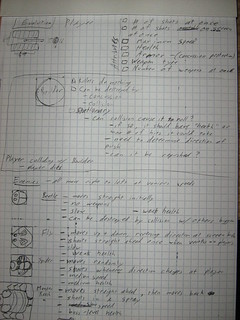
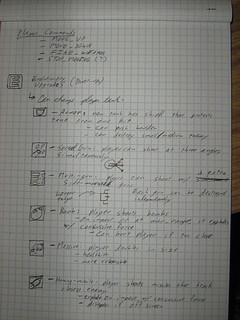
I have a couple of pages of notes, and I’m aware that I could easily take this “simple” game and evolve it into a monster.

But those notes are details. I’m sticking with my plan, and I still need to make the tank controllable by the player before doing anything else.

Categories
Game Development Geek / Technical Linux Game Development Personal Development

LD24: The Player’s Tank #LD48

I now have a tank capable of moving up and down and firing bullets.

That footage is based on the random movement I programmed in. It’s not player-controlled yet, but at least I can leave it up to take a break and be sure that the timelapse is a lot more interesting.

My current plan:
– get the player’s character in the game
– make it controllable
– add obstacles (most likely boulders)
– make collisions between the player and obstacles deadly
– add an enemy
– create a wave of enemies
– create a way to modify the wave of enemies so each enemy evolves in some way

Categories
Game Design Game Development Geek / Technical Linux Game Development Personal Development

LD24: Lunch and Evolutionary Plans #LD48

The first lunch of the compo:

Lunch the First

That’s a peanut butter, banana, and raisin sandwich. It also has some cinnamon sprinkled inside. And some carrots and broccoli on the side.

As for the project, here’s what I’m planning:

– get the player’s character in the game
– make it controllable
– add obstacles (most likely boulders)
– make collisions between the player and obstacles deadly
– add an enemy
– create a wave of enemies
– create a way to modify the wave of enemies so each enemy evolves in some way

That last bit hopefully doesn’t become too ambitious. There’s a lot that could be decided here. For instance, maybe the attributes of every enemy that makes it past the player or causes the player damage more heavily inspire the evolution of later waves.

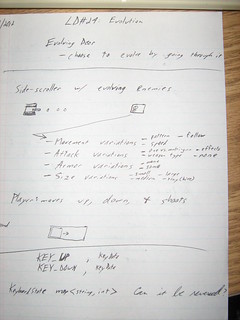
But besides that, I should probably figure out exactly the kinds of things that can be evolved. Here’s where I worry about how limited the evolutionary changes can be. There’s only so much procedural work I can leverage. There’s still the decisions I have to make for what that procedural

For instance, enemy health can increase as new waves arrive. What about enemy armor? Should I include it, or is it just the equivalent of more health? Weapons could get stronger and faster, but what about allowing angles? Homing missiles? Spray guns vs lasers vs explosives?

If I decide to include explosives, then the radius could be one of the attributes that changes, but the decision to allow explosives in the first place means that the potential for evolutionary changes is limited by what I can implement on my own, and the procedural stuff is less interesting than merely tweaking some values.

But I’ll worry about it all once I get something playable.