I wanted to have something playable or at least controllable within 12 hours. I did it within 25.
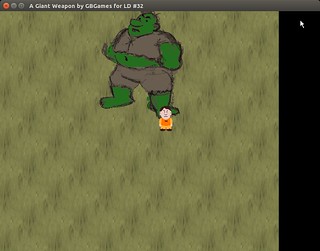
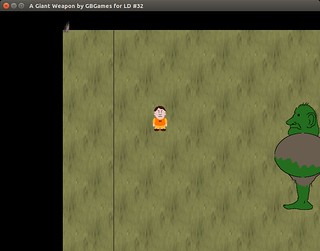
You can now click on the ground, and the soldier will move assign itself the goal of moving towards that point.
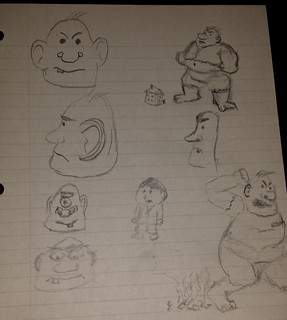
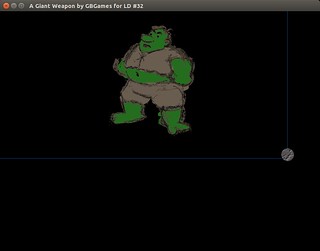
The monster is still just placeholder art with basic AI.
There are bugs, though.
For some reason, when I run my game, the loading screen gets inconsistent for me. The mouse cursor freezes on the screen on the main menu screen, in both of these cases, I see the screen look like it is locked, or flickering between two images that should not be on the screen. For instance, my loading screen says “Loading resource 8 of 14”, and it bounces back and forth between 8 and 9, which isn’t happening in my code, which makes me think that there is a problem with rendering.
Animation looks weird once I enter into the game, and so I have to restart the program and hope that I don’t see the issue again.
I tried it in another game which has more or less the same code, and it seems to work fine, so at least that rules out an expensive hardware issue.
But the bad news is that I have a ridiculously difficult to diagnose bug in my Ludum Dare project, and there is less than 24 hours left in the compo. There’s also a weird rendering issue in which my terrain is showing gaps behind it as I move about the world. B-(
And I still have a ton of work to do.
Also, I realized that with all of the struggles, I have been forgetting to commit my changes. Here’s the complete commit log:
$ git log
commit 35fabffff77407ce6a66a146ff297df254c5626e
Author: Gianfranco Berardi
Date: Sat Apr 18 20:29:47 2015 -0500
A lot happened; can control player character, have basic AI framework.
commit cc662aa500df16c01dae56ac3a419a64e0448c22
Author: Gianfranco Berardi
Date: Sat Apr 18 10:32:08 2015 -0500
Fixed camera; added grass, monster placeholder, and boulder.
commit 4656623ca6dfc9fc2e68620a7ec5056e171276e1
Author: Gianfranco Berardi
Date: Fri Apr 17 23:27:09 2015 -0500
Initial commit for LD#32.
Early on, I realized that my efforts were all over the place. I wanted to work on adding a playable character, and I ended up making some terrain instead. Nice, but not as important.
So I actually put together a quick design document, inspired by Hybrid Mind’s Ludum Dare 29 timelapse.
Holy cow, it made a huge difference! I was able to dump everything out of my head, realize there were some gaps, recognize that I had a scope issue, and also prioritize whenever I identified a new problem or bug to fix.
It also helps me see my progress. It’s easy to get demotivated when the clock keeps ticking, but seeing all of the completed work reminds me that I’ve made a dent, and it also helps me keep focused because I want to get more of those planned tasks crossed off my list.
Of course, I’m always realizing something that needs to be added, so the list will get larger. I’m not sure if more planning or more doing would have revealed that information to me sooner.