Categories
Games Geek / Technical Marketing/Business

The American Gamer

People like to analyze NPD statistics on console ownership, so feel free to pop on over to The Great American Gaming Landscape if you want to see what this past year can tell you about the American gamer.

Or I can spoil it for you. B-)

Over half of the population plays video games, yet only a quarter of households own a next-gen console. Unless you count my Nintendo DS, I fit into these stats. My gaming takes place mostly on my computer, and I still have GameCube games I haven’t finished. Heck, I still have N64 games I haven’t finished. And SNES. And NES. And I have a few Atari 2600 games to go through. I should add that if you follow me on Twitter, you would know that I also play next-gen games at my day job’s employee lounge at lunch. My coworkers and I would play Metal Gear Solid games together, then N+ (yay, indie!), and now we’re on a Boom Blox kick. It seems lots of people who play next-gen games do so somewhere other than home.

Those people who insist that they needed to get every next-gen console so they don’t miss out on any great games? There are almost 3.4 million of them. Sounds like a lot, but that’s only a little over 1% of the population. Those people are elite.

Almost half of all households with a next-gen console have a Wii, which dominates. Most likely if you have a Wii, though, you won’t have a PS3 or a 360.

And with the Wii price drop coming, even though there is a dearth of quality games, it’s likely that the Wii will only get more popular, even in the face of new offerings from Sony and Microsoft.

Again, if you want more details, visit the link above. It’s fun to pore over the numbers. Just think: 75% of households who play games don’t own a modern-day console. If you make browser-based games or downloadable games for PCs, my interpretation of the data suggests you are a force to be reckoned with.

Categories
Game Design Game Development Games Geek / Technical Linux Game Development Personal Development Post-mortem

LD#15: Mineral Miner Post-mortem

Ludum Dare #15 is over, and I already wrote that the results are in. Aside from placing well in Community, which shows how much I love participating in LD48, I also saw my overall ranking come in at around the 40 percentile. I was ranked #63, which sounds good, but there were a number of ties for previous rankings. Out of 144 entries, Mineral Miner was 87th. It’s much better than coming in almost dead last in the previous Ludum Dare (and not completely last only by virtue of two other entries not getting rated at all), but I’ve done better.

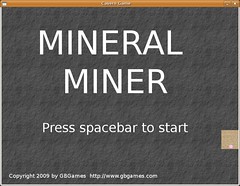
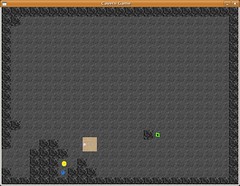
Let’s look back on this project and see what happened. First, let’s go over a summary of the game. Mineral Miner turned out to be a puzzle game in which you drive around a cavern in a tank, getting out to collect minerals. You can only collect one mineral at a time, so you need to drop off collected minerals in your tank to collect more. If you are near a monster lair and not inside the safety of your tank, a monster will come out and chase you. If a monster catches you, you lose. If you collect all the minerals, you can leave the level and win.

What Went Right:

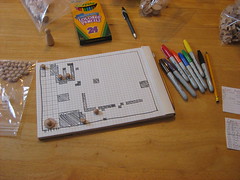
  • Rapid Prototyping on Paper I took a free, online game design course at GameDesignConcepts.wordpress.com, and I was able to put use those skills to great effect. During the competition, I posted about my prototypes. With only 48 hours, it can feel painfully slow, but I iterated through the design, adding a new mechanic, trying it out, and deciding whether to keep or remove it, and then repeating until I had something I thought might be fun. Painfully slow? It took me almost no time at all. In previous LD48s, I’ve been known to add mechanics at the last minute in an attempt to make a game out of the code I was writing. This time, I knew exactly what mechanics I needed, and there were no real surprises here. The finished game ended up playing exactly how I hoped it would. Prototyping!
  • Quick ‘n Dirty Graphics I’m not terribly familiar with art tools, such as The Gimp, and so every LD48 I find myself looking up how to use it to create what ends up being ugly art for my games anyway. I decided that this time, I wouldn’t try to make anything fancy. If I have any images that need text, I will use the basic text tool instead of the script-fu that creates cool looking logos if you tweak parameters just right. The tank? A square with a dot to let you know which way is the front. The driver? A yellow circle. Hey, it worked for Pac-man. I was able to focus more of my time on making the game because I wasn’t frustrating myself with trying to create halfway decent artwork.

    Screenshot-Cavern Game

    CavernGameCollisionDetection

  • I Made Sound Effects This is my fifth Ludum Dare, and only the second time that a game I made had sound effects. Because I had a game that pretty much worked the way I expected it to, I had time for some polish. I made a list of sound effects I thought I would need, used sfxr to create the beeps and boops, and wrote the code to tie it all together. Adding sound really makes a big difference to a game, and I was glad that I could do so for this one.
  • Faster Build Times and Lighter Distributables Because I had been doing some work on my Vampire Game, work that involves using TDD from the first line of code, I also did some work on my build scripts. Going from a 10 minute build time with a distributable that is already 10+MB due to including source libraries to a build that finishes in seconds and is less than 2MB is amazing for productivity, especially as it comes down to the final hour of the competition. Everything happened so much faster, keeping me focused on game development instead of getting distracted as I waited for a build to finish. Now, it isn’t as if my builds always took 10 minutes, but going from checked out source code to a complete build would. Once the libraries were built with my old system, compiling and linking would still take some time, much longer than the time it took with my new build scripts. Plus, one of the complaints I would get from previous competitions is that my game package was so large, so that’s one complaint I did not see this time around. B-)
  • Simple AI Goes a Long Way I remember taking a few minutes to think about how I wanted the monsters to interact with the level. Should they obey the walls and other obstacles, like the player has to? If so, that would take a bit of AI programming. I don’t have much experience with AI, and I didn’t want to take the time to learn it for this LD48, so what did I do? I made the monster head towards the player every step, ignoring the environment. I could explain it away. It’s a monster. Maybe it climbs walls like crazy? The big surprise was how well it looked. Besides making it move towards the player, I also made the monster randomly move horizontally or vertically to do so. Combined with the sound effect when it comes out of its lair, the twitchy looking monster moving really fast at the player actually feels scary.

What Went Wrong:

  • Distractions I have two cats, and both of them have been featured in previous LD48s, so I won’t focus on their antics too much. My home office wasn’t in a usable state, so I was out in the kitchen or living room. The cats love distracting me from productivity, and LD#15 was no exception. The one thing I did my hardest to control was external obligations. Anytime someone wanted to make plans with me for the weekend of LD48, I would politely tell them that I was busy. And it worked! I was able to focus almost entirely on eating, sleeping, and LD48ing…except for the Chicago Fire game.

    Chicago Fire vs D.C. United

    I won tickets to the Fire vs D.C. United game, which happened to be the same weekend. They were really good tickets, too, and so I made an exception. In practical terms, I lost a good chunk of Saturday. I was able to get the game finished, but having an extra hour or two would have been good for tightening up the graphics and audio. On top of knowing that, the Fire lost, so it wasn’t even as fun a game to watch from the 2nd row as it could have been.

  • The Sound Effects Were Very Rough By far the biggest complaint from people playing my game is that the audio hurts. I was able to get audio in within the last hour of the competition, but I didn’t have time to adjust it. I knew that some of the sound effects were loud and obnoxious, especially the one that plays when you bump into walls, but I couldn’t dedicate the time to tweaking it. The deadline was looming, and I still had a few more programming tasks to complete.
  • There’s Only One Level Right before the end, I realized that I did not have a victory condition. I had programmed a way to lose if a monster caught you and also if you tried to leave the level without collecting all of the minerals, but someone will eventually collect all of them. What then? Ideally, I would have added code to load the next level, created that level, and kept going. In fact, Level 2 is in the distributed game, although it is a copy of Level 1 and there is no code that knows about it. I was thinking about taking Level 1 and breaking it up into at least three levels, with each level introducing new puzzles and getting progressively more difficult. Three doesn’t sound much better than one, but it would have made a big difference. The player would have felt that progress was being made, and the later levels could introduce the trickier ways to deal with monster lairs.
  • Level Loading Bug I could not figure it out in time for the deadline, and I still haven’t looked at it since, but every so often, the level loading code would choke on the data, bringing the game to a halt. Sometimes shutting down the game and rerunning it would work. The data came from a text file, and my code is supposed to load a single character at a time, mapping the value to a tile. Sometimes, however, it would choke because a single character variable would have a value that is two characters long. For a time, I was dedicated to fixing it, but with only 48 hours, a good chunk of which I couldn’t make use of, I decided that since it wasn’t a show-stopper, I would keep going. I really wish I could have figured out why that bug was there. Besides ruining the perceived integrity of the game, I know at least one person didn’t review it due to this crash.
  • Making a Puzzle Game I didn’t set out to make a puzzle game. I didn’t want to worry about creating a lot of content. One level might not be such a problem if the level was varied and fresh each time you played. I could have created a procedural level generator, but I never built one before. I didn’t want to spend time learning how to do so, nor did I want to spend the time tweaking the algorithm to make nicer levels even if I did end up accomplishing it. Out of all of the ideas I came up with, the game I liked the most ended up being a puzzle game, which unfortunately meant I was either going to spend a lot of time making clever levels or finish a game with hardly any levels. It ended up being the latter.

What I Learned:

  • Rapid Paper Prototypes Work My game design skills are sorely lacking, but I’ve been able to practice what I learned in the game design concepts course, and it really paid off with Mineral Miner. I’m not claiming that it’s a fantastic game, but it did rank #45 in the Fun category, putting it in the top 50%, and #27 in the Innovation category, which puts it in the top quarter! It feels good to know that the game design I prototyped early on before writing a single line of code came together, and the comments for my entry showed that people saw a lot of potential in my game. Everything I wanted to put into the game, I learned from minutes of drawing on paper and messing around with tokens. I didn’t need to have a game engine coded up to explore, discard, and introduce mechanics, which means I saved a lot of time that would otherwise have been wasted on code that would get thrown away and changed needlessly.
  • Quick ‘n Dirty Graphics and Audio Can’t Be Permanent My art and audio work was minimal and saved me a lot of time, allowing me to work quickly at getting the game play up and running. Unfortunately, my overall rating got hurt here. I was near the bottom in the Graphics category at #104 and surprisingly a little better in the Audio category at #77. I was hoping for time near the end to replace crude art and sounds with better ones, but it didn’t happen. On that note, even if it did happen, it wouldn’t be more than marginally better since I don’t have the practice and skill with my art tools. One suggestion was to use images of my prototype work, and I agree, the drawings look much nicer.
  • My Pacing Still Needs Work I felt much more confident about my entry this time around, but I still found myself finishing the game at the last minute. There’s very little time for polish when the complete game forms only an hour before the deadline! It’s especially a concern since I decided to go with quick and low-quality art in order to get the game running as quickly as possible. I probably could have set mini-deadlines for myself. 48 hours sounds like an incredibly compressed period of time to make a game, and it is, but it’s still enough time to flounder. Early on, I have two whole days to worry about everything. In the last 5 hours, I’m in crunch mode. I could stand to manage my time and prioritize my tasks much better.

If I could do LD#15 over again, I would try to manage my time better. I could have had the prototype work done much earlier on, leaving me with more time to do the actual programming and arting. I might have been able to get more levels and variety in if I didn’t waste 5 or 10 or 20 minutes at a time wondering what to do. Still, even though Mineral Miner wasn’t a winner of Ludum Dare, I felt it was a success. I designed early on paper instead of designing with hard-to-change code, and I was able to focus on making the game I felt had a chance of being fun. People said they enjoyed the game and wished there were more levels. It was a complete game, meaning that aside from the level loading bug I mentioned above, everything that happens in the game happens because I designed it that way. In 48 hours, a complete game that provided some entertainment for others is a good accomplishment.

Categories
Game Design Game Development Games Geek / Technical Linux Game Development Personal Development

LD#15 Results Are In!

It’s 2 weeks later, and Ludum Dare #15 is officially over. The results are in, and I placed 5th…in the Community category. Unfortunately there was no food category this time around, or I could have gotten the gold in that one. B-)

Seriously, congratulations to the makers of the top ten overall entries! The #1 overall game was Beacon by ChevyRay, which was also featured on IndieGames.com’s Freeware Game Pick not too long ago. Congratulations to ChevyRay for making a splash there!

I’ll have a post-mortem of the Mineral Miner soon, but here’s a summary of how I did: badly in graphics and audio, decent in humor and fun, and well in innovation and theme. A number of people REALLY hated the audio, but they seemed to really like the actual game play. When people are unhappy that there is only one level, it means I left them wanting more in a good way. B-)

My entry ranked #63 overall, being 87th out of 144 entries. There were a number of ties for various placements, so the ranking only goes to #107. I’m a little disappointed in how well my entry did, but there was some great competition. I did much better in LD#13, but I still consider this Ludum Dare to be a success for me. I had a finished game by the end of 48 hours, one that got some great feedback from players. I got to practice skills from the game design concepts course I took this summer, and I would say they really helped me put this game together before a single line of code was written.

Once again, congratulations to the winners! There are some fantastic games in the mix!

Categories
Game Design Games Geek / Technical

Game Design Prototyping Awesomeness!

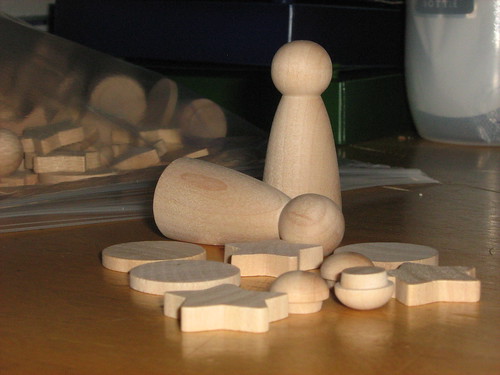
Recently I went to a craft and hobby store, which was too glittery for my tastes, but it was for a good reason. I wanted to buy these:

Prototyping materials

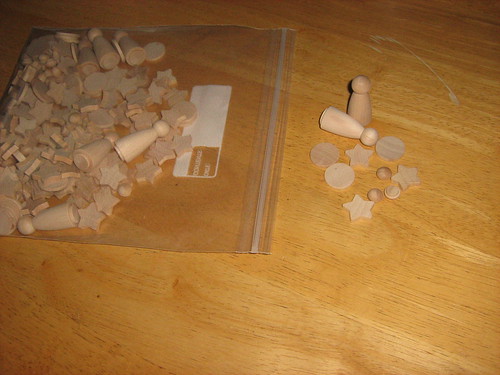
You can get a better sense of scale here:

Prototyping materials

If you’re looking for items online or at a store, the circles and stars are just flat pieces by the appropriate name. The tall board game avatars are called doll pins. The mushroomy pieces are furniture plugs. Since I purchased so many of each type, the total price came out to less than $40. It’s very likely that I paid too much for them, or that I bought too many, but as you can see, I have an entire bag of these items. Why?

In the Game Design Concepts course that I’m taking online, there was a post early on about creating a prototyping kit. After messing around with paper cutouts which blow away too easily or stones from a wedding centerpiece which are a bit dirty to hold (sitting in water that evaporated years ago will result in that), I decided I wanted some hardier stuff. These pieces can be used as various tokens for game prototypes.

In my design project for the class, I’m doing a high school reunion game, and on paper I had rules about earning prestige points by accomplishing various goals. Initially I marked these points as stars that I drew with a pen, but now I have star pieces which are more tangible. You get 4 prestige points? Here are 4 star-shaped wooden pieces that have a decent weight to them and feel nice.

I bought 8 doll pins. They come in packs of two, and I was originally going to get 2 packs when I thought, “What if I want to do something massively multiplayer?” B-)

The furniture plugs just looked cool. I could see placing them on spaces to indicate that there are traps or coins available.

And if I feel so inclined, I could always paint each item various colors.

If you would rather have a ready-made kit, check out the Piecepack, or if you’re looking for awesome craft parts for your own custom kit, look at CraftParts.com. And of course, you can probably find such items at any local craft/hobby store.

Categories
Game Design Game Development Games Geek / Technical Marketing/Business

Plants vs Zombies Developer Interview

In my post on Plants vs Zombies, I was lucky enough to have one of the people deeply involved in the production of the game answer some of the questions I had about the design process and behind-the-scenes work. I have been waiting for an in-depth interview with George Fan, the designer and creator of the game.

GeneralGames.ca’s interview with George Fan is a short one, and it isn’t as in-depth as I would like, but Fan does answer some questions about how the game came about.

In other interviews, he has said that he was innovating on the tower defense genre, mainly by improving the accessibility.

My goal was to take the tower defense standards and simplify them down to the point that almost anyone could pick up and play. With that in mind, I kept the playfield small and removed some of the things found in traditional tower defense that might not be as intuitive.

He mentions the humor aspect being a big focus as well.

There’s no word on whether or not a sequel to the game is in the works, but Plants vs Zombies is being ported to other platforms, including XBLA.

Categories
Game Design Game Development Games Geek / Technical Marketing/Business

Defining Indie

Wolfire Games has a new blog post that attempts to define what indie games are. Defining what “indie” means has been about as tough as defining what a “game” is. I’ve covered a few attempts here and here.

What people in general think “indie” means can affect how a new game is welcomed into the market. I know that a number of game developers worry that labeling their games as “indie” might negatively affect sales since people might associate “indie” with “low-budget” and “amateur”. On the other hand, other developers want people to associate their “indie” game with “innovation” and “creativity”.

Wolfire Games mentions Microsoft’s handling of their Live Arcade and Community Games sections. When the name of “Community Games”, which has generally been considered the home of poorer quality games, was changed to “Indie Games”, many developers balked at the idea of associating “indie” with “worse”.

After talking a bit about how various organizations have defined “indie”, Wolfire gives its definition: an indie game is one motivated by passion and designed by the people actively working on it.

And right away, I’m sure some of you are uncomfortable with that definition, too.

So if you make a game that seems to appeal to people willing to spend their money, and you work on it to improve the revenue, you fail the first part? Or what if you are just absurdly bad at the marketing and business aspects? Do you pass the first part?
And if you have a small company that actually separates the game designer from the programmer, it fails the second part?

I think that most people can agree that being indie means having full creative freedom over your work. I think if you look at Wolfire’s definition, it attempts to solve the problem of answering “Who is indie?” with “EA” or “Nintendo”. While EA technically has freedom in that no one tells EA what to do, EA is far removed from the actual development of a game, and any game they publish is presumably not being made without their influence somehow affecting it. On the other hand, Introversion, creators of Defcon and Darwinia, are able to exercise creative freedom without worrying about a publisher making feature requests or design changes. They sink or swim based on their own efforts.

What about a company like Valve? Most people try to claim that “indie” means you don’t have a publisher, but what if you ARE the publisher AND develop games? Well, how many levels of hierarchy are there? Does it impact the creative freedom of the developers of any individual game? Valve would also be considered too big by Wolfire’s definition. Portal was made by a group within Valve, which implies to me that full creative freedom by the hands-on developers was hampered.

Basically, if you’re big enough to have studios within your company, you’re not indie because each studio is beholden to some other part of the organization.

Perhaps a better way to define indie is to restate Wolfire’s attempt as: an indie game is one that involves full creative freedom for the people working directly on it.

Now it’s your turn to be uncomfortable with my attempt at a definition. Feel free to comment and poke holes in my definition. B-)

Categories
Game Design Game Development Games Geek / Technical Personal Development

Ludum Dare #15 is Coming!

It’s August, which is one of the months of the year, and that means that Ludum Dare, the the tri-annual 48-hour game development contest, is back!

Suggest your theme, and in the coming weeks the theme vote will commence. Will Exploding Bananas win? Circuits? Glow in the dark? Cooking? We’ll find when the contest officially starts on August 28th!

Here are the results of LD#14 from this past April. I ran away with the gold…in the Food sub-competition. My journaling abilities also commanded a respectable 5th place. The theme then was Impending Wall of Doom, and there were a lot of creative ideas that people implemented.

Ludum Dare is always a fun time, and the last one broke records for number of participants. Will a new record be set at LD#15?

Categories
Game Design Games Marketing/Business

Plants vs Zombies: How Did PopCap Do it?

It’s almost 9:30 PM as I write this post. The significance of the time is that it is hours after I expected it to be. The reason: I’ve been playing the demo of PopCap’s Plants vs Zombies and didn’t notice the passing of the hours.

If you’re a game developer, the first question on your mind is probably “What did PopCap do so right?” It’s bizarre. Tower Defense games were last year’s Big Thing. They’re old hat now. Everyone made their own Tower Defense game variation to the point that it was becoming its own genre. So how did PopCap take what is essentially a played-out game mechanic, theme it with zombies and plants, and create it’s fastest selling game that is being talked about all over the Internet?

Well, it’s PopCap. I’m sure they prototyped a lot of really bad implementations before hitting on the finished version.

But the game has zombies and cutesy plants. How didn’t this game simply fail at trying to appeal to everyone?

The game was conceived by George Fan, who is also the creator of the IGF award-winning Insaniquarium. So that’s where he went off to! There’s a few interviews with him, although they aren’t terribly in-depth. GameArena and Hobbit Hollow Games managed to discuss the game design and development with Fan, but I would have liked a bit more info. Gamasutra managed to report that the first prototype of the game was completed three years ago in an analysis of Plants vs Zombies.

Three years! No wonder there are so many modes to the game! I bet there were a number of winning prototypes, and the decision was made to include them all. And again, I ask, how did this not fall on its face as trying too hard to be all things to all players?

I have a feeling that the game was being tweaked and changed all the way up until it was finally released. While most players might not notice it, I think the game looks slightly unfinished, as if a few more weeks (!!) of polish would have made it perfect. Sometimes it seems like an animation is missing or a color is off. One complaint I’ve seen online is that the later plants can sometimes be pretty pointless.

On the other hand, what IS in is fantastic. The variety of zombies and plants is amazing. The first time I saw a Dancing Zombie, I was cracking up long enough to distract me from collecting sunshine. It almost cost me the level. The entire game is rich in detail. The plants dance and move, the zombies fall apart as they get destroyed, and the game mechanics even change every so many levels! Suddenly, instead of planting seeds, you’re bowling for zombies or hitting them with mallets as they pop out of graves!

There’s humor, interesting character designs, and a regular reward schedule. The game is pretty active. While most Tower Defense games only let you purchase and place towers, Plants vs Zombies lets you collect sunshine as a resource. Regularly. You’re constantly clicking somewhere on the screen. At the end of most levels, you’re given a new plant, and the next level might introduce a new zombie type. So each level, there is something new to see. And again, the game changes significantly every so many levels. Instead of being able to pick and choose your plants based on resources, you might have a conveyor belt of pre-chosen plants with which to fight off the zombie horde. Instead of planting seeds, you might bowl the Wall-Nut into them.

So even if you are a regular Tower Defense veteran, somehow you won’t get bored by how easy the game is. There’s just too much to do and see! Is the insane variety of everything the secret to the game’s success? Do you want to keep playing just to see what’s next?

Apparently Plants vs Zombies appeals to both casual and non-casual players equally. It’s very easy to get into, and it is very easy to stay in. Like all Tower Defense games, it’s a resource management game. Before a level starts, you can choose which seeds to carry into battle with you. You only have so many slots, so you’ll find yourself choosing between the option of slowing zombies with snow peas or destroying many of the undead with the cherry bomb. When you plant a seed, there is a reload time before you can plant another of the same type (one of those things which intuitively doesn’t make sense outside of the fact that it is a game), so while you might not want to plant a peashooter until you know where the next zombie is coming, guessing correctly means you had enough time to plant a second one before it shows up. Some zombies use props to try to protect themselves or circumvent your defenses. The pole vaulter will jump over the first plant it sees, so the Wall-nut that should be protecting your weaker plants isn’t as effective. The snorkeling zombie can’t be hit by normal shots unless he is out of the water. I know I’ve planted lily pads specifically for this guy to chew on just so my peashooters can take him out as he rises to chow down. Failing that, squashing him with squash was another cheap and effective way to deal with him.

If anything demonstrates my claim that a game can be made more casual by making it more accessible, Plants vs Zombies is it. It does so many things right while providing so much of it to the player in a manageable way. The entire experience is fun and enjoyable.

As an indie, I take heart knowing that a fantastic game like this can be made by a small team, can use what would otherwise be considered an old game mechanic, and set a new standard that appeals to a wide cross-section of players. I hope I can learn more about the day-to-day development of this project. Was it three years of focused development, or was Fan’s team working simultaneously on other games at the same time? Was PopCap getting nervous that this game was taking too long, or were they fully backing the project, giving it as much time as it needed to be good? What can an indie game developer learn from the development of this game? When will we see the Plants vs Zombies post-mortem?

Categories
Games Geek / Technical Marketing/Business

Blast from the Past: Metal Gear Solid Pamphlet

I’ve been playing Metal Gear Solid with some coworkers, and we’ve been having fun making fun of a lot of the silliness: Genome soldiers are genetically engineered to be the best except for the side-effect of extreme myopia. And an inability to store long-term memories of the fact that someone just shot at them. Or how Snake is a trained mercenary but didn’t think that maybe he should have recognized what a sniper’s laser sight looks like instead of letting Meryl get shot multiple times.

Anyway, somehow I remembered something from years ago. In 1997, back when the Nintendo 64 was still new, I found a bunch of addresses for video game developers. Some were even located nearby (this was back before most of them left Chicago)! So I wrote a bunch of letters, printed off of a dot matrix printer on my Apple II c+, asking them if they had any games they planned to produce for the N64. I made sure to let them know about games they had created in the past that I liked.

A number of the letters came back. The addresses I had for Acclaim, Nexoft, and Taito were no longer valid and the forwarding time had expired. Oh, well.

Koei sent me a newsletter, the Koei Connection, Vol 4, No 1. It included information about P.T.O. II, Heir of Zendor, Dynasty Warriors, Ark of Time, Sign of the Sun, and VirtuaPark – The Fish. They had a section to answer player questions, and I learned that I could order games directly from Koei. You could get Romance of the Three Kingdoms 3 for PC DOS 3.5 for only $19.95! B-)

But the coolest response was from Konami. I received a large envelope. In it was a letter:

Dear Gianfranco

Thank you for your interest in Konami. We do have several games coming out for the N64 such as International Superstar Soccer 64 and Goman 5 (Legand of the Mystical Ninja). Lets not forget NBA In the Zone ’98 the first 5 on 5 Basketball game for the N64. The possibility of having Metal Gear 64 has even me getting goose bumps. All that and the new Castlevainia on the Playstation it’s going to be a great Fall. If you have any other questions, feel free to contact us here at (847) 215-5100.

All grammatical and spelling mistakes are preserved.

There was a P.S. “Keep on playing!” Quotes were preserved as well. B-)

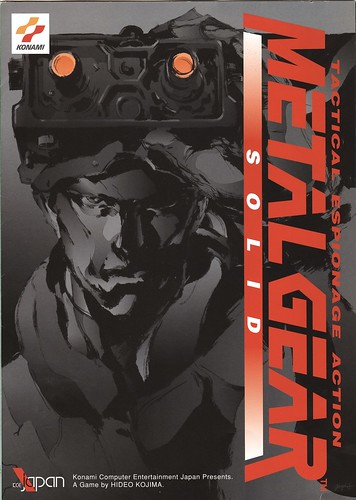
So what was in this big envelope? A poster for International Superstar Soccer 64. A sell sheet photocopied to list Vandal-Hearts, Contra: Legacy War, Suikoden, NBA In the Zone 2, and Crypt Killer. “The Justifier Light gun for the Sony Playstation available now!” And the reason why I remembered it all:

Cover

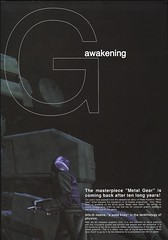
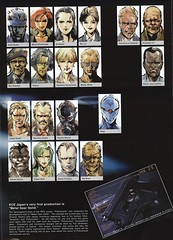
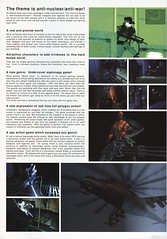
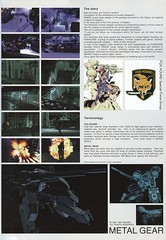
There was this cool fold out pamphlet about a game I had never heard of. Metal Gear Solid? What’s that? B-) Below are some scans I had made. If you click on the image, you can see a much larger version at higher quality so you can even read the text if you’d like. And some of the text is pretty funny. “It is 3D functions of the 32-bit machine realize the possibilities of this game to its fullest potential.”

Inside_M_Flap Inside_G_Flap

Pg_01

Pg_02

Pg_03
Note how this game is a “new expression of real time full polygon action!” B-)

Pg_04

Back

I hope you Metal Gear fans enjoy it.

Categories
Games Geek / Technical Personal Development

The Best Resignation Letter Ever

Thanks to @juggernautco, I learned about A Message for 2K Australia, the best resignation letter from an indie game developer ever. Apparently from the creator of ROM Check Fail and Fishie Fishie, it’s a fantastic way to tell your day job that you’re moving on.

Good luck, Farbs!