Categories
Game Development

Hear Indie Speakers for Free at EPX Indie 2015

If you’re in the Iowa City, Iowa area, you might be interested in attending EPX Indie 2015 today at 6PM, hosted by EPX Studio, a student organization dedicated to developing media such as video games, animations, websites, product design, robotics, and whatever else their members are interested in.

They’ll have four speakers, including:

  • Kate Craig – Artist for Gone Home (Skyping in)
  • Anthony Burch – writer for Borderlands, blogger, co-host of Hey Ash, Whatcha Playin? & more (Skyping in)
  • Eric Neuhaus – local game developer for Virtually Competent
  • Tom Heinecke – local game developer who’s worked on the Guitar Hero series, as well as Bit Dungeon for his own company KintoGames

For more information, see the EPX Indie 2015 Facebook event page at https://www.facebook.com/events/423711344477067/

Categories
Game Development Games Marketing/Business

GDC 2015 Starts Today

Four years ago, I attended my first and only Game Developers Conference.

While many people find the conference overrated or a pain to travel to, I miss the energy of so many game developers in one place, sharing their passion and experience with each other.

I miss the Independent Games Summit and the AI Summit. I learned quite a bit from the sessions I attended, and I met quite a few game developers I only ever knew online for the first time.

I miss the Expo floor, not only for playing demos of everyone’s games but also to see what new trends and technologies might be coming.

I would love to check out the GDC Education Summit.

I want to see who will win at the Indie Games Festival and how Nathan Vella compares to Andy Schatz as host. I’m sure he’ll be great, and he’ll say inspirational things we’ll all want to write about. No pressure.

I’ll be following this year’s action on Twitter and on Gamasutra, unless anyone has any better recommendations.

While my wife and I are still watching Oscar-nominated films, I’m surprised I haven’t been looking into playing Seumas McNally-nominated games. I’ll fix that now.

Congratulations to all of the finalists for the IGF! I see many of you have a GNU/Linux version of your game, and I’m looking forward to trying them out.

Categories
Game Development

Isometric Pixel Art Cheat Sheet

I’ve never made an isometric game, but I know that there are some calculations needed to translate what’s on screen to what’s in the world and vice versa, calculations that aren’t necessary in an top-down view.

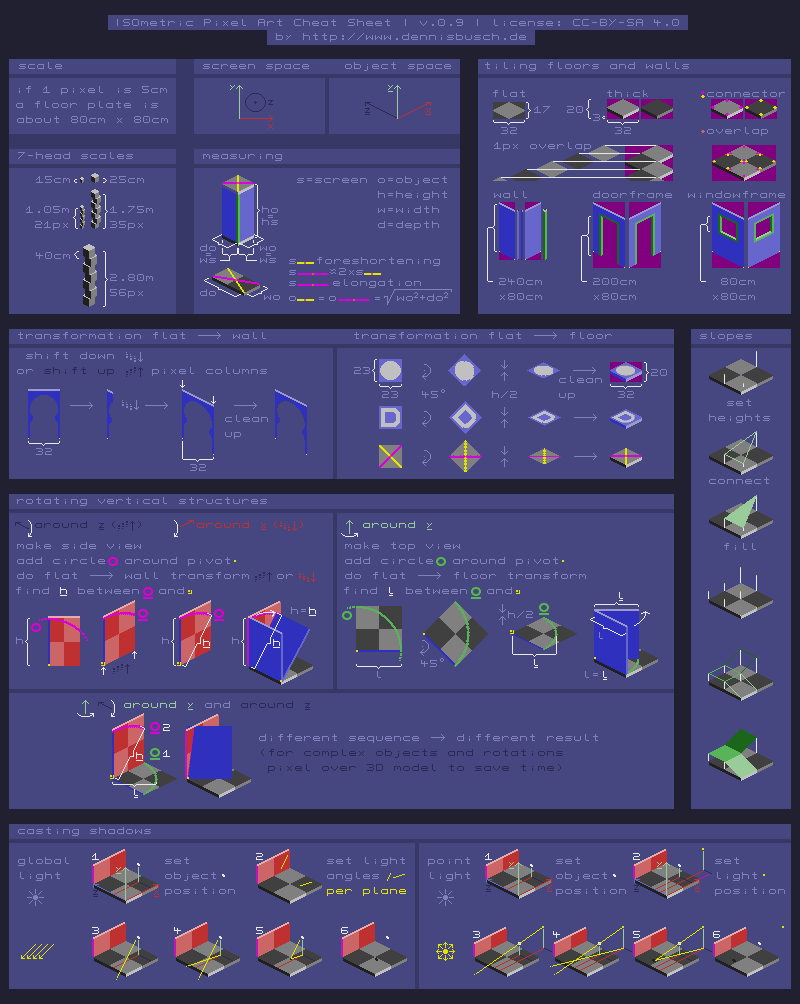
But what about drawing the art to populate an isometric game? Well, Dennis Busch provided a handy cheat sheet to help you figure out how to do so:

Isometric Pixel Art Cheat Sheet

It provides illustrated tips for:

  • tiling floors and walls
  • transforming flat images to walls or floors
  • rotating a vertical structure
  • handling slopes
  • casting shadows with global and point lights

Thanks to Jon Jones for finding this cheat sheet a billion years ago.

And if you find it useful, consider contributing some funds to Dennis or hiring him. See some of his pixel art to get an idea of what he can do for you.

Categories
Game Development Geek / Technical

More Game Mechanic and Algorithm Visualizations

Sometime back, I wrote about GameMechanicExplorer, which was a new site that allowed you to explore game mechanics interactively.

Seeing a new technique represented in a visual space can help make it easier to understand, especially if the math or algorithm is complex.

If you’ve ever done searches online for game development, you’ve probably come across Amit Patel’s website, which acted as a public set of bookmarks for various game development resources.

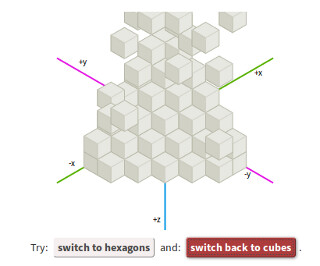
RedBlobGames 1

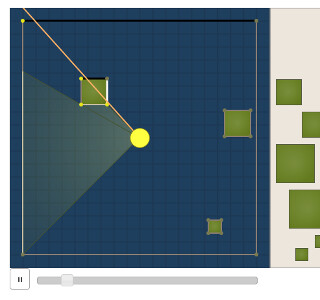
In the last year, he started posting interactive visualizations to explain topics such as lighting and visibility, A* pathfinding, probability, and using noise to make procedural generation look natural, among others.

RedBlobGames 2

I enjoyed his article on procedural map generation in the past, but being able to see (and hear) how noise works and learning about the different kinds of noise in one place is amazing.

In general, you can find a lot of great game development resources at Red Blob Games, but these new visualizations add a lot of value. Thanks for posting these, Amit!

Categories
Game Development Games Marketing/Business

Controversy over 2nd Mighty No. 9 Funding Campaign?

Outraged Gizmo

Last year, comcept USA, LLC raised over $4 million for their 2D platforming game Mighty No. 9. Over 60,000 backers plus whoever contributed through PayPal are looking forward to this Mega Man-inspired project to get completed, and the development team has been periodically releasing their work to show how much progress has been made, such as this Mighty No. 9 work-in-progress video released last month:

It’s generating quite a bit of excitement, and as the developers realize that this game has a large and dedicated following, they decided to capitalize on it.

Announced at the 2014 Anime Expo, there is a new funding campaign:

More details about the announcement are at the Mighty No. 9 website, but the general idea is that the original funding is enough to make the game and it will still be made, but this new campaign is to fund bonus content. The first announced stretch goal is full English voice acting.

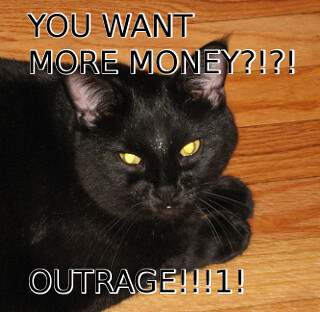
Apparently some people are outraged about this second campaign. People are complaining that producer Keiji Inafune is greedy. “You’ve already got $4 million, and now you want even more money?!” Some people have compared it to Exploding Rabbit’s Super Retro Squad, which met its very conservative funding goal easily, yet the developers were inexperienced and realized during its development that making games is hard.

But Mighty No. 9 is getting made. The people behind it know what they are doing and are fully-funded. The new campaign isn’t to help finish the game. It’s to add more bonus content to the game.

There is a very strange entitlement issue that some vocal Internet denizens seem to share. Kickstarter is a way to invest in something, and it’s entirely possible that it will fail. You contributing $5 or $500 does not mean you will get what is being made. A project may also turn out completely different than originally planned.

And when Mighty No. 9 is looking like it is well on its way to being exactly as advertised, the hostility lobbed at the developers for what some people misunderstand as greed is even more bizarre.

Making games in full view of the public is like being an umpire at a Little League baseball game in which all of the parents watching are drunk and boisterous and occasionally violent. Oh, and they don’t know how the game is played, yet have no trouble telling you how you are doing a terrible job in very colorful language.

Is it just business, though? Are people merely getting insight into what it is really like, now that funding is crowd-sourced? Or is it the nature of business on the Internet?

I imagine Bill Gates long ago learned to put a filter on the content he reads to keep his sanity. It’s hard to keep your finger on the pulse of the industry if you are going to read about how you are the Devil incarnate on a regular basis. I suppose before the Internet you just had to worry about a harsh opinion piece in the newspaper because most publicly-available forums were professional in nature.

Being an indie developer has appeal for many partly because you are not beholden to someone else. You have no boss but yourself. You have no constraints on your vision but your own. You have no deadlines but the ones you impose.

Yet, crowd-sourced funding puts you in this strange place. It enables you to not only do market research and connect with fans, but it can also give those fans a sense of ownership in your independent venture. And if the expectations aren’t clear upfront, there can be a lot of pain.

Categories
Game Development Marketing/Business Personal Development

Reminder: Come to My Lunch and Learn Presentation on May 29th

If you can make it, please come to my Lunch and Learn post mortem about my time running GBGames full-time on Thursday. I hear it will be a good one.

Playing the Long Game: The Vital Importance of Purpose, Mission, and Vision to Your Business

Gianfranco Berardi will share the major lessons that can be drawn from his experience running an independent game development business full-time.

He’ll explain what happened between the time he delivered his two weeks’ notice to his day job in 2010 until 2012, when a lack of funds forced him once again back to part-time business owner status. See how a lack of strategic planning resulted in a business with no focus and a business owner feeling out of his depth. More importantly, learn how doing the hard work of identifying your Why, How, and What pays off both immediately and in the long-term.

WHEN:
May 29th, 2014 at noon

WHERE:
StartupCity Des Moines
317 6th Ave, Suite 500, Des Moines IA, 50309
p: 515-868-0473
e: info@startupcitydsm.com

It’s a free event, and I’d love to see you there. Register for it at https://tikly.co/-/2510.

Categories
Game Design Game Development Marketing/Business Personal Development

A Recipe for Meaningful Gamification

Gamification has been quite the buzz word for the last few years, although I haven’t seen too much in the headlines recently.

Sebastian Deterding defined gamification as introducing game design elements in non-game contexts in the presentation below:

From Game Design Elements to Gamefulness: Defining "Gamification" from Sebastian Deterding

Deterding has since been upset at how gamification is thought to be nothing more than using incentives to reward people (press button, receive points/badge/achievement) for doing what the designers want them to do, and he argues that good game design and a larger purpose behind it all is still needed to make it successful.

Gamification isn’t new, and people have been talking about it for decades under different terms. Deterding has since preferred “Gameful Design” as a term instead.

I recently learned about Scott Nicholson, associate professor at the School of Information Studies at Syracuse University. He researches learning through games, and he’s the director of Because Play Matters Game Lab, which is meant to create transformative games and play for informal learning environments.

Nicholson is interested in Meaningful Gamification, which he defines as “using game design elements to help users find meaning in non-game contexts.”

So, you are trying to establish long-term change and making such effort intrinsic rather than relying on rewards to keep it going. There’s a lot of research on compensation in the workplace. The old carrot-and-stick approach seems logical. If you want people to produce more, you reward them with more pay. If you want to stop some behavior, you punish. If you take away those rewards and punishments, people will revert to behavior you don’t necessarily want.

But for some time there has been the idea that extrinsic motivation actually reduces productivity. A person told that he/she will be rewarded for doing an activity will be more likely to stop doing the activity when the reward stops than a person who was not presented with an award.

Nicholson created the following recipe to help create meaningful gamification:

  • Reflection – assisting participants in finding other interests and past experiences that can deepen engagement and learning
  • Exposition – creating stories for participants that are integrated with the real-world setting and
    allowing them to create their own
  • Choice – developing systems that put the power in the hands of the participants
  • Information – using game design and game display concepts to allow participants to learn more about the real-world context
  • Play – facilitating the freedom to explore and fail within boundaries
  • Engagement – encouraging participants to discover and learn from others interested in the real-world setting

I think choice is interesting, because a lot of gamification interest comes from the idea that if you create a game that everyone in your organization must play, then it will drive the behavior the organization wants, when it’s not actually the case.

More information about this recipe is at the Because Play Matters Game Lab website.

Categories
Game Design Game Development

Are Your Game Mechanics Off Balance?

Note: this post was originally published in the January 2012 issue of ASPects, the official newsletter of the Association of Software Professionals.

You’ve been working on your action game for so long that you’re sick of playing it. You have a wide variety of enemies with different strengths and weaknesses, and you’ve provided the player with dozens of different weapons to take advantage of those weaknesses. You’ve tested so many different playstyles, changing variables as you found issues, and you even had your family and friends try it out to make sure that they don’t think it is too hard or too easy. Your game is ready for your first customer!

Except something goes wrong. Someone discovers a way to use a weapon that dominates all of the enemies in your game, eliminating the challenge and fun entirely. Or perhaps there’s a sequence in the game that you find slightly challenging, but to someone who doesn’t know all of the intricacies of the game and hasn’t had the opportunity to practice for months, it’s frustratingly too hard. In either case, the reason why your game isn’t ready is that it isn’t balanced.

A Numbers Game

Balance in a game can refer to many things, but the basic idea is that you are deciding what values and numbers to use in a game. As an example, Tic-Tac-Toe, or noughts and crosses, has two players, nice spaces in a 3×3 grid, the requirement that you can place only one ‘X’ or ‘O’ during a turn, the requirement that each space can only hold one mark, and a victory condition of having three of your marks in a row. Tic-Tac-Toe is a fairly simple game, but you can imagine all of the ways you can upset the balance by changing these values. It would be a completely different game with a 4x4x4 matrix and requiring four in a row for a victory condition.

Balancing a game requires getting the numbers right, but it’s not always obvious what “right” is. Should your strategy game have one type of resource to collect or two? Should a unit that does twice the damage of another unit cost twice as much to produce? What if it has half the armor?

As I was getting my strategy game “Stop That Hero!” ready for release, I tried to make sure that even if someone didn’t play perfectly, they would still be able to win while also ensuring that it wasn’t too easy to win. What I found was that even when I played how I thought was sub-optimal, it was still using special knowledge that I had as a developer, so what was somewhat challenging to me was way too hard for someone else. Having other people play it gave me a lot more information to go on.

The feedback you get with playtesting will be invaluable, but you might find you are making guesses at appropriate values. In my game, the player summons minions such as orcs and dragons to fight off heroes such as archers, knights, and wizards. Summoning costs resources, and it takes time to summon a minion. How much should an orc cost? How long does it take to summon a warlock?

While guesses are good for getting the game up and playable in the first place, the guess-and-pray approach can be tedious and slow when you’re trying to get the game ready for customers. There has to be a better way.

A Little Analysis Goes a Long Way

I found two tools helpful in game balancing work: a spreadsheet and a whiteboard.

In the spreadsheet, I entered as much information about the various entities as I could. Data such as HP, movement speed, and minion costs all ended up in the chart. In the game, resources increase by 1 each second for each castle and tower the player controls, so time is another value to keep track of.

EntityDefinitions

Using numbers such as cost, time to summon, game play time, and the number of towers the player controls, you could answer some questions, such as:
With control of one tower, how many orcs can the player afford by the time one orc is available on the battlefield?
How many slimes can be summoned after 30 seconds of game play if the player has control of one tower? After 1 minute? With two towers?
How many orcs could have been produced during the time it takes to produce one slime?

The answers come fairly naturally from the data. For instance, if an orc takes 3 seconds to be summoned, and a slime takes 6.4 seconds to be summoned, you can produce two orcs and part of a third in the time it takes to produce one slime. Knowing this information, you can determine that the cost of one slime should be just slightly more than the cost of producing two orcs, all other things being equal.

But sometimes the values aren’t equal. In my case, an orc does the same damage as a slime during one attack, but orcs deliver attacks every second while a slime needs to spend a little more than 2 seconds to do its next attack. Also, slimes move at less than half the speed of orcs. On the other hand, slimes have ten times the hit points, making it much harder for the heroes to kill it. So how much is a slime worth compared to an orc now?

If you can come up with appropriate formulas, you can gather some statistics to help in balancing. Figuring out the relationships between all of these numbers is key, and this is where a whiteboard can come in handy.

STH_BalanceChart

This chart represents all of the interacting systems during a game session. You can see how player resources are influenced by play time, the structures owned by the player, and resource chests collected. More resources means more minions can be summoned, which decreases resources and increases the number of entities. Some entities can capture towers, which helps increase resources. Combat is represented by the weapon-related boxes at the bottom of the chart, which all impact HP, which impacts whether or not a given entity exists. Speed can be impacted by a slow status effect, which means heroes take longer to move, which means the player has more time to gain resources and summon minions.

Even with only a handful of numbers, you can see that the relationships between them and across systems can get complex. Still, this chart helps us find our way to some interesting statistics. For instance, we can determine how many orcs it takes to kill a one guard. Let’s say that guards have 250 HP and do 33 HP of damage every 1.2 seconds, and orcs have 100 HP and do 17 HP of damage every second.

Orcs take (250 HP / 17 HP damage) x 1 second = 15 seconds to kill a guard. Guards take (100HP/33 HP damage) x (1.2 seconds) = 4.8 seconds to kill one orc. Since guards kill orcs at a rate of 0.208 per second (1 / 4.8 seconds), it takes 15 seconds x 0.208 = 3.125 orcs to kill a guard. In game terms, three orcs will die before the guard’s death blow is dealt by the fourth orc.

STH_MinionKillRatesByHero

Knowing this information, we should make sure that the player is capable of summoning at least four orcs for every guard in the game world, or else it will be impossible to withstand the onslaught of the heroes. If orcs cost 7 resources, and if one level is designed to produce four guards from the nearby village, the player should be able to have 7 resources per orc x 4 orcs per guard x 4 guards = 112 resources before those guards arrive.

You can also see what happens if you change a number. If an orc does twice as much damage, it would take 250 HP / 34 HP damage) x 1 second = 7.4 seconds to kill a guard, so it would take only two orcs to kill a guard (7.4 seconds x 0.208 orcs killed per second = 1.5 orcs).

By studying the relationships between numbers, you can determine what information would be useful, and then simple mathematics can get you that information. Spreadsheets also help you by making it easy to tweak values to see what effect a change might have on other values. You still need to playtest as much as you can since it is only by playing that you can determine if the game is entertaining enough, but this article should have demonstrated that you have tools to aid you in balancing the game.

Categories
Game Development Marketing/Business Personal Development

See Me Present at StartupCity Des Moines on May 29th

StartupCity Des Moines

NOTE: If you couldn’t make it, the presentation is available online.

Des Moines, Iowa has a coworking community called StartupCity Des Moines. It’s a pretty neat place, and there’s a lot of exciting things going on there. It’s the only entrepreneur hub I know of in the area.

Over a month back, I went to a lunch and learn on entrepreneurship given by one of the founders, Christian Renaud.

About halfway through his talk, he mentioned the idea of sharing your failures with the community. While successes are great to share, giving a post mortem for failed business also helps make the entire community of businesses better for the future.

“I would strongly encourage you, just for the betterment, to not make central Iowa suck for startups over the next 20, 30, 50 years. Till that back in. All the good things you learned, all the bad things you learned. Till them back into the soil, because God knows we need them.”

Since then, I’ve been thinking that I have something to share from my experience running GBGames full-time and failing to get it self-sustaining before running out of money.

I’ll be presenting at the end of the month:

Playing the Long Game: The Vital Importance of Purpose, Mission, and Vision to Your Business

Gianfranco Berardi will share the major lessons that can be drawn from his experience running an independent game development business full-time.

He’ll explain what happened between the time he delivered his two weeks’ notice to his day job in 2010 until 2012, when a lack of funds forced him once again back to part-time business owner status. See how a lack of strategic planning resulted in a business with no focus and a business owner feeling out of his depth. More importantly, learn how doing the hard work of identifying your Why, How, and What pays off both immediately and in the long-term.

WHEN:
May 29th, 2014 at noon

WHERE:
StartupCity Des Moines
317 6th Ave, Suite 500, Des Moines IA, 50309
p: 515-868-0473
e: info@startupcitydsm.com

It’s a free event, and I’d love to see you there. Register for it at https://tikly.co/-/2510.

Categories
Game Development Politics/Government

Public Domain Jam Next Weekend #PDJam

Copyright law is kind of messed up. Actual copyright law is actually a combination of codified law and legal rulings to clarify or provide exceptions for such laws. For a primer on copyright law for indie game developers, see What an Indie Needs to Know About Copyright.

The Copyright Clause of the U.S. Constitution states that Congress is empowered “to promote the Progress of Science and useful Arts, by securing for limited Times to Authors and Inventors the exclusive Right to their respective Writings and Discoveries.”

That is, copyright is a tool to promote science and art, and it does so by providing a temporary monopoly for creators.

It is NOT meant to provide monopolies for creators as an end in itself. It’s just the means to an end.

Once the temporary monopoly’s time period expires, the work in question enters the public domain.

The public domain is the set of all creative works that are available to the public. There are no licenses required, no fees to pay, and no patents to worry about. That is, someone was able to benefit immediately from creating it, and in exchange, for the rest of posterity, everyone can benefit from it and build upon it. That’s the way it should be.

The nature of creation isn’t completely independent invention. Instead, a new creation tends to rely on existing creations. For example, the invention of the electric motor relied upon the knowledge produced earlier on the nature of electric currents and their interactions with magnets. Another example is the popular BBC television series “Sherlock” which is based upon writings of Sir Arthur Conan Doyle from the late 1800s.

Unfortunately, copyright law keeps extended the “temporary” monopoly indefinitely and there doesn’t seem to be an indication that it will stop, which means the public domain has been frozen in place for decades. So while, for example, Disney was able to build an empire off of freely available public domain works, such as the story of Snow White and the seven dwarves, no one has been allowed to build off of Disney’s works in turn. Basically, some people got some advantages from free culture and aren’t returning the favor, and what’s more, they are actively lobbying to ensure they won’t have to.

Lawrence Lessig is the author of Free Culture, which explains more about how copyright law used to work and how it no longer does. I highly recommend reading that book if you want to understand the vital importance of a healthy and constantly replenished public domain.

But what are we doing today? The public domain that exists, as stuck as it is, still has plenty of great works to build upon. And yet, when it comes to games, are we seeing a lot of unique work?

We have the ubiquitous space marines (including Relic’s Space Marine), zombies, and military shooters. We have the Tolkien-esque fantasy games, the interstellar wars with hostile aliens, and the dudebro hero’s journey.

And yet, there is so much more out there to build games upon.

Enter The Public Domain Jam.

Gritfish explains:

I announced the Public Domain Jam a month ago as a reaction to the over-use of some themes in the indie game scene, but since then, I’ve been flooded with nothing but enthusiasm from people over their love of works in the public domain.

The tagline for the jam is “Because there’s more out there than zombies.”

To encourage the publication of games that immediately contribute to free culture, “Nothing to Hide” creator Nicky Hide has donated a $1,000 prize to be awarded the top rated game published under a Creative Commons Zero license.

There are a number of other incentives, including free art and sound assets, free licenses for cross-platform game engines, and more.

I think it sounds like a fantastic idea. The only concern goes back to my assertion at the top of this post: copyright law is messed up.

Years ago, I wrote about Zorro, the public domain, and derivative works. The Curse of Capistrano is the first story to feature Zorro, and it is in the public domain. The Mark of Zorro was the 1920 film about the story. It’s also in the public domain.

Except, copyright law is different from one country to another, which means that while you can make your game based on this story in the United States, you might not be able to distribute your game in some countries where the story is not yet in the public domain.

Moreover, even though the copyright for some stories about Zorro are in the public domain, the trademarks for Zorro do not expire.

Which is why Zorro Productions is able to exist. If you want to make a Zorro-based film, TV show, comic, game, or book, you probably want to license the rights from them to avoid legal trouble. The claim is that the original story does not describe Zorro the way people expect to see him today. Characters such as his horse Tornado are introduced later in works not in the public domain.

There have been a number of lawsuits, including one last year involving a musical based on the public domain works that Zorro Productions claims is a violation of their trademarks and copyrights. The creator of the musical sued them, and it will be interesting to see if this case plays out in its entirety instead of being settled out of court like they usually do.

So, again, the Public Domain Jam sounds great, but copyright law is complex, and everyone should be careful because otherwise public domain works might have certain organizations asserting they own some piece of it. And in the case of international distribution, they might be right in some cases depending on the laws of certain countries.

But remember, the entire point of the Public Domain Jam is to get us away from building “Yet Another Game About XYZ”. The rich variety of source material available in the public domain should provide plenty of innovation and without as much legal risk.