Categories
Personal Development

Clear Goals or Trivial Pursuits

Useless Fountain

It has been over a month since I gave up the steady paycheck of the day job and pursued GBGames as a full-time business. Between moving, settling into my new home and office, and watching the World Cup, I’ve decided not to hit the ground running. Basically, I was taking a small break. I decided that I was fine with using up some of my savings to take a vacation from work and to get my head clear. After all, working for years at a day job, you are bound to pick up bad habits, right? B-)

As a game developer, though, there’s only so much time I can stay away, and I’ve been looking forward to starting work. The problem was that each day I would find myself feeling a bit anxious whenever I sat at my computer.

What makes me a bit anxious, however, isn’t just the knowledge that I’ll need to start working in earnest on my business. Yes, getting income and soon is very important and will be urgent sooner rather than later. If I don’t start earning money soon, my burn rate will eat through my savings more quickly than I’d like. But I knew that fact before, and I’m not worried about it yet.

What makes me feel anxious is that I didn’t know what to do. Not that I didn’t know what I COULD do. I had lots of projects and items on lists. I know what I wanted to do. The question is: what SPECIFICALLY should I do? What do I dedicate my time and effort to, and what do I put off until later? What should I do today, this week, this month, this year?

A good question to ask

I got a lot of insight into how to answer those questions by asking another one: “What would a successful day look like?” On its own, a day can mean nothing, but together with lots of other days, it could mean the difference between a life well-spent or a life wasted. So how do you know what a successful day looks like?

The answer is simple: if it was spent getting you to a successful week!

Of course, that begs another question: how do you know what a successful week is? The answer to this one is also simple. If that week was spent getting you to a successful month, then it was a good week!

And you can recurse all the way through successful quarters, years, decades, and life. Once you know what a successful year looks like, it’s easier to break it down into what successful quarters look like, and then it is easier to see what successful months look like, and so on. The long view sharpens the short view.

In My 16 Answers, question #16 asks “What does busy look like?” and part of my answer is as follows:

But, if I can identify goals I want to accomplish, and if I make sure to do those activities that will help me accomplish those goals, then I can know whether I’m being busy or wasting time.

Science fiction author Robert Heinlein is credited with the following statement:

In the absence of clearly-defined goals, we become strangely loyal to performing daily trivia until ultimately we become enslaved by it.

When you work a day job, someone else gives you your goals. The company has already determined what products and services to offer, and you get to help create them. Easy.

When you are an indie, you’re the one who has to determine what products and services to offer. And it isn’t as simple as saying “I know how to program in Java, so I’ll create Java games.” It’s also not as simple as “Lots of people are playing farm simulations on Facebook. I’ll make a farm simulation for Facebook.” Besides doing an assessment of your own skills, you need to determine what the market wants. And in the end, if you expect to be fulfilled in any way, you have to know that what you’re doing is in line with your own purpose or mission.

Let’s say you want to educate children with games. Without knowing your goals or purpose, you could be sitting at your computer and randomly deciding between reading child psychology blogs, checking email, studying a game development article, chatting online, blogging, or programming. And from day to day, you wouldn’t have a sustained focus, so by the end of five years, you might not have even one game finished.

Now let’s say that your goals include creating five educational games over the course of the next five years. You know you need to create roughly one game per year to accomplish this goal. Before you create your first game, you want to do market research. Perhaps today would be the day to do some market research to find out what educational games are already offered to potential customers. Tomorrow you’ll play and analyze a few of those games. The next day, you’ll research the competition. At the end of the week, you’ll have a lot of information about your market. And perhaps that week was part of an overall month dedicated to determining what your first project should be.

In order to know what a successful day or any other time period is, you need to know what your goals are. Once you’ve set goals, it becomes much easier to know what you should focus your attention on at any given moment. Otherwise, you’re spending your time performing daily trivia. What’s worse, you won’t even know you’re wasting your time since you feel busy.

Do you find yourself busy without purpose? Have you found goal-setting helps give you a sense of direction in your daily activities?

(Photo: Useless Fountain by Milestoned | CC-BY-2.0)

Categories
Game Development Marketing/Business Personal Development

My 16 Answers

In my post You’re an Indie. Now What?, I linked to Seth Godin’s 16 Questions for Free Agents. Below are my answers.

1.Who are you trying to please?

The short answer: my customers. But I think this question is really about identifying who your customers are. After all, you can’t please everyone, and if you try, you’re probably making something watered-down that pleases no one.

So who do I want to please? One, I’ve always wanted to make sure that I make games that I can also play, so cross-platform compatibility is very important to me. I use GNU/Linux at home, and I am frustrated when a game is released that is Windows-only. It’s even more frustrating for a game to be ported to the Mac but to hear that the developer refuses to support GNU/Linux. That’s like finding out that an old high school buddy traveled across the country to visit a mutual friend but refused to visit you because “it’s too far” even though you live just two blocks away. Web games are usually better at cross-platform support, but when they rely on Windows and Mac-only plugins, again, it shuts out people like me.

Two, even though I’ve quit my day job and no longer have to be there for 40-60 hours a week, I remember not having a lot of time to play games, at least not as I used to when I was younger. Years ago, playing 4+ hours per day after school was easy. Today, I don’t think I even WANT to dedicate that much time when I have so many other things I want to do. But I don’t want to play Bejeweled for 10 minutes. I want to play bigger, more complex games. Thinking games. Involved games. I just don’t want to need to dedicate hours upon hours to playing them in order to get satisfaction. So if I make a game, I would like to appeal to the gamers who wish they could game more often but find it difficult to do so. There are casual games, but sometimes they’re too simple for our tastes.

A perfect example of a game that allows you to get involved without needing to spend inordinate amounts of time to do so is Neptune’s Pride by Iron Helmet. It’s a real-time strategy that doesn’t require quick reflexes or quick thinking to do well. In fact, the faster you are, the less you’ll have to do since most of the time you’re waiting to see how your strategies play out. While it has a fun social element, allowing you to trade and backstab and do all sorts of diplomacy-related things, I like that you can log in only once a day or every 5 minutes and not gain or lose much over your opponents, and yet it is deep.

So the customer I’m trying to please right now is someone who wants to play deeper, more intricate games but have the same time commitment as he/she would with more casual games, and he/she wants to do so on the platform of his/her choice without absurd arbitrary limits.

2.Are you trying to make a living, make a difference, or leave a legacy?

I don’t believe these are mutually-exclusive. In fact, I have a hard time seeing how you can make a sustainable living without trying to make a difference or make your mark on the world. That said, the question of “what are you trying to do” is an important one to answer.

I won’t be satisfied with merely getting by. Granted, my income is nearly nonexistent at the moment, and there is definitely a desire to change that, but I don’t want to make bad long-term decisions just to make a quick buck now. I want to be creative and encourage others to be creative. I want to pursue curiosity and support others in their own pursuits. I want to make something that gives people a reason to think and talk about it.

3.How will the world be different when you’ve succeeded?

Earlier this year, I thought long and hard about how I wanted my life to turn out. I knew I was in charge of making decisions that would impact my quality of life, and if I didn’t become more self-aware and more conscious, then life would impact me instead.

In an earlier post, I mentioned going through some exercises in the book Life on Purpose: Six Passages to an Inspired Life. If you want some great advice for getting some guidance in your life, I’d highly recommend reading that book and actually running through the exercises yourself.

My current identified life on purpose is a joyful life of freedom, continuous learning, encouraged and supported creativity, insatiable curiosity, and prolific creation, all driven by passion and a desire for excellence, powered by a healthy body and soul.

The thing about a life on purpose is that it isn’t just about me. It’s about everyone else, too. I want my life to be a joyful life of freedom, and I want others to experience that, too. I hope I’m always learning in my life, and as important as it is, I hope the same is true for you.

While I anticipate my life on purpose will change as I grow, currently the above statement indicates how I hope the world would be changed when I’m through.

4.Is it more important to add new customers or to increase your interactions with existing ones?

It’s a question I’m wrestling with. There are only three ways to increase your business, according to Jay Abraham’s book Getting Everything You Can Out of All You’ve Got: 21 Ways You Can Out-Think, Out-Perform, and Out-Earn the Competition: increase the number of clients, increase the average size of the sale from a client, and increase the number of times a client returns to buy again.

So clearly adding new customers is important, but increasing interactions with customers is also important. Of course, just starting out, I have no customers. Having one customer is more important than giving great service to no customers, at least if I want to see revenue.

But there are two speeds when it comes to adding new customers to your business: fast and slow. Amazon.com needed to get big fast and gave very little thought to company culture. Ben & Jerry’s wanted a certain culture and built up slowly.

As an indie, I’m not interested in producing five or 10 games a quarter in the hopes that one of them becomes a hit and makes up for the investment in all of them. I’ll leave that business model to the major publishers. I’d rather have customers that are willing to talk to me about what they like and what bothers them.

So while it is more important to add customers, I don’t want to try to “get customers” at the expense of the longer-term relationship I could have. I don’t want people feeling ripped-off. I want to know that the people playing my games are satisfied, that they have no problem telling their friends and family about my games, and that they look forward to my games.

5.Do you want a team? How big? (I know, that’s two questions)

No. Ideally my team would be just me.

I’ve realized over the years that I can’t do everything myself, though. While I’ll take advantage of contractors and freelancers, I’d still prefer to keep my “team” small. I am not interested in turning GBGames into a massive company.

6.Would you rather have an open-ended project that’s never done, or one where you hit natural end points? (How high is high enough?)

Open-ended project that’s never done? I’m pretty sure Duke Nukem Forever covers that. B-)

Joking aside, I’m making games, and I’d rather have projects I can say are finished. While I could see making social MMOs requiring updates throughout the life of the game, there will still be a 1.0 version released.

7.Are you prepared to actively sell your stuff, or are you expecting that buyers will walk in the door and ask for it?

“If you build it, they will come” is widely regarded as a lie, and so if I expect to sell anything, I need to be prepared to actively do so. I won’t last long if I am sitting back and waiting for the customer to do the hard work of discovering my game, determining whether or not he/she wants to play it, and paying for it.

8.Which: to invent a category or to be just like Bob/Sue, but better?

While creating innovative and unique games sounds more creatively satisfying, I don’t want to make them so foreign that people don’t know what they’re playing and therefore won’t. At the same time, I don’t want to merely clone other successful games. Even if they could be financially successful, I wouldn’t be happy with it.

9.If you take someone else’s investment, are you prepared to sell out to pay it back?

Yes? By taking someone else’s investment, don’t I have an obligation to do things with the expectation that I will pay it back? If someone gives me $10,000, I’m going to want to do something that makes back at least $10,000, and I suppose that could be seen as “selling out.”

As of now, the only person’s investment I need to worry about is my own. Of course, I’d still like to be able to pay myself back (and then some!), so my behavior will still be geared toward getting my business profitable. It is a business, after all.

10.Are you done personally growing, or is this project going to force you to change and develop yourself?

Is anyone ever done personally growing? My business will definitely force me to change and grow much more quickly than I ever had to before.

11.Choose: teach and lead and challenge your customers, or do what they ask…

While I’ve been writing about having customers who are willing to tell me what they want, I am not going to be bending over backwards to make games that appeal to all customer requests. I’m the game designer, after all.

Also, part of my life on purpose includes continuous learning, and again it applies to everyone, not just me. And so I choose to teach, lead, and challenge my customers. What I choose to teach, however, is a different question.

12.How long can you wait before it feels as though you’re succeeding?

Before I quit my day job, I determined how much my burn rate was based on my current savings. I figured that the worst-case was that I had only a year before my savings ran out, but if I had to, I had even more time if I didn’t mind dipping into retirement savings.

And even if my savings did run out, I would find a way. I’m indie now, and I don’t see myself going back. At the moment, I feel that, if I had to, I could wait indefinitely.

13.Is perfect important? (Do you feel the need to fail privately, not in public?)

Heck, no! I’m planning on blogging about my failings. B-)

14.Do you want your customers to know each other (a tribe) or is it better they be anonymous and separate?

I’d love for my customers to interact with each other if they choose to. Going along with my answer to #4, I want these people to enjoy being customers. I don’t want them to be one-off cash register chimes.

15.How close to failure, wipe out and humiliation are you willing to fly? (And while we’re on the topic, how open to criticism are you willing to be?)

I’m all in as far as quitting my day job and relying on myself to earn a living goes, but per project? I don’t think I would try to spend everything I have on my first project. While it might result in higher quality art and sound as well better quality work (I’m not so arrogant as to think that I couldn’t hire someone to do a better job of programming than I), that’s it. If the game doesn’t earn me a living, it’s over for me.

So realistically, I’m going to be more cautious and less willing to spend money when I don’t need to. I need to be careful that I’m being too cautious. After all, if I can pay someone to do something in 30 minutes that would take me weeks to do a poorer job of, I should pay the money. But if I wipe out, I’m not going to do it in one big expensive effort in the first month of being indie.

Humiliation and criticism? I’m open to the possibility that people will laugh at my efforts, but I’m not going to let them discourage me. Cynics do not create.

16.What does busy look like?

I’m going to assume the use of the word busy here does not imply that you’re spinning wheels as opposed to moving forward.

I think there won’t be any one activity that I can point to and say, “If I’m working, this is what I’m doing.” I can’t expect to do well if I focus exclusively on product development because there won’t be any marketing or sales efforts. People won’t know what I’m offering or why they should pay for it. If I only do market research, then nothing is ever going to be produced. And if I only sell, then I’m not going to be creating anything, either.

But, if I can identify goals I want to accomplish, and if I make sure to do those activities that will help me accomplish those goals, then I can know whether I’m being busy or wasting time.

What are your 16 answers?

Some answers were harder to answer than I anticipated, while others were questions I’ve never thought about before.

If you’re an indie, have you taken the time to answer those 16 questions? Care to share them?

Categories
Game Development Marketing/Business Personal Development

Going Full-Time Indie

Empty Cube

Last Monday, I gave my two weeks’ notice to my day job. I’m going to run GBGames, LLC full-time.

After 5 years of part-time development and not much to show for it, I was frustrated. I had no urgency. I found myself losing focus often, even after I admonished myself for doing so. Week after week, I’d get disappointed in my lack of productivity. I’d identify the problem as a lack of seriousness or a lack of clarity or a lack of efficiency, and I’d claim, “No more! This time, it’s for real!”, but then I’d find myself at the end of another week with little to no forward progress and hardly any change to my work habits.

Well, no more! This time, it’s for real! B-)

I’m cutting myself off from the peace of mind of a regular income from a salaried position, with nice benefits, at a really good company, with great coworkers. I could work in much worse environments. I was able to spend money on food, clothes, utilities, and toys without generally worrying if I had enough money to cover it. The people were great, and the company policies were what you thought of when you thought of best-practices.

So why walk away from that? Because I’m also cutting myself off from an obligation to be anywhere for 40-60 hours a week. Those hours are mine now. I have the freedom to use them however I want. Instead of being a cog in an otherwise pretty great wheel, I’m making my own wheel.

Of course, with that freedom comes great responsibility. I’m solely responsible for the success or failure of my business. My future income depends more on my marketing, sales, creativity, and productive output than the time I spend sitting at a desk. It’s going to be hard work, and I’ll encounter challenges the likes of which I’ve never seen.

But it’s time. I have an opportunity to make a mark on the world. I am done with feeling like the lion’s share of my attention is being given to what I should to be doing to the detriment of what I want to be doing. I’m only going to get older. I turn 29 in a couple of months, and before I know it, I’ll be 30. And then 40. And 50. And so on. If I’m going to run my business full-time, it might as well be now, when I have less responsibilities and obligations. I’ve prepared for years to do it. I’m as ready as I’m going to be.

Let’s go, World. I’m ready to rock.

(Photo: Empty Cube | CC BY 2.0)

Categories
Personal Development

Three Ways to Achieve Your Goals More Easily

Every year, especially around New Year’s Eve, people notice something about their lives that they don’t like. Maybe someone doesn’t like seeing the extra inches around his waist. Perhaps someone else doesn’t like the size of her savings account. Whether it has to do with health, wealth, or quality of life, these people identify something they don’t like and decide to do something about it.

They set goals such as:

  • I’m going to lose 25 lbs by summer.
  • I want to have half a million dollars before I retire.
  • I want to live in a bigger apartment.

When people set goals, they have good intentions. They may even write down their goals. For a weight loss goal, perhaps that goal is placed on the fridge as a reminder. Perhaps that first week might be filled with exercise at the gym, and the goal setter might be filled with energy and motivation.

Too often, though, what happens for many people is that they soon forget the goals they set. The person who wants to lose weight might find that he has a hard time waking up one morning, and so he skips going to the gym that day. And he might go to the gym the next day. But soon enough, another tough morning comes. And then another. And he might find the habit of going to the gym daily gets scaled back to only a few days a week. Eventually, without realizing it, he won’t be going to the gym at all, and he’ll be back to living his life the way he did before he set the goal.

And the same goes for any goal. Perhaps the person who wants to save $500,000 gets excited about saving a bit of money each time she gets paid, but it’s possible that there are plenty of bills that need paying and the morning coffee isn’t too much money and someone’s birthday is coming up. She might find that saving money is just too hard, and eventually she falls out of the habit.

A year later, these people might look back and realize that they haven’t made any progress on their goals. And for some people, they might have a lot of goals that they are failing to achieve at once. Insert guilt and frustration here. I’ve been there, and odds are, you’ve been there, too.

So what can you do? I recently realized a few ways to make goal achievement easier:

  1. Focus on only a few goals, not a billion!
  2. Make those goals vivid!
  3. Keep your attention on those goals!

Focus on only a few goals!

This one was tough for me to internalize. I have a billion interests. I have a day job. I have an indie video game development business. I write for this blog. I play soccer. I have friends and family I want to spend time with. I am the Charter Executive for the Association of Software Professionals Games Special Interest Group. I want to weight about 15 lbs less than I do. I want a nicer apartment. I have a ton of papers I want to shred, a set of online business courses to finish taking, books to read, a ukelele to build and learn how to play, a printer to setup…Yeah, I’m busy! B-)

I used to keep all of these projects on a list, which is good in that they won’t fall through the cracks or become forgotten, but I always felt like I wasn’t making progress. One day I’d write a blog post, but I wouldn’t have time to work on my game development projects. I’d go to the gym and run for an hour, but then I’d be too tired to read that business book I’ve been meaning to finish. I’d do some actions related to one project, such as taking the online business course, but then feel like other things weren’t getting done, so I’d switch my focus to something else.

Eventually, I realized that my approach wasn’t working. My attention was spread too thin, rendering me ineffective at everything. I felt frustrated, and life just wasn’t fun. I felt like I needed to constantly be “on”. Watching TV, playing video games, reading for leisure, spending time with friends: they all felt like ways I was procrastinating doing all of the work that I knew had to get done. As the psychologist William James once said, “Nothing is so fatiguing as the eternal hanging on of an uncompleted task.” And I had a lot of those!

If I was going to accomplish anything meaningful, I needed to focus on it until it was done. After all, if it was the most important thing for me to do, why spend time on anything else? Isn’t that just procrastination?

At the start of the new year, I identified a few major goals that I wanted to accomplish this year. Not 50. Not 100. I came up with four goals, and I have since reduced them to three. At any given moment, I know that if I should be doing anything, it is in service to to accomplishing those three goals.

Why so few? Because I need focus if I want to see these goals accomplished. Focusing on a billion goals is the same as having no focus at all.

Make those goals vivid!

There are good ways to define goals, but there are also bad ways to do so. If you search online for tips about setting goals, you’ll inevitably come across the acronym SMART, and you’ll also come across articles suggesting that it is outdated. Whatever you decide to do, write your goal so that it gives you energy to think about it. Boring goals won’t motivate you.

“I want to lose weight” is a lame goal. It has no energy behind it. There’s no vision. It’s just a weak prayer. A better version: “I want to lose 15 lbs in three months.” It’s better partly because of the details, but it could be improved. How about this one?

“I am achieving a healthy, optimal weight that makes me look sexy and feels vibrant. I easily reach a weight of XYZ lbs.”

Achieving! Healthy! Optimal! Sexy! Vibrant! Easily! These words make the goal FEEL awesome! Just think about the way that goal is written in the last example. It’s a lot harder to forget than “I want to lose weight”, isn’t it?

You want your goals to fire up your imagination, and you want to imagine what success looks and feels like. It might sound silly, but this activity is key. I allow myself to enjoy the good feelings that come from immersing myself in these goals as if they are already achieved. This isn’t just fantasy or navel-gazing. Imagining that your success is already accomplished actually helps you accomplish those goals! If you can convincingly feel that your accomplished goal is real, your subconscious can go to work making it happen.

Of course, if you do the work to create a goal that inspires you, it would be a shame to forget about it.

Keep your attention on those goals!

I’ve had a problem declaring goals and not following up on them. For example, when it came to making time for regular game development each week, I have historically been pretty bad at it. Tracking it through the Thousander Club, I could see just how bad it was, and at the start of each year, I would say, “This is it! This is the line in the sand! I did badly before, but I will change my ways completely!” The next thing I know, it’s December, and I realize that I am nowhere near 1,000 hours of game development.

If your goals are important to you, you need to dedicate the time to thinking about them. It’s too easy to forget about your goals when you’re drowning under obligations and interests pulling you in multiple directions.

Some people suggest writing down your goals every day. I don’t like the idea of throwing away hundreds of index cards throughout the year, so I wrote them down once, but every morning I make an effort to think about those three goals. I read the statements, and because they are vivid and striking, it is easy to imagine them being real. I’m healthy and look great. I’m living in a comfortable, secure home. My business is successful and profitable.

Every morning, I make the time to quietly think about my three main goals for the year, and it is time well spent. These are goals I really care about, and I don’t want to forget them just because urgent tasks distracted me. And the more I think about them, the easier it is to remember them. It’s a nice feedback loop. And as I make progress on these goals, they just get further reinforced.

So make the time! It can take mere minutes each morning to visualize your goals. Set up reminders. If you don’t need reminders to accomplish your goals, that’s great. If you are like me, get into the habit of setting aside time to think about your goals daily.

Does this visualization really work?

To give an example of how amazing it is to focus on a vivid vision, one time I allowed myself to imagine what it would be like to own a Lamborghini. I never really cared about cars before, and this was purely for fun. These cars cost as much as a house, so it would feel pretty wealthy to own one. They turn heads. I could wear shades as I drove down the street. I could show up at parties, and the valet would be excited to get the opportunity to park my car. I didn’t really want such an impractical car, but as far as pretending I was rich enough to own one, why not? It was just for fun.

But you know what I started seeing a lot more of? Corvettes. I saw them everywhere. Sometimes I would see four or five before I’ve traveled a mile! People around me talked about Corvettes. I learned that there were some for sale near my home. I went to a bed and breakfast in the middle of the countryside in Wisconsin, and even there I saw a yellow Corvette outside of the restaurant I went to eat at! It turned out that there was even a Corvette car show in town. It was surreal.

I’m not saying that I manifested Corvettes by thinking about cool cars, although some people will talk about the Law of Attraction at work here. I personally think that I was merely noticing these cars more since I had trained my subconscious to look for awesome cars. They were probably always there, but I hadn’t cared about them enough to notice before.

Regardless of what you believe, making it a habit to vividly imagine your goals will help you recognize opportunities to make those visions a reality. Now, the three points I described above aren’t enough to get you to achieve your goals, but if you’ve ever experienced the frustration of realizing that goals you set a year prior were completely forgotten, they should help you keep your goals at the forefront of your mind, show you how realistic they are, and make it easier to achieve them.

Categories
Personal Development

How to Have an Improved, More Ambitious Life

Checkmate

Have you had difficulty coming up with ambitious dreams? Do you find yourself constantly ignoring possibilities, thinking that you couldn’t do or be enough?

Last week, in an effort to give back to my old high school, I joined a number of other alumni in giving presentations to the freshmen and sophomore men. The organizer’s two main goals for these presentations:

  1. To reach out to those students who are on the fence about the possibility of going to college.
  2. To encourage those students who are planning on going to college to try to go to the best college they can.

I took the big picture idea to be: dream big.

My presentation focused on my own uncertainty during my time in high school. I didn’t know what to expect after high school ended. To make it worse, my fear of the unknowns of college and my future kept me from creating a plan. In the end, things worked out better than I ever expected. I finished by asking the students to embrace possibility, ignore mediocrity, and dream big.

What I didn’t realize until after I had given the presentation four or five times that day is that there seemed to be a pattern with my ability to embrace change which probably made all the difference in my life.

Anytime there was some challenge or opportunity, I would think, “I can do it.”

I was in student council. I was Homecoming King. I took drawing, painting, and accounting classes rather than take a free period. I was editor of the school paper. I was in the honors program, received great grades, and was a member of the National Honor Society. I organized an all-day event to replace a discontinued annual event instead of leaving a gap. After high school, I received my Bachelor of Science in Computer Science along with two minors: mathematics and microelectronics. I started my own indie video game business. I tried out for the Chicago Fire soccer team.

I didn’t list those accomplishments to toot my own horn. My point was that in each case, the idea that I could actually DO it was natural to me.

That isn’t to say that actually DOING these things were easy. As editor of the school paper, I only published four issues out of the entire year, and I managed to get the paper in trouble with the school administration (it’s better to ask for forgiveness than to ask for permission?). Going for two minors along with my major took me five years instead of four. Forming GBGames, LLC took me months longer than it should have.

But because I thought I COULD do it, I eventually found a way. It would have been easy to ignore the fact that the Chicago Fire was holding open tryouts. I hadn’t played soccer in 10 years. The odds of me suddenly becoming a professional soccer player were very slim indeed. Why bother?

I’ll tell you why. The barrier to entry was laughable. I pretty much had to sign my name on an application form and send in a small fee. Bam. I was one of the 156 people who tried out, and I got to play soccer with some of the best and brightest amateur soccer players from around the world. I had no illusions that I was going to get called back for the 2nd or 3rd days of the tryouts, but that wasn’t the point. The point was that with my attempt, I had a blast, and now I have this great story to tell people. How many people do you know that can say they tried out for a professional soccer team?

But I never would have even bothered looking up the application process if I didn’t think that I could do it.

So if I could that presentation again, I’d sum up everything with “Believe you can do it.”

If you internalize that thought and apply it to every opportunity you care about, you can’t help but be more ambitious. Why settle for a dead-end job when you could go to college? Why settle for a community college when you could find scholarships, grants, and loans to send you to the best college you can find? Why settle for any relationship you can get when you can find a fulfilling one? Why settle for mediocrity when, with a little thought and effort, you could attain awesomeness?

What is your pattern for approaching possibilities, challenges, and opportunities? Do you surrender immediately to the idea that you can’t, or do you generally feel confident that you can?

(Photo: http://www.flickr.com/photos/alanlight/62314517/ | CC BY 2.0)

Categories
Marketing/Business Personal Development

Happy New Year!

I know. I’m very late, but I didn’t mean for the new year to start without me! What can I say about 2009? What does 2010 have in store?

Let’s look back on 2009 first. I created an index card and kept it with me throughout the year to remind me what I wanted to focus on:

This year\'s focus!

My four main focii: being more decisive, creating more value, delivering more value, and being healthier.

Being more decisive was meant to remind me that I need to be more active in my pursuits if I expect to make a difference. I may want to run my own business and create games, but unless I make bigger and better decisions, I’ll continue to get mediocre results.

Creating and delivering more value? Those two were inspired by Steve Pavlina’s article How to Make Lots of Money During a Recession. Creating and delivering real value to customers is the best, most sustainable way to earn a living. You can probably trick people into parting with their money, but if you can deliver your creations to people who are willing to pay for it, you’ll be well ahead.

And finally, being healthier. I wanted to lose weight and feel as fit as I did when I was in high school.

So how did I do in each focus last year? Miserably.

At the beginning of the year, I was able to leverage the work of outsourced contractors to create a Facebook game, Sea Friends. You can read the post-mortem, but here are the key highlights:

  • It was the most aggressive schedule I have worked on outside of 48-hour game development competitions.
  • I learned a lot about what I can accomplish by leveraging other people’s time.
  • I got a taste of what life is like when you put everything else on hold and dedicate your time and resources to a single pursuit.

That last bit, however, got me in the end. I spent way longer recovering from this project than I would have liked. Between a day job and working on this project, I had no time for relaxing. I couldn’t afford idle time or time spent on anything that wasn’t getting that game finished. I paid someone else to shovel my car out of the snow during this time because I couldn’t afford the time to do it myself! So I needed to take time off, and unfortunately that downtime lasted much longer than anticipated.

And as for Sea Friends, it’s not a very good game, but it still had a few hundred daily active users as recently as a few weeks ago. I could have spent time improving it, but between feeling burnt out and the proprietary nature of the Flash file, I couldn’t motivate myself to do so. I’m not proud of it, allowing those two things to stop me, but it’s what happened.

After Sea Friends, I had a whole year to release a new game, but outside of Ludum Dare competition entries, I didn’t finish anything. So much for creating and delivering value.

I suppose I’m being overly negative. Late last year, I also invested in an online educational course on Internet business development, and since my focus has been there for the past few months, that’s why there has been a drop in the Thousander Club entries (and blog entries in general!). What I’ve been learning there should help me not only with GBGames but also a different website I started.

The focus that resulted in definite improvement was the focus on being healthier. I went from 188 lbs in February to a peak of 192 lbs in May down to 180 lbs in December. That’s a net loss of 8 lbs, and 12 lbs were lost between May and the end of the year! I’ve also been playing soccer, so I’m feeling more fit in general, too. Aside from a pulled hamstring in October, I’ve been improving my health slowly but surely.

So if 2009 was a mediocre year for me, what makes me think that 2010 will be any different?

Because I’ll be leveraging Purpose, Discipline, and Habits this time around.

Last year, each focus was practically the equivalent of a bad New Year’s Resolution. They were vague, and I didn’t do anything to change my life so that each focus played a big role. Yeah, I had a reminder in the form of that index card, but what was it reminding me to do or be?

I realized I didn’t want a repeat of a mediocre year, and so I decided I was going to make changes to my life to ensure it.

First, I didn’t want to feel aimless, drifting from one interesting project to the next without accomplishing anything. I needed to figure out what I really wanted out of my life. I needed to figure out my purpose.

Using the exercises in the book Life on Purpose: Six Passages to an Inspired Life, I was able to get a good start with this statement:

A Life on Purpose is a joyful life of freedom, continuous learning, encouraged and supported creativity, insatiable curiosity, and prolific creation, all driven by passion and a desire for excellence, powered by a healthy body and soul.

Bam. It’s great to have something to help me make decisions. If it doesn’t lead to more freedom and fun, I’m not interested. If being that person’s friend is discouraging and stifles my creativity and curiosity, I don’t want that friendship. If my heart isn’t in it and I can’t improve, why should I bother doing the same old same old? And if my health deteriorates because of it, why should I accept it as a fact of life?

Ok, so what do I want? Generally, I want to be a prolific creator. I want to be a lifelong learner. I want to be fit and healthy. I want to be a leader and role-model. I want to live a life of passion.

I’ve identified four major goals that I want to accomplish this coming year, and while I won’t be able to list all of them here, they all pass my “Is it a match for my purpose?” test.

One goal is to earn regular revenue from GBGames. So far, the only revenue I’ve ever earned is from ads, and it was never significant in the first place. I could basically pay for web hosting. With the recession, my revenues have dropped.

So how do I plan on changing things this year? Hasn’t my goal always been to earn revenue from GBGames? Yes, but I never gave my business the attention it needed. This year, I’m taking steps to change my life so that I can give it that attention.

There is a quote I like about discipline: “Discipline is remembering what you want.” A lot of people fail at keeping New Year’s resolutions because they think they need to dedicate all of their will power to accomplish it and they burn out. Will power is great for short bursts of focus, but it’s the wrong tool to use for the long haul. Discipline is the right tool. Will power will let you do things to change your environment so that discipline is easier to maintain. For instance, if you want to lose weight, using will power to avoid eating all of the junk food you keep in your home every day is a poor use of the will. A better use? Dedicating an afternoon of throwing away your junk food, shopping for healthier food, and planning healthy meals. Now you have healthy meals and snacks because you used your will power to change your environment to match your goals. Set your life up in a way that makes it easy to remember what you want out of it.

How do you do so? You install some good habits. If you can get yourself to go for a walk every single day after dinner without fail, you’re a long way along your goal of becoming more fit, and each day it becomes harder to fail.

So how do I leverage my purpose, discipline, and habits to help me accomplish my goal of earning revenue for GBGames this year? Frankly, my business plan is still being formed, and it’s the subject of another blog post. That said, in previous years, my business has suffered because it was always an afterthought. Development hours were squeezed into weeks full of non-development. 2010 will be the year that I gear my daily actions and habits toward improving my business. I’ve already taken stock of my current situation, and I’ve identified what needs to change. While I feel behind already, this work was important and needed to be done to pave the way for the rest of the year.

In previous years, I believe I have written inspirational posts about how things were going to change, but I never stuck by those convictions. This year feels different. It is different. I’ve hit a point where what I knew intellectually about the connection between action and results is now intuitively known as well.

While I intend to write more about my plans, for now, days after Groundhog’s Day, here’s to 2010!

Categories
Game Development Personal Development

No Thousander Club Updates?

There’s a reason why you haven’t seen any Thousander Club updates in a long time. I haven’t been programming!

It’s a bit painful to see yet another week go by where I haven’t done some coding, but my current priorities don’t leave time to do game development. I’ll have more to say when these non-game development projects come to fruition, but I’ll be back to making games soon enough. Even though I put game-making on hold for now, I intend to write for this blog at least twice a week, so make sure to check back for regular updates.

[tags]game, game design, productivity, personal development, video game development, indie[/tags]

Categories
Game Design Game Development Games Geek / Technical Linux Game Development Personal Development Post-mortem

LD#15: Mineral Miner Post-mortem

Ludum Dare #15 is over, and I already wrote that the results are in. Aside from placing well in Community, which shows how much I love participating in LD48, I also saw my overall ranking come in at around the 40 percentile. I was ranked #63, which sounds good, but there were a number of ties for previous rankings. Out of 144 entries, Mineral Miner was 87th. It’s much better than coming in almost dead last in the previous Ludum Dare (and not completely last only by virtue of two other entries not getting rated at all), but I’ve done better.

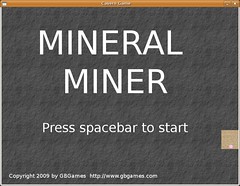
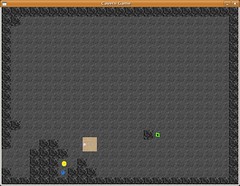
Let’s look back on this project and see what happened. First, let’s go over a summary of the game. Mineral Miner turned out to be a puzzle game in which you drive around a cavern in a tank, getting out to collect minerals. You can only collect one mineral at a time, so you need to drop off collected minerals in your tank to collect more. If you are near a monster lair and not inside the safety of your tank, a monster will come out and chase you. If a monster catches you, you lose. If you collect all the minerals, you can leave the level and win.

What Went Right:

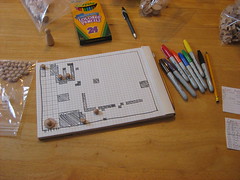
  • Rapid Prototyping on Paper I took a free, online game design course at GameDesignConcepts.wordpress.com, and I was able to put use those skills to great effect. During the competition, I posted about my prototypes. With only 48 hours, it can feel painfully slow, but I iterated through the design, adding a new mechanic, trying it out, and deciding whether to keep or remove it, and then repeating until I had something I thought might be fun. Painfully slow? It took me almost no time at all. In previous LD48s, I’ve been known to add mechanics at the last minute in an attempt to make a game out of the code I was writing. This time, I knew exactly what mechanics I needed, and there were no real surprises here. The finished game ended up playing exactly how I hoped it would. Prototyping!
  • Quick ‘n Dirty Graphics I’m not terribly familiar with art tools, such as The Gimp, and so every LD48 I find myself looking up how to use it to create what ends up being ugly art for my games anyway. I decided that this time, I wouldn’t try to make anything fancy. If I have any images that need text, I will use the basic text tool instead of the script-fu that creates cool looking logos if you tweak parameters just right. The tank? A square with a dot to let you know which way is the front. The driver? A yellow circle. Hey, it worked for Pac-man. I was able to focus more of my time on making the game because I wasn’t frustrating myself with trying to create halfway decent artwork.

    Screenshot-Cavern Game

    CavernGameCollisionDetection

  • I Made Sound Effects This is my fifth Ludum Dare, and only the second time that a game I made had sound effects. Because I had a game that pretty much worked the way I expected it to, I had time for some polish. I made a list of sound effects I thought I would need, used sfxr to create the beeps and boops, and wrote the code to tie it all together. Adding sound really makes a big difference to a game, and I was glad that I could do so for this one.
  • Faster Build Times and Lighter Distributables Because I had been doing some work on my Vampire Game, work that involves using TDD from the first line of code, I also did some work on my build scripts. Going from a 10 minute build time with a distributable that is already 10+MB due to including source libraries to a build that finishes in seconds and is less than 2MB is amazing for productivity, especially as it comes down to the final hour of the competition. Everything happened so much faster, keeping me focused on game development instead of getting distracted as I waited for a build to finish. Now, it isn’t as if my builds always took 10 minutes, but going from checked out source code to a complete build would. Once the libraries were built with my old system, compiling and linking would still take some time, much longer than the time it took with my new build scripts. Plus, one of the complaints I would get from previous competitions is that my game package was so large, so that’s one complaint I did not see this time around. B-)
  • Simple AI Goes a Long Way I remember taking a few minutes to think about how I wanted the monsters to interact with the level. Should they obey the walls and other obstacles, like the player has to? If so, that would take a bit of AI programming. I don’t have much experience with AI, and I didn’t want to take the time to learn it for this LD48, so what did I do? I made the monster head towards the player every step, ignoring the environment. I could explain it away. It’s a monster. Maybe it climbs walls like crazy? The big surprise was how well it looked. Besides making it move towards the player, I also made the monster randomly move horizontally or vertically to do so. Combined with the sound effect when it comes out of its lair, the twitchy looking monster moving really fast at the player actually feels scary.

What Went Wrong:

  • Distractions I have two cats, and both of them have been featured in previous LD48s, so I won’t focus on their antics too much. My home office wasn’t in a usable state, so I was out in the kitchen or living room. The cats love distracting me from productivity, and LD#15 was no exception. The one thing I did my hardest to control was external obligations. Anytime someone wanted to make plans with me for the weekend of LD48, I would politely tell them that I was busy. And it worked! I was able to focus almost entirely on eating, sleeping, and LD48ing…except for the Chicago Fire game.

    Chicago Fire vs D.C. United

    I won tickets to the Fire vs D.C. United game, which happened to be the same weekend. They were really good tickets, too, and so I made an exception. In practical terms, I lost a good chunk of Saturday. I was able to get the game finished, but having an extra hour or two would have been good for tightening up the graphics and audio. On top of knowing that, the Fire lost, so it wasn’t even as fun a game to watch from the 2nd row as it could have been.

  • The Sound Effects Were Very Rough By far the biggest complaint from people playing my game is that the audio hurts. I was able to get audio in within the last hour of the competition, but I didn’t have time to adjust it. I knew that some of the sound effects were loud and obnoxious, especially the one that plays when you bump into walls, but I couldn’t dedicate the time to tweaking it. The deadline was looming, and I still had a few more programming tasks to complete.
  • There’s Only One Level Right before the end, I realized that I did not have a victory condition. I had programmed a way to lose if a monster caught you and also if you tried to leave the level without collecting all of the minerals, but someone will eventually collect all of them. What then? Ideally, I would have added code to load the next level, created that level, and kept going. In fact, Level 2 is in the distributed game, although it is a copy of Level 1 and there is no code that knows about it. I was thinking about taking Level 1 and breaking it up into at least three levels, with each level introducing new puzzles and getting progressively more difficult. Three doesn’t sound much better than one, but it would have made a big difference. The player would have felt that progress was being made, and the later levels could introduce the trickier ways to deal with monster lairs.
  • Level Loading Bug I could not figure it out in time for the deadline, and I still haven’t looked at it since, but every so often, the level loading code would choke on the data, bringing the game to a halt. Sometimes shutting down the game and rerunning it would work. The data came from a text file, and my code is supposed to load a single character at a time, mapping the value to a tile. Sometimes, however, it would choke because a single character variable would have a value that is two characters long. For a time, I was dedicated to fixing it, but with only 48 hours, a good chunk of which I couldn’t make use of, I decided that since it wasn’t a show-stopper, I would keep going. I really wish I could have figured out why that bug was there. Besides ruining the perceived integrity of the game, I know at least one person didn’t review it due to this crash.
  • Making a Puzzle Game I didn’t set out to make a puzzle game. I didn’t want to worry about creating a lot of content. One level might not be such a problem if the level was varied and fresh each time you played. I could have created a procedural level generator, but I never built one before. I didn’t want to spend time learning how to do so, nor did I want to spend the time tweaking the algorithm to make nicer levels even if I did end up accomplishing it. Out of all of the ideas I came up with, the game I liked the most ended up being a puzzle game, which unfortunately meant I was either going to spend a lot of time making clever levels or finish a game with hardly any levels. It ended up being the latter.

What I Learned:

  • Rapid Paper Prototypes Work My game design skills are sorely lacking, but I’ve been able to practice what I learned in the game design concepts course, and it really paid off with Mineral Miner. I’m not claiming that it’s a fantastic game, but it did rank #45 in the Fun category, putting it in the top 50%, and #27 in the Innovation category, which puts it in the top quarter! It feels good to know that the game design I prototyped early on before writing a single line of code came together, and the comments for my entry showed that people saw a lot of potential in my game. Everything I wanted to put into the game, I learned from minutes of drawing on paper and messing around with tokens. I didn’t need to have a game engine coded up to explore, discard, and introduce mechanics, which means I saved a lot of time that would otherwise have been wasted on code that would get thrown away and changed needlessly.
  • Quick ‘n Dirty Graphics and Audio Can’t Be Permanent My art and audio work was minimal and saved me a lot of time, allowing me to work quickly at getting the game play up and running. Unfortunately, my overall rating got hurt here. I was near the bottom in the Graphics category at #104 and surprisingly a little better in the Audio category at #77. I was hoping for time near the end to replace crude art and sounds with better ones, but it didn’t happen. On that note, even if it did happen, it wouldn’t be more than marginally better since I don’t have the practice and skill with my art tools. One suggestion was to use images of my prototype work, and I agree, the drawings look much nicer.
  • My Pacing Still Needs Work I felt much more confident about my entry this time around, but I still found myself finishing the game at the last minute. There’s very little time for polish when the complete game forms only an hour before the deadline! It’s especially a concern since I decided to go with quick and low-quality art in order to get the game running as quickly as possible. I probably could have set mini-deadlines for myself. 48 hours sounds like an incredibly compressed period of time to make a game, and it is, but it’s still enough time to flounder. Early on, I have two whole days to worry about everything. In the last 5 hours, I’m in crunch mode. I could stand to manage my time and prioritize my tasks much better.

If I could do LD#15 over again, I would try to manage my time better. I could have had the prototype work done much earlier on, leaving me with more time to do the actual programming and arting. I might have been able to get more levels and variety in if I didn’t waste 5 or 10 or 20 minutes at a time wondering what to do. Still, even though Mineral Miner wasn’t a winner of Ludum Dare, I felt it was a success. I designed early on paper instead of designing with hard-to-change code, and I was able to focus on making the game I felt had a chance of being fun. People said they enjoyed the game and wished there were more levels. It was a complete game, meaning that aside from the level loading bug I mentioned above, everything that happens in the game happens because I designed it that way. In 48 hours, a complete game that provided some entertainment for others is a good accomplishment.

Categories
Game Design Game Development Games Geek / Technical Linux Game Development Personal Development

LD#15 Results Are In!

It’s 2 weeks later, and Ludum Dare #15 is officially over. The results are in, and I placed 5th…in the Community category. Unfortunately there was no food category this time around, or I could have gotten the gold in that one. B-)

Seriously, congratulations to the makers of the top ten overall entries! The #1 overall game was Beacon by ChevyRay, which was also featured on IndieGames.com’s Freeware Game Pick not too long ago. Congratulations to ChevyRay for making a splash there!

I’ll have a post-mortem of the Mineral Miner soon, but here’s a summary of how I did: badly in graphics and audio, decent in humor and fun, and well in innovation and theme. A number of people REALLY hated the audio, but they seemed to really like the actual game play. When people are unhappy that there is only one level, it means I left them wanting more in a good way. B-)

My entry ranked #63 overall, being 87th out of 144 entries. There were a number of ties for various placements, so the ranking only goes to #107. I’m a little disappointed in how well my entry did, but there was some great competition. I did much better in LD#13, but I still consider this Ludum Dare to be a success for me. I had a finished game by the end of 48 hours, one that got some great feedback from players. I got to practice skills from the game design concepts course I took this summer, and I would say they really helped me put this game together before a single line of code was written.

Once again, congratulations to the winners! There are some fantastic games in the mix!

Categories
Game Development Personal Development

Thousander Club Update: September 7th

For this week’s Thousander Club update:

Game Hours: 576 (previous three years) + 181.75 (current year) = 757.75 / 1000
Game Ideas: 775 (previous three years) + 10 (current year) = 785 / 1000

[tags]game, game design, productivity, personal development, video game development, indie[/tags]