Categories
Geek / Technical Marketing/Business

My Offsite Backup Solutions

To go along with my last post on indie maintenance and disaster plans, I’d like to mention how I currently back up my important data.

Local Backups

I have two active computers. My main development machine is my currently dying laptop. My desktop has a backup of my laptop’s data. Using rsync and SSH, I can transfer files between devices easily, which was really helpful when I needed to replace the desktop in 2010. I simply rsynced files to my laptop, then rsynced them back to the new desktop. As my laptop has been failing recently, I’ve been using any lucidity on its part as an opportunity to rsync files to my desktop in anticipation of the laptop dying at any moment.

I also have a 1TB hard drive connected to the router, which means any computers on my network could make use of it. Unfortunately, it has to be formatted as NTFS and requires the use of Samba, which means it isn’t a perfect solution, and it also means that I use it way less than I should.

So there’s data redundancy within my computer network. If one machine or drive fails, the important data is also available on the other, and I could always find a way to make better use of my 1TB drive so that losing both computers wouldn’t be a catastrophic data loss.

But what happens if I get robbed and lose all of this equipment? Or if a fire breaks out? Or some other disaster that takes out all of the data since it is all in the same office?

Remote Solutions

Since my main project, Stop That Hero!, uses git for version control, I paid for a Micro account on GitHub, which gives me 5 private repositories and the ability to add one collaborator for just $7/month. So if I lose everything, at least I can continue to work on the project once I get a new computer.

What about other data?

While I have a DropBox account, I only have limited space available (although signing up for your own account with that link gives us each 250MB extra). DropBox offers tiered pricing plans and a team/business plan, but I can’t justify the expense at this time. I’ve been using DropBox for private data backups and as a way to quickly provide a link to a file. I know a few Flash game developers have used DropBox to put up their game for FlashGameLicense.com.

An alternative to DropBox is SpiderOak. It offers way more space than DropBox, and if you choose to pay for more space, you get more than double the capacity for the same price. Plus, data encryption works both ways, when sending or receiving. According to the SpiderOak site, they claim to be a “zero knowledge” backup provider:

This means that we do not know anything about the data that you store on SpiderOak — not even your folder or filenames. On the server we only see sequentially numbered containers of encrypted data.

Now, this encryption means that it takes a lot longer to backup files. Since you get so much more space (2GB to start, and we each get a free GB if you use the link above), backing up a few GBs of data can take a good part of your day when you start out. Plus, unlike DropBox, you aren’t tied to the DropBox folder. You can configure whatever folders and files you want to backup, and you can still share files publicly. You can configure SpiderOak to automatically back up changes at a schedule you set, and it will keep track of previous versions of files for you, too.

I’ve been fairly happy with SpiderOak so far. The only issue I ran into was related to how it was backing up my Projects folder while I was working on it. I rebuilt my project, and apparently SpiderOak was in the middle of processing the folder my project lives in, and it choked. It was probably because a file like Game.o was deleted and replaced, and it didn’t know how to handle it mid-processing. I managed to get it unstuck, but it took a support email and a perusal of the support forums to find out how. To prevent problems in the future, explicitly tell it not to backup the folder where your project build lives.

So these are some free solutions with paid options that allow you to sync multiple computers and share with friends. What if you’re looking for something more cost efficient as well as private? I have a friend who pays for a dedicated remote solution. Carbonite is $59/year for one computer, which implies that you can’t use it to sync multiple computers or share files with friends, but it’s another option available to you. Mozy is an alternative, and it’s basic plan is $5.99/month for 50GB with options to pay a little extra to sync multiple computers. There’s also a Mozy Pro set of plans for servers as well as desktops that charge per gigabyte on top of a flat fee.

What does your backup plan look like?

Categories
Game Development Geek / Technical Marketing/Business

Indie Maintenance and Disaster Plans

My Dell Precision M90, which has been running like a champ for more than half a decade despite my cats’ attempts to get their fur clogged in its fans, is finally dying. I’ve been seeing graphical glitches for some time, but I’ve been able to continue working, and the glitches eventually go away. Except when they don’t. And recently, the machine won’t boot correctly.

Well this isn't a good sign. on Twitpic

The culprit seems to be a failing video card, which is way too expensive to replace. It’s frustrating since doing so would probably give this machine another few years of life.

I’ve been very happy with this machine, but it’s been slowly getting worse, and I realized that I had no plans for replacing it. So I’ve been either putting off the research so I can do the work I need to do, or I’ve been desperately trying to get the machine back up and running so I can continue to do that work, all the while knowing that I am going to need to spend some time (and money) on finding a replacement.

A large company probably has plans for this sort of thing, with IT departments bringing in spare equipment or ordering replacements. In fact, some companies have entire disaster preparedness plans in place. Replacing equipment quickly to ensure business continuity is just a part of such plans.

Since I purchased this laptop through Dell Small Business, I was able to get next-day on-site tech support that I only needed to take advantage of once towards the end of the extended warranty last year, and I was also able to replace the A/C adapter quickly after the cats chewed through the old cord a few years ago. Even knowing that the warranty was expiring, I didn’t really think through how I would continue to work without the laptop, which I should have realized was as inevitable as a hard drive dying.

And now that I think about it, perhaps the cats should worry about a replacement plan as well…

As an indie or solo entrepreneur, what do you do it? How prepared are you for equipment failure? Do you only start to worry about it the day your computer fails to boot, or do you anticipate the day your development equipment needs maintenance and replacement? Or do you constantly replace your machines with the latest and greatest and so don’t need to worry about longevity?

Categories
Game Development Marketing/Business Personal Development

Reviewed: 2011; Previewed: Next Year

Welcome to 2012! I hope you enjoy your stay!

How was the last year for you? Mine was a mixed bag.

First, the good:

  • I went to the Game Developers Conference for the first time, meeting and hobnobbing with the best and brightest of the game industry. GDC was a blast!
  • I got engaged on the balcony of Neuschwanstein Castle in Germany while taking a once-in-a-lifetime trip through Europe with her graduate class.
  • On the way back from that trip, I learned I had a new niece. The last time I saw her, she was already starting to walk.
  • In January, I started my term as a new board member of the Association of Software Professionals and ended up becoming the President two months ago.
  • I finished a game for the Ludum Dare #20 Jam in May.
  • I started taking pre-orders for Stop That Hero! at the end of September, and I released the alpha version of the game for sale a few weeks ago.

Now, the bad:

  • I’m probably in worst shape than when I started the year.
  • I missed the IGF deadline.
  • I’m out of money.

While 2010 saw me make the leap into full-time indie game development, 2011 saw me struggle to stay there. My burn rate estimate said I should last through to October using only my savings. Years ago, I bought a few shares of stock, and I had to sell those recently at a loss (Thanks, economy!) to cover my expenses. While I’ve sold a few pre-orders and a couple of alpha versions since its release for Windows and GNU/Linux, Stop That Hero! isn’t finished and won’t likely pay the bills anytime soon. And I still need to find a way to get the Mac port made for the Mac pre-order customers. I feel terrible about not having it made yet. B-(

So in terms of my business, was 2011 a failure? Yes, in the sense that my project was really late and overbudget, ruining any plans and revised plans continually throughout the year. Yes, in the sense that I no longer have my savings to allow me to focus on my business full-time. And yes in the sense that I feel I wasted my opportunity.

But no in the sense that I’m wiser for it all. I got an education without being saddled with student loans, at least.

Now, I learned a lot. Yes, I learned more about the technical details of making games. I gained some valuable, in-the-trenches experience in running a business on a scale I’ve never seen before.

But to be honest, that’s small comfort when I need look into contract work to make ends meet now.

I got a lot of advice throughout the last year. People told me that I was focusing too much on the technology and not enough on the game, that my insistence on making a downloadable game for GNU/Linux was a poor business decision when I should be targeting mobile and web-based platforms, that C++ was a poor language to use, that I should be focused on making quick games to see if one becomes a hit, that, basically, I was doing things wrong. In other words, I was being way too indie for their tastes, that I should be indie their way instead. B-)

It was all good advice, but I ignored most of it. It was my decision. And if I had to do it again, I’m not sure I would have done it differently.

My problems did not come from the technology I used or my target platforms, even though I could have done more to leverage existing libraries and to learn from open source games. My problems were not a matter of not using Flash or Unity, or of insisting on using GNU/Linux as my base development platform. If any of these were problems, they were mere symptoms.

My real problems stemmed from:

  • a lack of experience.
  • a lack of collaboration.
  • being undisciplined in producing results.
  • ignoring cash flow.

That last one sinks more businesses than any other issue. And I KNEW this fact, yet I kept pushing forward to get my game out as soon as I could, figuring that I would stop then to figure out what I was going to do. Every month ending without a released game had me thinking that I just needed a few more days, and a few more days, and the next thing I knew, it was a year later without a released version of the game to show for it.

When my business plan fell apart, I shouldn’t have put off fixing/rewriting it until after the product was finished. It seems obvious as I write this, but I guess my head was buried in my work, and I wanted to have something to show for my efforts. Instead of running a business, I was only focused on trying to make a game. There’s a lot more to running a game development business than game development.

Sadly, the one piece of advice I took to heart was probably the worst. I stopped writing so I could focus more of my time on game development. My writing is one of my biggest strengths and providers of value, and the less I wrote, the less chance I had of gaining an audience, getting feedback, and interacting with other game developers in general. I used to be the orange juice-drinking indie game blogging guy. Now I’m just another obscure struggling indie.

To the future!

So what’s 2012 going to look like?

Honestly, I’m not sure yet. I’m still figuring out my game plan, but here are some major themes.

I’ll be married in a few months. Woo!

Of course, it means it is even more important for me to figure out how to pay the bills. My expenses are already very low, so it is a matter of getting more income, and right now I don’t see how my business is going to provide it. I’m going to be looking for contract work, but I am keeping an eye out for creative funding opportunities.

As a result, I’ll once again have less time than I like for my business, which means I’ll need to make sure that I spend that time wisely. I intend to focus on creating results more rapidly than I have. Perhaps it means collaborating with other developers or using other technologies, but it will mean holding myself to deadlines and focusing on providing value consistently.

And you can bet that I’ll be writing about my progress.

I hope 2012 is prosperous and full of opportunity for you. I’m figuring out my plan to try to make the most of mine. Happy new year!

Categories
Game Development Games Marketing/Business Personal Development

Getting Used to Accepting Payments

According to my git repository, yesterday was the one-year anniversary of the start of my first major commerical game project, Stop That Hero!.

I’m not celebrating because it’s not a good milestone to hit. I didn’t know how long it would be to take the Ludum Dare #18 prototype and make it into a full commercial-quality game, but I did not expect it to take a year. In fact, when the 2010 Ludum Dare October Challenge was announced, I thought a month sounded like a good time period. If it took three days to prototype the game, surely four weeks would be plenty of time to polish it up and release it.

Tomorrow is October 1st and the 2011 Ludum Dare October Challenge (even though an announcement went out saying that it started already), and I was hoping to have the game released before then. In fact, I thought I would have something released by today, but there were some AI issues I tackled last week that I’m still working on.

But eventually I am going to release my game, and I realized that I have never accepted payments for a video game before. Until last month, I wasn’t even registered with a payment processor.

So last night, I posted a few pre-order forms on the Stop That Hero! website. If you want to get the game when it is released for Windows, Linux, or Mac, you can reserve your copy of the game now.

In posting the pre-order, I realized I made a big step. I had some nervousness, partly because I’m selling a game that isn’t released yet, and partly because I’m asking for payment. I’ve never done it before.

It’s possible that no one will care, that no one will even click on the links to buy, but that’s not the point. The point was that I decided to ask people to do so in the first place.

You can’t make money without asking for it, and I decided that until the game is released, the worst-case is that no one bothers to pay me for it. But if I don’t ask for pre-orders, then there is a 100% chance that I won’t get paid anyway.

I’ve taken a step to change that certainty into a possibility, and it’s one of those moments that makes you feel good to run your own business. I don’t have to accept circumstances. I can take action to change them.

In this case, my game is taking longer than expected to make, and I could decide that it means delaying the possibility of sales until the game is released, but I could also try something to see how it goes. The worst case is that it has no effect, that no one will reserve their copy of the game, but there’s a potential now for a lot of upside.

And now I’ll get back to work. Eventually any pre-orders have to get fulfilled with a real game, and I’d like that to be before the end of another month.

Categories
Game Design Game Development Marketing/Business

Should Indies Make Bigger Games?

I’ve been participating in the Indie Indie Conversation on YouTube with other full-time indie game developers. We upload 3 minute videos at a time (although some are a bit longer) and have a discussion about all sorts of topics related to being an indie, such as technical struggles, the need to explicitly make time for social interaction, and meaningful game play.

Recently, there has been some talk about financial concerns. Andy Moore of Steambirds fame has talked about his recent return to full-time indie status, but his lack of contract work was not his choice, and the lack of a safety net is made worse by the lack of a current project. Mike Hommel chimed in saying that his last project was a flop and lost him money, and he’s going to have to make some games for Flash Game Licensing to make a bit of cash. In the end, he got a new business deal, so good for him, but the turn this conversation took bothered me.

So I made this video:

Now, keep in mind, I write way better than I speak. To clarify, I don’t want to say that Flash games are necessarily dinky little things that get churned out with no soul. My impression of the attitudes of some indies, however, is that spending time on a game to make it great rather than merely good is spending too much time on a single project.

How much value can you really provide your customers if you spent only a few weeks on your game? Chris Hecker’s 2010 GDC rant Please Finish Your Game talks about the idea that a lot of games are prematurely “finished” by indies. That is, they are put out there, and there’s no follow-up or follow-through.

Yes, it is important to get feedback as your game iteratively develops, and releasing early and often is great for getting that feedback and helping you see what direction to take. But it’s not as if indies are putting together epic games and dropping development as soon as they see that there is no audience, or at least that’s not my impression. They just aren’t trying to make bigger games, and apparently they think they’re being rewarded enough for the smaller games.

So are big games inappropriate for developers who aren’t Mojang? Is it too financially risky to make something deeper for players to enjoy, or is it the exact right way that we should be making games? Did you quit your day job to be mediocre, or do you want to meet your potential, even if it is a bit riskier?

Categories
Game Design Game Development Marketing/Business Personal Development

The Importance of Speed

At GDC, I heard a lot of conflicting advice.

Dan Cook suggested a broad portfolio to reduce risk, for instance, while other developers talked about focusing your energies on a single project or genre.

Whatever any one indie said, the one thing everyone seemed to agree upon was the importance of speed.

Dan Cook has written about the importance of quick iterations to “find the fun” as quick as possible.

Andy Schatz talked about the development of Monaco when he was almost about to throw in the towel on being an indie, and he advocated working on something exciting every day.

Use two hour game jams to explore game mechanics or designs.

Play-test early and often.

Create an MMO every day.

With Stop That Hero!, I already knew that things were going much more slowly than I would have liked, but the importance of speed really hit home during the Ludum Dare Jam at the Noisebridge hacker space on the last day of GDC.

My goal: create one simple, quick game every hour during the jam. I knew it was ambitious, but I wanted to try out this focus on speed.

In the end, I spent hours just trying to cobble together some decent code to use as a base for my first project, and I didn’t manage to finish it.

That’s not agile. That’s not speed. And that’s not good.

I struggle with my major project partly because I don’t have a base of code to leverage. Every time I need technology to support game play, I have to figure out how to implement it and fit it into my existing code. I never spent any time working with something like Game Maker or a game engine such as Quake or Torque, and since I do my development on GNU/Linux and want to be able to port to multiple platforms, there aren’t really any 2D engines available for me to work with. If I need some tech, I more often than not have to figure out the best way to architect it myself. My current pathfinding and navigation code is difficult to work with, for example, and I’m sure there is a better way.

Stop That Hero! might just be too much for me right now, and I might be better served by stepping back to work on smaller projects that don’t require AI, UI, or any other technology I don’t currently have. Also, I could probably do well to dedicate time to studying existing source code.

While part of me wants to muscle through and not leave my first major project unfinished, another part of me thinks I would do better building up my tech by creating smaller games around individual pieces. For instance, if I created an entire game around clicking buttons, I would have created my UI code AND have a finished game to show for it. On the other hand, I’d probably run into a lot of the same issues trying to finish a smaller game anyway, so why not continue working on the same project?

I really want to see Stop That Hero! get finished, but the ship date keeps getting pushed back, and the problem isn’t necessarily a matter of features that can be cut. The basic game requires a lot of moving parts which still aren’t created, so it’s not as if I have scope to reduce.

If I want to work and ship faster, I need to change something about what I’m doing. Either I need a improved technology base, which I obviously haven’t been able to create quickly, or I need to temporarily switch to a smaller, simpler set of projects.

How would you approach this problem? Would you try to use smaller projects as stepping stones to the larger project, or would you continue to work on the larger project, figuring that you would end up hitting the same obstacles and solving the same problems anyway?

This post was scheduled to be published at a time when I will not be able to access the computer. I’ll respond to comments when I return at the end of the month.

Categories
Marketing/Business Personal Development

Happy Anniversary, GBGames!

It’s been five years since I first formed an LLC. Last year’s anniversary post mentioned that I was not happy with the previous four years of part-time progress and hinted at what I planned to do about it.

A few months later, I was a full-time indie game developer.

And I wish I had something exciting to post on this five year anniversary of GBGames, LLC, but being full-time and focusing so much more of my time and energy towards my business has taught me a lot, including how much I don’t know about making games.

But since going full-time, I’ve attended my first Game Developers Conference, broke ground on my first major project, and learned first-hand about the trials and tribulations of running my business.

When I was running GBGames part-time, I had “corporate welfare” keeping me going if I wasn’t able to produce much. Now, if I don’t produce, I have a dwindling savings account to look at. In other words, there’s a bit more urgency when I work.

As stressful as it might be, this last year has been my best one yet. I’m doing what I want, dedicating as much time as I want to it, and having a more fulfilling and fun life. And frankly, having a window in my office beats a cool screensaver in a cube any day. B-)

In the coming year, I will be releasing my first major commercial games, and I’ll finally get to apply all of those sales and marketing tips I’ve been learning.

Here’s to five more years!

This post was scheduled to be published at a time when I will not be able to access the computer. I’ll respond to comments when I return at the end of the month.

Categories
Game Design Game Development Games Geek / Technical Marketing/Business Personal Development

The After GDC Glow

Last week I attended my first Game Developers Conference, and I guess the best way to start the recap is to say that I had a blast!

The Independent Games Summit was full of different groups of indies. Some knew each other from TIGSource. Others have been around forever. And since we’re all indies, we each had our own unique story and reason for being there. Even so, it felt as if everyone knew each other and were fairly supportive. It was like a very odd yet loving family.

I only had a Summit & Tutorials pass since it seemed to be in the sweet spot between the too-expensive All Access Pass and the “let’s hang out with people who want to find a job at the Career Pavilion” Expo pass. While I couldn’t attend a lot of the cool talks and panels in the later half of the week, I was still able to attend any of the summits.

At one point, I skipped out on the IGS summit for an AI summit talk on pathfinding. James Anhalt of Blizzard talked about the pathfinding problems of StarCraft 2, Alexander Kring of Nihilistic focused on Heroes on the Move, and Nathan Sturtevant from the University of Denver worked on Dragon’s Age: Origins. They each gave a glimpse into the tech behind the games, and the Q&A session at the end made me laugh because it was almost all complaints about StarCraft.

If I would have attended the Google Android Day tutorials, I apparently could have received a free Google device. I didn’t, but I got to see the long line for the tutorials that morning. It’s kind of the same, right?

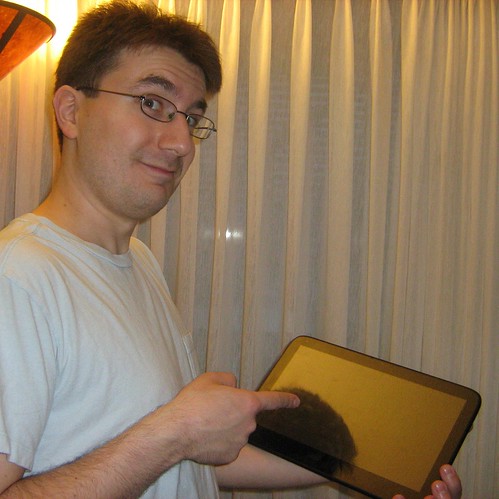
On the other hand, I did sign up for an Intel AppUp event with Mike “PoV” Kasprzak and Phil “philhassey” Hassey and received this baby:

My New Intel-provided, Meebo-based Tablet

It’s a Meebo-based EXOPC Slate! I finally got a cool consumer electronics device!

The best part of GDC was meeting everyone I’ve only ever spoken to on IRC or on web forums. Whether I was having lunch, standing in line, or walking to a session, there was always someone’s name to call out to and say “Hey! I recognize you from your online avatar!”

I briefly met Leigh Alexander, Drew Sikora, Ian Schreiber, Noah Falstein, and Derek Yu. I met game developers I’ve talked to on the Indie Gamer forums and in the #ludumdare IRC channel. I met game developers I’ve only heard about in passing.

The IGDA booth with Corvus Elrod and company!

And I got to hug Corvus Elrod of Zakelro! Don’t forget to vote for the 2011 IGDA board!

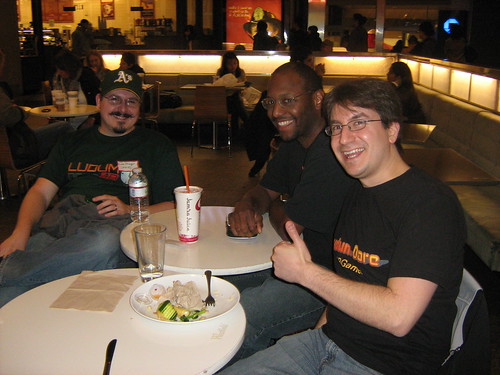
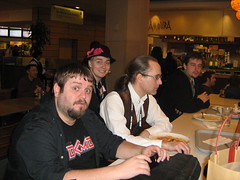
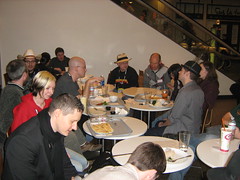
The Ludum Dare meetup was fun and had a good turnout:

Ludum Dare meetup

Ludum Dare meetupLudum Dare meetupLudum Dare meetup

There were so many of us, we needed multiple tables!

And here’s a link to a bunch of us wearing LD48 shirts.

And one action shot of PoV eating:

PoV eats!

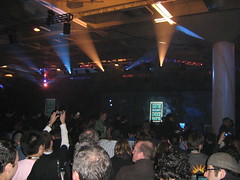
I was finally able to attend the Independent Games Festival and the Game Developers Choice Awards.

The IGF/GDCA at GDC

Congratulations to Mojang for winning five awards between the two events, including the Seamus McNally Grand Prize in the IGF!

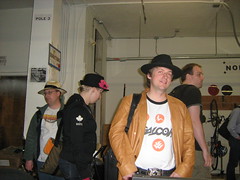
At the end of the week, we had the Ludum Dare Jam at Noisebridge, a really cool hacker space.

Ludum Dare Jam at NoisebridgeLudum Dare Jam at Noisebridge

And an action video of Phil Hassey sleeping:

I had to leave the jam early and get on a plane the next morning, but I definitely want to do GDC next year! Heck, two days into it, I half wanted GDC to be over so I could get back home and make games sooner!

In the meantime, what was your favorite part of GDC?

This post was scheduled to be published at a time when I will not be able to access the computer. I’ll respond to comments when I return at the end of the month.

Categories
Game Development Games Geek / Technical Marketing/Business Personal Development

Off to My First GDC!

Wooooooooooooooooo!

WOOOOOOOOOOOOOOOOO!

After years of being one of those people who was a bit jealous of everyone who was going to the Game Developers Conference, I realized that I’m now one of those people to be jealous of. Today I will be setting foot in San Francisco, and tomorrow I will pick up my badge for the GDC!

And then I’ll be wide-eyed and star-struck and generally feel like the humble newbie I am. B-)

I’ll be attending the Indie Games Festival for the first time, meeting Ludum Dare regulars at the Ludum Dare meetup for the first time, and otherwise taking in the sights and sounds of GDC…for the first time!

I’ll be there through Saturday, so feel free to contact me through Twitter: @GBGames

WOOOOOOOOOOOOOOOOOOOOOOOOOOOOOOOOOO! GDC!

Categories
Game Development Games Geek / Technical Marketing/Business Personal Development

I’m Going to the GDC (FINALLY)!

I finally purchased a Game Developers Conference pass for the first time!

After years of having to hear about the conference and the summits and the talks and the panels and the awards and the parties after the fact, I am actually going to be a participant!

Now I’ll get to attend the Indie Games Festival!
Now I’ll be able to meet game developers and journalists in-person instead of merely through IRC, Twitter, or blogs!
Now I get to be snubbed by major game developers when they hear I’m an independent game developer!

There were always excuses not to go in the past, such as not being able to request enough time off from a day job or not having the money. And the cost for registering for the pass, booking a plane, and staying at a hotel for a week was a big obstacle.

And cost was still a major stumbling block for me. Until I can make some income on a regular basis, I’m trying to be very careful with how I spend my money.

So how did I justify the massive expense this time?

For one thing, I have a friend currently residing in San Francisco who said I can crash at his place. No need for a hotel now!

Now, the GDC pass was tricky. I could have saved a lot of money by getting an Expo pass, but I wouldn’t be able to participate the entire week. Getting an All Access pass was prohibitively expensive. I opted for the Summits & Tutorials Pass since it seemed to offer the right balance of access and cost. While I won’t be able to attend a number of events, I will be able to go to tutorials and the Independent Games Summit.

Still, it wasn’t chump change, and I still had to book a flight.

My decision to pay so much at this time was based on a few thoughts:

  • I can technically afford to go, and I might be too poor to go next year if my income level doesn’t change from $0.
  • I can finally meet people who are involved in the industry, whether peers or mentors. My involvement has almost always been virtual. At least in Chicago there was the IGDA chapter, but the local game developers tended to be inactive, and they seem to drop like flies.
  • I hear it is an experience.

So, bottom line, I’m going because it is a huge opportunity for me to be more involved in my industry and get to meet other participants.

I’m really excited. I’m actually going to be at GDC, and I’d love to meet you!

Who else is going to GDC?