Categories
Games

A Guide to Toytles: Leaf Raking – Weather

This post is part of a series about Toytles: Leaf Raking, a game that lets you explore basic business concepts, challenges your strategic thinking, and teaches the importance of responsibility and keeping your promises. Get it for both iOS and Android.

The weather is one of the most impactful elements of the game, and it is the subject of the next part of my deep dive.

Weather

If you want to know more about how the rain and the wind affect leaf fall and your ability to rake those leaves back up, click the link above. You’ll gain some key knowledge that will help you make better decisions as you run your leaf-raking business.

Tomorrow, we’ll look at your energy.

Toytles: Leaf Raking Player's Guide

Get the 24-page, full color PDF of the Toytles: Leaf Raking Player’s Guide for free by signing up for the GBGames Curiosities newsletter!

Categories
Games

A Guide to Toytles: Leaf Raking – Yard Bags

This post is part of a series about Toytles: Leaf Raking, a game that lets you explore basic business concepts, challenges your strategic thinking, and teaches the importance of responsibility and keeping your promises. Get it for both iOS and Android.

You can rake leaves, but you have to put the leaves somewhere! That’s where yard bags come in, the subject of the next part of the deep dive into the game.

Yard Bags

You will use yard bags throughout your leaf-raking business, so click the link above to learn more about them.

Next time, let’s look at how weather can have an impact on your plans.

Toytles: Leaf Raking Player's Guide

Get the 24-page, full color PDF of the Toytles: Leaf Raking Player’s Guide for free by signing up for the GBGames Curiosities newsletter!

Categories
Games

A Guide to Toytles: Leaf Raking – Rakes

This post is part of a series about Toytles: Leaf Raking, a game that lets you explore basic business concepts, challenges your strategic thinking, and teaches the importance of responsibility and keeping your promises. Get it for both iOS and Android.

For a leaf-raking entrepreneur, knowing your rakes is incredibly important, and that’s why they get a fairly detailed treatment in the next part of my deep dive into the game.

Work Pace

As of this writing, there are three types of rakes, and they each have their own attributes. Knowing them that might compel you choose one over another when dealing with the tactics of raking a client’s yard.

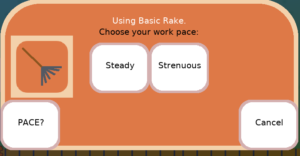
There’s also the choice of which pace you wish to rake leaves at, which has an impact on the time you use as well as your energy. Click the link above to learn more about it.

Next time, we’ll look at the humble yet important Yard Bag.

Toytles: Leaf Raking Player's Guide

Get the 24-page, full color PDF of the Toytles: Leaf Raking Player’s Guide for free by signing up for the GBGames Curiosities newsletter!

Categories
Games

A Guide to Toytles: Leaf Raking – Yards

This post is part of a series about Toytles: Leaf Raking, a game that lets you explore basic business concepts, challenges your strategic thinking, and teaches the importance of responsibility and keeping your promises. Get it for both iOS and Android.

Each of your neighbors has one of three types of yards, the topic of the next part of my deep dive.

A Large Yard

Learn about how they are different and what impact a client’s yard has on your attempts to earn enough money to buy yourself the Ultimate Item(tm).

Next time, we’ll look at a leaf-raking entrepreneur’s best friends: the rakes!

Toytles: Leaf Raking Player's Guide

Get the 24-page, full color PDF of the Toytles: Leaf Raking Player’s Guide for free by signing up for the GBGames Curiosities newsletter!

Categories
Games

A Guide to Toytles: Leaf Raking – Clients & Neighbors

This post is part of a series about Toytles: Leaf Raking, a game that lets you explore basic business concepts, challenges your strategic thinking, and teaches the importance of responsibility and keeping your promises. Get it for both iOS and Android.

The town at the center of the game is populated with your neighbors and clients, the subject of the next part of the deep dive.

Clients And Neighbors

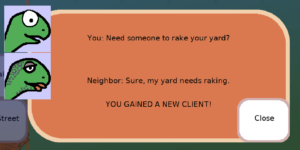
Click the link above to learn how to turn your neighbors into clients and what happens if you don’t keep their yards clean.

And tomorrow, we’ll focus on the yards themselves.

Toytles: Leaf Raking Player's Guide

Get the 24-page, full color PDF of the Toytles: Leaf Raking Player’s Guide for free by signing up for the GBGames Curiosities newsletter!

Categories
Games

A Guide to Toytles: Leaf Raking – Income

This post is part of a series about Toytles: Leaf Raking, a game that lets you explore basic business concepts, challenges your strategic thinking, and teaches the importance of responsibility and keeping your promises. Get it for both iOS and Android.

Income

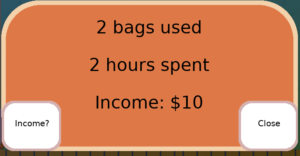
The next part of my deep dive into the game is up, and the focus is on income. It goes into how you earn it, as well as work you need to do that doesn’t earn you income yet can lose you the game if you do not do it.

Next time, we’ll focus on neighbors and clients.

Toytles: Leaf Raking Player's Guide

Get the 24-page, full color PDF of the Toytles: Leaf Raking Player’s Guide for free by signing up for the GBGames Curiosities newsletter!

Categories
Games

A Guide to Toytles: Leaf Raking – How It Works

This post is part of a series about Toytles: Leaf Raking, a game that lets you explore basic business concepts, challenges your strategic thinking, and teaches the importance of responsibility and keeping your promises. Get it for both iOS and Android.

Toytles: Leaf Raking

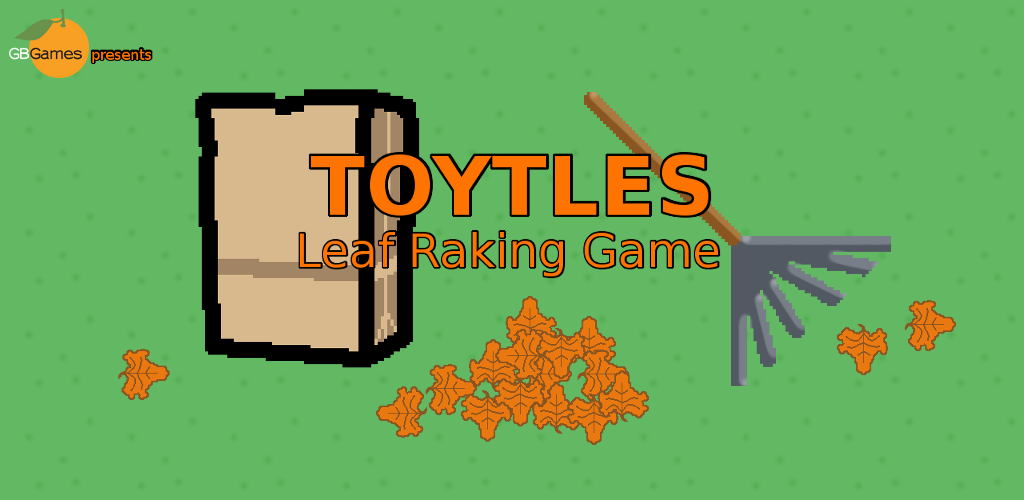
Toytles: Leaf Raking is a leaf-raking business simulation. You play the role of a young reptile who has 90 days before the first snowfall of winter to earn enough money to purchase the amazingly cool and very expensive Ultimate Item(tm).

Check the main page linked above to see screenshots and a quick description of the game, but over the next couple of weeks I will be adding a collection of tips and tricks.

The first page is titled How It Works, and it is a more detailed overview of what you can expect to do in the game.

Future pages will dive deep into the various aspects of the game. Armed with the knowledge from this guide, you should feel more capable at tackling your own leaf-raking business.

Toytles: Leaf Raking Player's Guide

Get the 24-page, full color PDF of the Toytles: Leaf Raking Player’s Guide for free by signing up for the GBGames Curiosities newsletter!

Categories
Game Development Games Marketing/Business

Announcing: Toytles: Leaf Raking, Now Available on iOS

I’ve finally gotten around to porting Toytles: Leaf Raking, my family-friendly leaf-raking business simulation, to iOS so now you can get it for your iPhones and iPads.

Download Toytles: Leaf Raking on the App Store!

Download on the App Store

Toytles: Leaf Raking

I originally created the game in 2016, and I’ve updated it a few times since then. My original announcement for the Android release of Toytles: Leaf Raking on Google Play was met with some enthusiasm (thanks, Mom), and I have been slowly making improvements and plans for newer features since its release.

I was quite proud of the game, and I had plans to update it sooner, but I had a few changes in my life occur. One request I received was to get the game out for iOS, and and I am happy to say that after only a few short years, it is now available.

I hope you enjoy it!

Toytles: Leaf Raking Player's Guide

Get the 24-page, full color PDF of the Toytles: Leaf Raking Player’s Guide for free by signing up for the GBGames Curiosities newsletter!

Categories
Marketing/Business

Books I Have Read: A Social Strategy

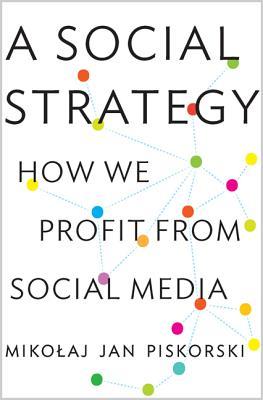
Mikolaj Jan Piskorski’s “A Social Strategy: How We Profit from Social Media” was published in 2014, which is quite a few lifetimes ago in the tech world, but I checked it out anyway.

A Social Strategy

It’s an academic text, looking at the success and failure of different social media platforms and a few companies attempting to take advantage of them through the lens of sociology.

It can get quite wonky at times, but I like wonky.

It also attempts to give advice to anyone looking to establish a new social network or use existing social networks to either save or make money.

In economics, there is a concept called “market failure” in which economic transactions do not happen or happen inefficiently due to some reason or another.

Piskorski notes that there are also categories of “social failure,” social
interactions that people seek and would better their situations if they happened but cannot accomplish in the off-line world. Social failures are about the interactions that do not occur, which is an interesting way to look at things.

For example, single people might find it difficult to meet others, and so dating platforms such as Ok Cupid and eHarmony provide social solutions. He analyzed how each differed in their approaches and how one succeeded due to providing a superior, more effective solution.

Besides “meet” failures, there are also “friend” failures, in which a person might find it difficult to share information or social support in an existing relationship. There’s a chapter in which Zynga is a case study that focuses on this context.

And much like how in economics there can be transaction costs as the underlying reason for a market failure, there are economic and social costs that prevent or inhibit otherwise good social interactions from happening. He categorizes them as breadth, display, search, and communication.

It’s a fascinating analysis, which is especially relevant if you are trying to create a new social app or platform. Piskorski juxtaposed Facebook and the Japanese social media platform mixi, as well as LinkedIn and Friendster, explaining how each tackled their solutions to the above social failures differently and how those different approaches created different results.

He argues that a social solution needs to address both the economic AND the social causes of interaction costs. Otherwise, it will be ineffective. In fact, he argues that social solutions that provide breadth, display, search, and communication functionalities will do better than others that only provide a few.

But, he also says that there are often trade-offs that need to be made. Some solutions increase the costs of certain functionalities. Facebook will never replace LinkedIn because Facebook would need to offer a way for people to meet strangers. In fact, Facebook once did offer a way to search and find strangers, but it had the side-effect that individuals in relationships used this functionality to cheat on their partners, which reduced the effectiveness of the “friend” solution that Facebook is offering. So Facebook removed the functionality, leaving LinkedIn as the dominant platform to meet people on.

Well, what if you aren’t setting up your own social network but want to take advantage of existing networks for your own business?

Piskorski also talks about the concept of the “social strategy.” In general, organizations use either low cost or high willingness-to-pay strategies. If you can lower the former without lowering the latter, or if you can increase the latter without increasing the former, you have a competitive advantage. Piskorski goes one step further to say that a social strategy involves leveraging people willing to take on business tasks for free in order to indirectly lower costs or increase willingness-to-pay.

A social strategy is different from a digital strategy, which is basically taking the familiar activity of broadcasting content at an audience and applying it online. A social strategy involves identifying and implementing a solution that solves unmet economic and social needs. In short, if you can introduce people to each other AND get them to do things for you for free, you are leveraging social media for your organization’s benefit.

The generalized framework used:

1) A viable social strategy seeks to increase a company’s profitability
2) by improving interactions between people
3) if they undertake a set of corporate functions for free

Piskorski discusses ways an organization can develop a strategy that fits the framework, as well as identifying what problems can occur if the strategy does not focus on how the proposed solution can both provide business value and social utility.

I am not sure exactly how different the social networking world looks in 20202 compared to 2014, and I would love to see if Piskorski has a new, updated analysis.

But “A Social Strategy” provided a set of principles and a framework that I think I can use to figure out how to more effectively market my games. Instead of randomly tweeting and posting on Facebook and wondering why I’m not getting the results I want, I can be a bit more analytical and thoughtful. I can be more purposeful and deliberate. And I can recognize when a strategy isn’t working that doesn’t involve merely noticing a lack of sales.

Categories
Games

Games I Have Played: Kohan: Immortal Sovereigns

In November 2019, I was listening to podcasts in my car, and I was catching up on Three Moves Ahead, a fantastic podcast about strategy games. There was a 2012 episode in which the Kohan series was discussed, and it intrigued me.

Kohan: Immortal Sovereigns

I knew Kohan: Immortal Sovereigns was an older real-time strategy game, released in 2001 and ported to Linux-based systems by Loki, but I had a hard time finding a way to buy it to play on my Ubuntu system in 2019. It was only available on Steam if I didn’t want to try to get an old copy on eBay or something like that.

I don’t normally play Steam games when non-DRM versions of games exist, but as I really wanted to experience Kohan: Immortal Sovereigns myself, I will say that Valve’s Proton, a fork of WINE, made the game work seamlessly on my system. I mean, periodically it will crash inexplicably, losing progress on a mission I finished, but when it doesn’t crash, it runs seamlessly.

Well, mostly. Apparently any screenshots I took are missing, and I managed to get to a mission that I can’t start because the game crashes when I try, but by then I think I got a good sense of the flavor that the single-player campaign provides.

Kohan: Immortal Sovereigns did some interesting things differently from other RTSes of its time. I am not going to pretend to be an expert on strategy games of that era, though. Around that time I had just discovered PC gaming as a colleague introduced me to Total Annihilation, and I eventually found myself playing Starcraft with coworkers at the help desk I worked at. I eventually played one of my favorite games Original War, and I fell in love with Homeworld: Cataclysm. All this is to say that my experience with strategy games in general is fairly limited, and so I am trying to play catch up by playing older games.

In this case, I wanted to see for myself what the Three Moves Ahead panel described as an “evolutionary dead end” for strategy game innovations which somehow also has influence on future games such as Company of Heroes.

First Impressions

  • The voice acting is kind of awful.
  • The enemy AI is not only putting up a fight but kicking my butt.
  • Oh, I don’t create individual units, I create companies? Interesting.
  • The economy is a bit confusing.
  • The dragon looks awesome!
  • Oh, geez, run away from the dragon!
  • Oh, geez, the dragon is giving chase quite beyond where I expected it to run!
  • HOLY COW THE DRAGON’S FIRE-BREATHING ATTACK HAS A HUUUUUGE RANGE!
  • Ok, wait, so I just tech up to grenadiers and mow down my enemies?
  • Why are my unstoppable grenadiers getting decimated so easily by the enemy all of a sudden?

I had a really cool screenshot involving a dragon just incinerating entire companies, but I can’t find it now. You’ll have to take my word for it.

So what makes Kohan special?

Let’s start with companies. You don’t create individual units like you would in Starcraft or Total Annihilation. You create an entire company of units at once by assigning a set of units to the front line and two support units. Each company has a captain, who can be some generic anonymous person or a Kohan, one of the immortal sovereigns who have amnesia in the campaign’s story but still insist on leading people to war.

What might not be obvious is that an individual unit is more like a symbol of recruited soldiers. If you lose units to battle but at least one member of the company survives, you can resupply and eventually get back your full company. The only exception is that the death of a Kohan in battle turns them into a medallion you can activate for 50 gold back in town. What this means is that if the company somehow survived while the Kohan died, it now has a generic captain in charge, and you can resurrect your Kohan to lead a different company.

Which brings us to the concept of Zones. Each zone could have its visibility on the map toggled on or off.

Companies have a Zone of Control, which I always left visible because when ZoCs overlap with enemies, a battle ensues. You don’t micromanage the battle, as the units fight on their own. It’s actually very enjoyable to watch since the 2D artwork and animation is gorgeous. The only things you can do to influence a company in battle are flee to a specified location or flee in whatever direction your company captain randomly decides to go. There were multiple formations you can put your company in, and each influences the ZoC. The terrain also did so, although I never understood why desert terrain would shrink instead of expand your ZoC.

Your settlements aren’t just places where you can invest in upgrades or create your companies. If your company has hurt or killed units, being within the Zone of Supply will heal them.

There is also the Zone of Population, but that mainly shows where you already have influence and where you can’t build settlements. I almost never paid attention to it since I never built settlements.

Extending your Zone of Supply is actually a key strategic point of the game, one that the AI knows how to handle well. If you start to send your armies against your enemies but don’t build settlements and outposts along the way, your companies will have a long retreat each time they need to heal up. Instead, I’ve found success in some tough missions involved leapfrogging ahead with soldiers to fight off enemies while my engineers built an outpost, which extends the range of my domain’s Zone of Supply. As a bonus, those outposts field their own guards, which means I don’t necessarily need to worry about using one of my precious companies to play defense. Then my advancing armies can retreat a bit to heal up and ready for the next wave of attack.

If you leave a company idle, it eventually fortifies its position, which increases its defensive bonus. It can often tilt the tide of battle, especially if the enemy is making its way towards your capital city and you need time to create a new company to fend them off.

Other bonuses come from attacking or defending from certain terrain, so an entrenched company in the forest will have a much easier time defending against an attack than a moving company marching through the open plains.

When a company’s Zone of Control overlaps with an enemy building, a siege occurs. The building’s guards appear automatically, and the battle ensues. When a building is under siege, it can’t upgrade or build companies, and the Zone of Supply for that building is disabled for the length of the battle, which is another reason to have outposts nearby.

The economy is interesting. I understand when I’m short on wood or iron that it prevents me from creating a company, but at some point even though the number is negative I apparently produce enough gold to pay for it anyway? I think it makes sense, and fans seem to love it, but it was hard to know what caused deficits in certain resources (was it the fact that I have too may outposts or companies which require maintenance/upkeep costs?). I never felt like I knew exactly what to do to make the economy go a certain direction. I basically invested in making enough gold that it covered everything and hope I did it right.

The individual units and makeup of companies has some intricacy I didn’t see initially. I found cavalry to be frustratingly weak, but they did allow me to explore the map much more quickly. I thought that grenadiers were both very strong and very armored, and creating a company of them was an “I Win” button. Eventually I learned that there is a bit more of an elaborate rock-paper-scissors mechanic, and I found battles were more likely to be won if I had a combination of archers, pikemen, and others fighting together. Unfortunately, much like the economy’s complexity, I didn’t feel like I understood exactly what did well against what.

Diplomacy between factions you meet on any given map looks like it should be more intricate, but other than one map in which I tried to bribe someone into liking me, I didn’t see it used as anything but a status indicator. Yep, that enemy is at war with me. That ally is not. Maybe there was more planned for this feature?

I haven’t played multiplayer, but I imagine it is potentially a different game?

Summary

The battles are enjoyable to watch, especially when magicians attack each other with explosive fireballs and demons expire by going back to wherever they came from. Since you don’t control individual units and the companies fight on their own, you are free to work at a higher level of strategy. I found the focus on Zones and their interactions made the game both manageable and enjoyably complex. I really, really liked the dragons, even though they were an optional part of any map they were on and didn’t play much of a role other than as a provider of a danger zone and a potential reward if you decide to take them on. I wish I understood the economy and the unit interactions better, and unfortunately it is difficult to find any guides or tips online that might shed some light on these key things.

Overall, I really enjoyed my time with Kohan: Immortal Sovereigns, and I wish it was more stable to play so I could finish the campaign. I also want to play games such as Company of Heroes to see where some of these interesting ideas went, but I think I’ll play the rest of the games in the Kohan Warchest first.