Categories
Game Design Game Development Geek / Technical Linux Game Development Personal Development

LD33: Yeaaaaaaaah! I’m in! #LDJam

I’m in.

Here’s my pre-compo checklist for Ludum Dare, the 48-hour game development competition that starts tonight and ends on Sunday.

I’ll be using C++, libSDL2, CMake/make, the awesome sfxr by DrPetter for audio, my own basic code base, my prototype toolkit, and a secret ingredient: love.

Last time, I did a terrible job of pacing. I focused on creating bad art instead of designing a game, even after I said I would do the opposite.

So this time around, I’ll be focusing on mechanics. For real. I’ll prototype and focus on getting something playable as quickly as possible, and I will iterate on the design so I can feel confident that I will have something to submit by the deadline.

If I need art, I’ll force myself to use circles and rectangles, or I’ll make a quick doodle, take a picture, and turn it into a sprite without worrying about cleanup.

I’m looking forward to making a game with you.

Well, not with you. I’ll be working by myself. But at the same time as you make yours.

As usual, I’ll be cross-posting between here and the Ludum Dare blog.

Good luck, everyone!

Categories
Game Development Geek / Technical

My History of Game Jams, Part III #LDJam

I’ve been writing about my lessons learned from past game jams. In a few short years, I’ve gotten better at finishing more ambitious games, and yet I still had a lot to learn.

If you didn’t read them, see my history of game jams part 1 and part 2.

Mini LDs
Between the major Ludum Dare compos, there are monthly Mini LDs. Usually someone hosts it and has the option of specifying special rules.

Apparently I didn’t blog about the mini compos I participated in. My favorite is from MiniLD #6 in 2009, which had the theme Monochrome and the special rules that you could only use a limited palette of colors. The idea was to combine all entrees into a single game. The other special rule was that each entrant also got a theme. I got Guardian.

I’m not sure how the final result turned out for all the games, but my game was Guardian Fish. I didn’t even plan on participating that weekend, and yet I put together something that people have told me would make a great game for the growing iOS market if I fleshed it out.
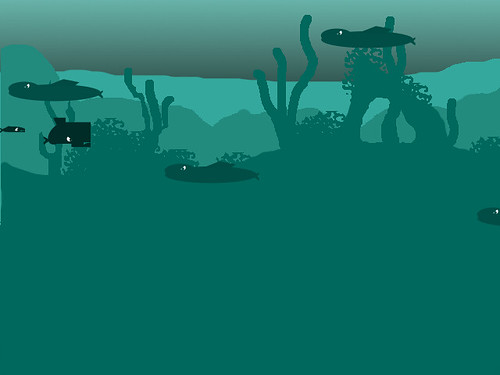
GuardianFish

In 2010, right before Ludum Dare #18, I hosted MiniLD #20 with the theme Greed and the optional theme of Fishing with a special rule: “Only one of each.” While programming usually makes it easy to make exact copies of objects, I was insisting that everyone had to ensure there was only one copy of any object.

While there was some griping about the constraint, there were more entrees in this MiniLD than any before it, even though a power outage and my project’s overly ambitious scope meant I didn’t get my own game, The Old Man and the Monkey Thief, done in time. I should have paid attention to my own compo’s constraints and adjusted the scope to fit it instead of trying to create a bunch of content to get around it.
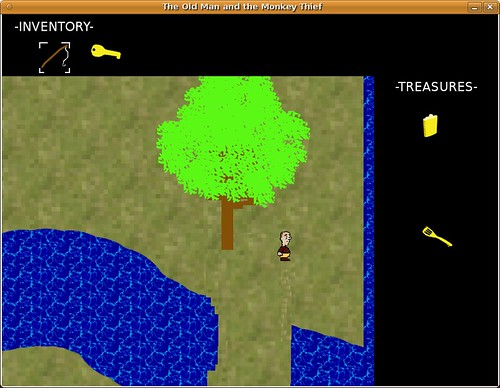
Inventory and Treasure!

I wrote up a post-mortem of MiniLD #20, including both my own project and running a MiniLD.

It turns out that people want closure and it isn’t enough to simply start a compo and disappear.

My favorite piece of feedback:

I must say there were times when I wanted to stuff that glass of juice down his throat.

You can’t buy memories like that. B-)

It’s also when I met McFunkyPants on the Ludum Dare site for the first time. He’s a pretty awesome game developer, game jam enthusiast, and author, and he runs One Game a Month, an awesome challenge now in its third year.

Full-time Indie Jams

The MiniLDs are great practice for the main compo. I missed Ludum Dare #19 due to the holidays, but I was sure to be part of Ludum Dare #20. At the time, I was struggling with how long Stop That Hero! was taking and I wanted a quick win.

The theme: “It’s Dangerous To Go Alone! Take this!”

Ugh. Really? The meme won? Fine.

I had the initial design I went with right away, prototyping it and eventually making it happen, except I didn’t get it done in 48 hours, so I once again took advantage of the third day of the Ludum Dare Jam to submit Hot Potato!, a game of delivering a package while avoiding the agents trying to grab it. You can pass the package to an adjacent courier (the “take this!” part of the theme).
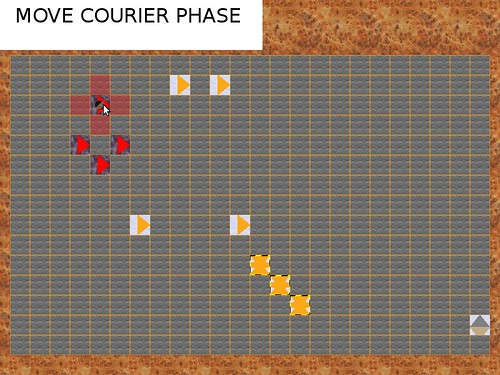
Screenshot - Final with pedestrians

Once again, simple graphics meant getting things done more quickly, although I didn’t get nearly as much done nor as quickly as I would have liked.

It would be over a year before I would participate in another game compo. Ludum Dare #24’s theme was Evolution, the Susan Lucci of Ludum Dare themes that never won until it did.

I managed to have something playable very quickly, and I iterated the development well. I didn’t get everything I wanted, but when the 48 hours were up, I had something fairly solid to submit instead of trying to rush something that resembles game play at the last minute.

Evolution Game Play

It turns out that Ludum Dare had been getting quite popular, and it has been hard to get people to rate games. In the past, you were given a random list of 20 games, and you were expected to do your best to rate at least those games. Now, they introduced a coolness rating, which increases as you rate other games, and it’s value determines if other people see your game when they get their random list of games that need a rating.

I didn’t plan on setting aside time to play and rate games, which hurt me in this compo.

In my post-mortem of Ludum Dare #24, I wrote:

If I could do LD#24 over again, what would I do differently? I’d spend more time upfront trying to create a design better suited for the theme that is also simple enough for me to make. I’d make sure my list of tasks was prioritized so that at all times I was working on implementing something that served the core design. And I’d make sure that I had set aside time after the compo and Jam to rate other games. People worked hard on their entries, and with over a thousand of them submitted, it’s unfortunately easy to get buried. I think the coolness rating does a great job of making things fair, and the name is perfect. I want to be cooler next time.

Another Long Absense Before the Next Compo

But it would be another two years before I participated in another game jam. By this time, I had a day job again, progress on Stop That Hero! was indefinitely on hold, and I had spent some long and dark evenings figuring out what direction GBGames should go in.

And I apparently forgot my previous game jam lessons.

I came up with a lot of ideas for Ludum Dare #32’s theme, An Unconventional Weapon. Some of them were used by other participants to great effect.

I loved the idea I ran with, though: getting a giant monster to follow your character so you can lead it towards your enemies while avoiding death yourself.
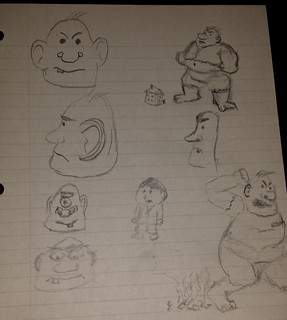
LD #32 Giants And Ogres

My strategy was to doodle when I wasn’t coding, and rather than use my poor digital art skills, I would use my less-poor pencil drawing skills and digitize them.
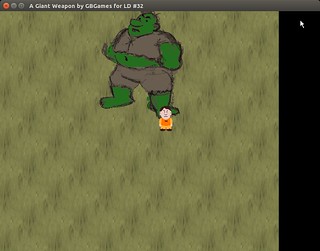
LD #32 - Controllable Character

And then I threw out that strategy for some reason and tried to create sprites that face four directions, taking up the lion’s share of the time I spent on this compo.
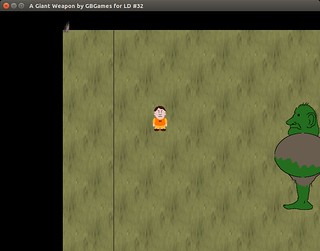
LD #32 A Giant Weapon

What’s worse is that while the animation helped, it looked worse in screen shots and didn’t look much better in motion. So all that time I could have spent on actually getting game play in was wasted.

It was hugely disappointing Ludum Dare compo for me. You could say I was rusty, but I handled my pacing badly and focused on assets instead of game play.

At the time, I was hard on myself and felt like it was proof that I still suck at game development. On the other hand, a few years ago, I would never have been able to quickly put together the limited game play that I did. I had a character that moved where you clicked in a very intuitive way, which is something people complimented me on, and I had a monster that you could attract either by getting in its vision or yelling out to it. The animations helped make it easier to see where the monster was looking, but I could have simplified them and had something working much faster.

So to be fair to myself, yeah, it sucked I didn’t submit a game, but I’ve come a long way from FuseGB and my first game jam.

Immersed Learning Experiences

My time working as a full-time game developer were definitely very good in terms of how much skill I developed and experience I earned in a couple short years, but the next best thing is a weekend dedicated to creating a game.

When you fully immerse yourself in the work, and when the constraints are that you need to have something finished in a short amount of time, you don’t get to procrastinate or be idle. You don’t read how to do things.

You spend your time doing.

And in the end, you have either a completed game that never existed before or experience to leverage for next time.

Getting that game finished is a great feeling. You get to point to a real game and say, “I made that. I’m a game developer. I developed a game.”

I’m looking forward to the next game jam. It’s another opportunity to grow with an entire community of game developers.

Categories
Game Development Geek / Technical

My History of Game Jams, Part II #LDJam

Last time, I talked about my first ever game jam and my first year’s worth of Ludum Dare events. After many years of thinking about it, it was nice to finally get some wins under my belt as well as a couple of good lessons. If you didn’t read it, see my history of game jams part 1.

My second Ludum Dare year

April 17th, 2009 was the start of Ludum Dare #14. The theme, Advancing Wall of Doom, was announced while I was out at a party for way too long, which meant I got a late start.

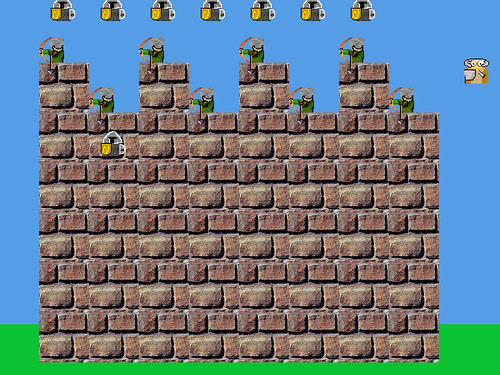
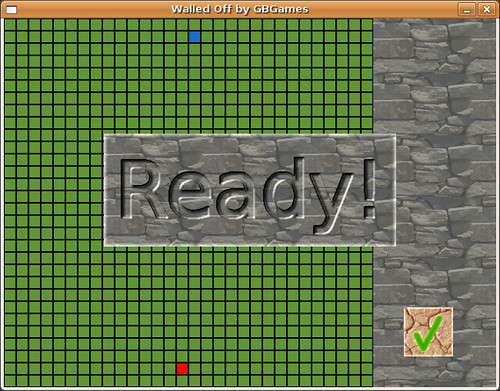
I remember thinking about something along the lines of Rampart, and eventually settled on a design in which you are trying to capture resources with your walls while preventing your opponent from stealing them. I had some neat design ideas and concepts, but almost no code after the first 24 hours. Oof.

Back then, Ludum Dare had medals for each category, and not only can your game be ranked, but the fun side competitions were the Community and Food compos. I got gold for my food pictures, and it was the only reason I submitted anything, because when the deadline hit, I had nothing else to show for the weekend but a button you could click.

Screenshot-Walled Off by GBGames

Since I was writing everything from scratch, and my previous attempts had either keyboard input or paid attention only to mouse movement, I learned how hard simple GUI elements such as buttons were to implement. It turned out that they have a lot going on under the hood.

I really wish I had written a post-mortem for this failure, too. I think it would have been insightful today.

That year’s August, Caverns was the theme for Ludum Dare #15. I had a good idea right away, and I ran with it.

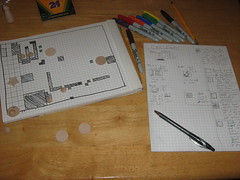
Prototype Update

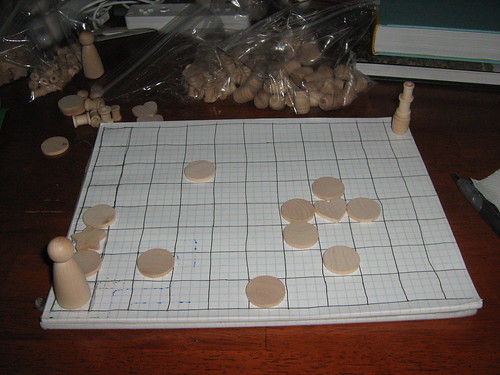
I took advantage of some new prototyping lessons I learned from Ian Schreiber’s free Game Design Concepts course, and I think I was able to put those lessons to good use. The final game had a lot of help getting finished because I spent some time figuring things out with paper and wooden pieces.

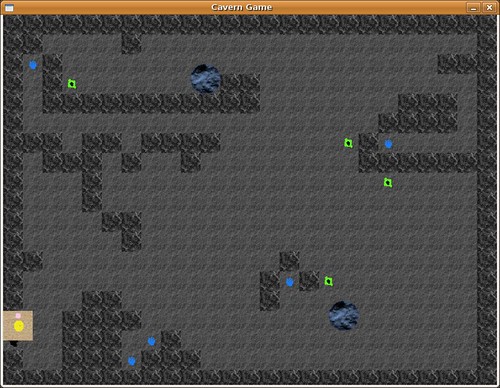
CavernGameFinal

My Mineral Miner post-mortem shows that rapid prototyping works well, and writing good, non-buggy code would help too. Graphics and sound are great for polish, but a lot can be done with terrible placeholder art. I also need to work on my pacing so I’m not wasting time figuring out what to do at any given moment. With only 48 hours, every minute counts. Even though I took in a soccer game and still managed to get a game finished, I could probably have used those few hours to make things better. I would try to make sure my calendar was blocked for for Ludum Dare weekends from then on.

Full-time Indie Game Jam

I missed Ludum Dare #16 and #17, but Ludum Dare #18 was a special one in my heart. It was the first one I participated in as a full-time indie game developer. In 2010, I had quit my job earlier that summer to be an independent game developer, but I had no dream game I was trying to make. When August came, I knew I was participating in Ludum Dare.

The theme was Enemies as Weapons, and I normally don’t like to think about the potential themes before it is announced, this one was standing out in my mind. I wanted to make a reverse Super Mario Bros in which you were Bowser sending Goombas and Koopa Troopas after the AI-controlled hero. I had just been learning a lot about game artificial intelligence, and this kind of project would be perfect for putting it into practice, except I would then also have to learn platformer physics.

So I changed the concept to a reverse Legend of Zelda, in which you were sending out minions to stop the hero from storming your castle and destroying you.

I spent some time coming up with other concepts before settling back on the reverse Legend of Zelda. My prototypes look very much like the end result.

More prototyping

Stop That Hero! is finished

I created a project backlog because I knew this project was going to be ambitious. I was making an epic game.

The game has a title!

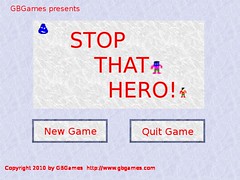
As my Stop That Hero! post-mortem says, I missed the original 48-hour deadline, but luckily the 72-hour jam compo was introduced and so I used my Monday (because I was full-time indie and could use my days however I wanted) to finish the game.

I spent too long on the UI again, and I had to scale back on my ambitions, but I was very pleased with my casual strategy game. Unfortunately, the jam compo wasn’t very popular then, so not many people played or rated my game, but the October Challenge proposed by Mike Kasprzak was coming, and now I had a game I wanted to make. I made this game in 72 hours. What could I make in another month?

It turns out that it took me another year to make Stop That Hero! into a more fleshed out game. Oof.

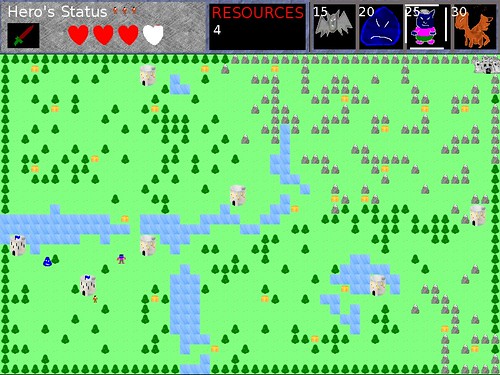
Stop That Hero!

More Game Jams

I was a full-time indie by this point. I had all the time in the world to participate in game jams, but I also had to do work that brought in money. What did I do next in terms of game jams?

I’ll write about it next time.

Categories
Game Development Geek / Technical

My History with Game Jams #LDJam

If you want to be a game developer, you need to develop games.

And when I look back on what games I’ve made, I realize that most were originated during game jams. What follows is a trip down memory lane with links to my game jams of the past, complete with links to post-mortems. Those are hard-earned lessons learned from a game jam veteran, kids.

2005: Game in a Day

Garage Games used to host the 24-hour game jam Game in a Day. I participated in my only Game in a Day on June 10th, 2005. The GID theme was Fusion, and I came up with an ambitious design.

I’ve been warned by TomB in #gameinaday on irc.maxgaming.net that I really should pick something simple for my first GID. The fact that I feel I need a design means that it is too complicated. Perhaps he’s right, but we’ll see how I do.

It would be an ambitious design for me today to complete in a 48-hour game jam such as Ludum Dare. I was young and naive, I was not very knowledgeable about the programming language or the 3rd-party libraries I was using. I had no experience with pacing in game jams. Even so, it seems even this early I learned a lesson that would serve me well to remember:

About 10 hours later, I finally have the main character moving about the screen according to the arrow keys. He only moves in four directions, but I’m not going to draw up more images for diagonal movement this late in the GID. I’d rather spend my time getting the fusion part of the game going.

Smart move, Self from 10 years ago!

What I recall most vividly during this jam was an overwhelming sense of fear the likes of which I have never known before. Early in my 24 hours, I started worrying that I didn’t know what I was doing and wouldn’t be able to finish, and I felt like I should quit. Logically, I knew it made no sense, that if I stopped, then it was a self-fulfilling prophecy, but it was a cold, numbing feeling I couldn’t easily ignore. Fear is the mind-killer, the little death that brings total annihilation, and I was apparently facing it head-on for the first time in my life.

But I did it! My first game jam ended with a playable game, the creatively-named FuseGB. It does not resemble my design at all, but I pushed forward and managed to make a playable game in 24 hours.

I gained a lot from my Game in a Day participation, including first-hand experience I never had before that would serve me well.

2008: Ludum Dare

Three years later, I was getting ready to participate in Ludum Dare for the first time, back before it had a dedicated domain name.

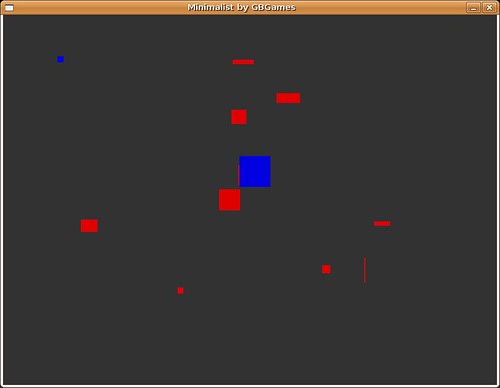
LD11 Minimalist by GBGames

Even though I spent a lot of my precious development time trying to get basic infrastructure together, I had a finished game with six hours left to polish it up before the deadline. I purposefully picked a simple set of mechanics so I had the best chance of finishing. While today’s Ludum Dare competitions see thousands of entries, in 2008, there were 70. I earned my first LD trophies in this compo, including my prized “Amazing Pickle Sandwich” award from HybridMind and The “Thanks for Epilepsy” Award from keeyai.

You can read my Ludum Dare #11 post-mortem for Minamilist, which eventually became a slightly better game Walls and a short-lived Facebook game called Sea Friends. It even inspired Maximalist, a game by pansapiens I enjoyed.

Later that year in August, the 12th Ludum Dare compo started with the theme Tower with the optional theme of Owls. I had successfully submitted games to two game jams, so I went in quite confident. I was also dabbling in test-driven development at the time, and I thought that a timed competition was the perfect time to practice my TDD skills.

Ludum Dare #12 was the birth of the ridiculously obtuse Towlr games, but I managed to submit what amounted to a tech demo. It had an owl, and a lot of people were inspired by my user interface. I got “The Palm Of RSI Prevention” trophy from Hamumu for it.

Tower Defender Game Play

But it wasn’t a complete game, and in fact it had bizarre bugs, such as the enemies climbing up the tower into the sky and getting stuck. As you can see, apparently I thought this bug was a good thing to show in the screenshot.

There was no way to lose, and no way to win. According to my Ludum Dare #12 post-mortem for Tower Defender, I wrestled with technology more than with game development, something I still struggle with because I insist on doing everything from scratch instead of using existing tech.

Months later, coinciding with the Winter Olympics, Ludum Dare #13’s theme was Roads, and early on I had a concept that I saw to completion.

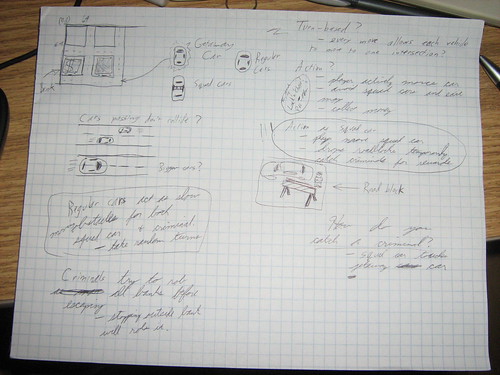
Road Lockdown design

These design notes eventually turned into these guys:
Road Lockdown

driving around in this game, Road LOCKDOWN!:
The final screenshot

I find this odd, but somehow I never wrote a post-mortem for this game jam. The final entry post and development time lapse don’t really say much about what happened, but I recall getting the game finished and submitted at the very last minute, getting “The Photo Finish” trophy from Doches. The game earned me The “I Can’t Get You Because You’re In The Bike Lane” Excuse trophy from demonpants, poking fun at how you have limited controls available to steer only at intersections so your squad car and the criminal’s car can be driving towards each other but in different lanes of traffic.

But the important thing is that I finished a playable and complete game again. That’s 3-ish out of 4 game jams, and that ain’t bad!

More Game Jams to Come

Thanks for reminiscing with me. Rereading my old posts reminds me of how far I’ve come.

Soon I’ll write up what happened in the next year and beyond!

Categories
Games

People Play Games in Ways We May Not Anticipate

Sometime back I had recommended Spryfox’s Alphabear to a coworker.

Yesterday he told me that his children love the game. Apparently they get 30 minutes of screen time, and instead of coding, they now play the word game.

He told me that it is very educational, and his son especially seems to be expanding his vocabulary by randomly picking letters until the game accepts a word as an input.

Now, I’ll admit, especially on the timed levels, I have also picked random letters if I’ve been stuck, but here was someone using it as his main strategy. He doesn’t need to know many long words because the game allows him to explore what’s possible on his own.

Maybe a player takes a strategy game and continually pauses it to make tactical decisions, effectively turning a real-time game into a pseudo-turn-based one.

Perhaps someone figures out how to use rockets to jump farther or higher in Marathon or does infinite bomb jumps in Super Metroid.

Or in this case, instead of someone using their extensive knowledge of obscure words to play a word game, they let the game teach them some.

Categories
Game Design

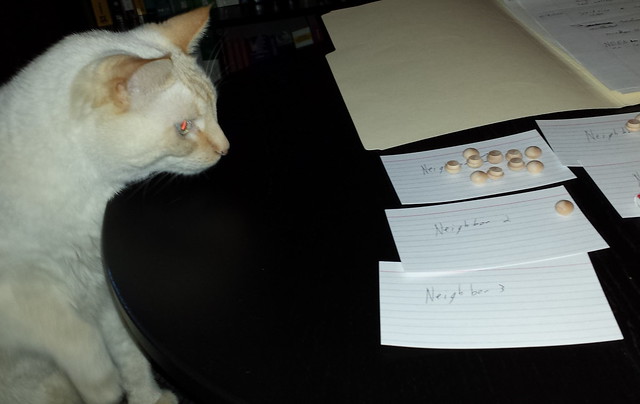
Cats and Game Prototypes Do Not Mix

Cats and Prototypes

I don’t have anything too serious to write about today, except that a curious cat and prototyping tools such as tiny wooden pieces do not make for a very productive development session.

Categories
Game Design

Game Design Analysis: Let’s Play Tic-Tac-Toe

Tic-Tac-Toe, or Naughts and Crosses if you are wrong, is a children’s game. It’s a solved game, which means there is always a best move someone can make, and the only reason why it appeals to children today is because they haven’t figured out the solution yet.

In any case, it’s a simple game. Let’s analyze the heck out of it as a game design exercise.

First, let’s look at the rules of Tic-tac-toe.

Setup:

We need a 3×3 grid and two players.

One player places X pieces, and the other player places O pieces.

Choose a player to go first.

Game play:

On a your turn, you place the piece you represent in an open square in the 3×3 grid.

That’s…pretty much it. All you can do is place your piece in the grid. Then it is the other player’s turn.

Resolution:

If, after placing a piece, you have three of your pieces in a row, column, or diagonal, you win the game.

If there are no more open squares in the grid, and no one has won, then the game is a draw.

Analysis:

It doesn’t seem very complicated once you write it out, does it? We knew it was a simple game, but wow, that’s pretty simple.

What’s interesting is what’s not explicitly mentioned in the rules but ends up being a part of everyone’s mental model of the game.

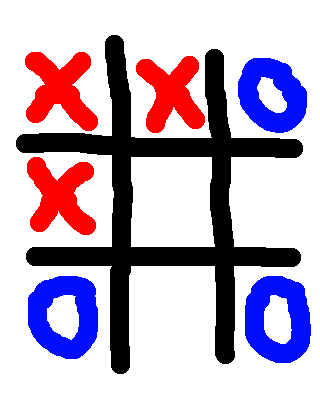
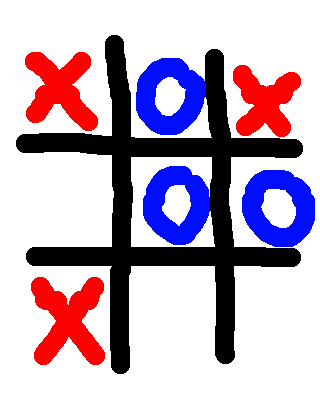
Here’s an example game in progress:

Tic-Tac-Toe

If it is X’s turn, where should the next piece be placed? At the top center square in the grid. Why?

To block O from winning. Because O just needs to place one more piece to get three Os in a row and win, and X doesn’t want to lose, X has one move that prevents O from winning here. Blocking isn’t explicitly mentioned in the game rules, and yet it becomes a key aspect of any serious Tic-tac-toe player’s strategy.

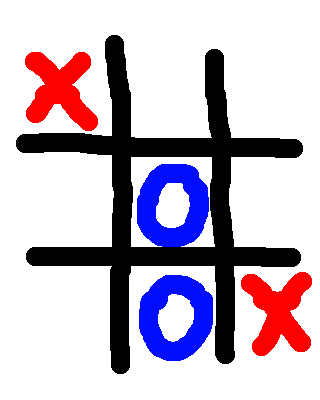
Tic-Tac-Toe

How about the above situation? O has just placed the piece at the bottom right. What’s the next move for X?

The answer: it doesn’t matter. O has forked and is now potentially able to win on both the right column and on the bottom row. If X places a block in either the bottom center or the middle right spot, then O simply places a piece in the other spot and wins the game. Forks are also absent from the rules, but expert players always look for an opportunity to create one.

Blocking and forking are examples of dynamics that are the emergent properties of the game’s mechanics. A minor change in the rules can have an impact on the game play.

What if you could use your turn to destroy a piece and open up a space in the grid? The obvious idea is that it would be hard to win because players would essentially destroy the opposing player’s piece any time it threatened to get to three in a row. Ok, what if we allowed each player to do so only once in a game?

Tic-Tac-Toe

It might slow the game down a bit. Destroying a piece merely delays the opposing player’s move by one move. The game is so simple and so very, very solved that it might not really change the nature of the game much.

But one dynamic that might evolve is the discovered fork, as the above example can show: even though O is threatening to win with a fork, X has just placed the piece at the bottom left. What if X decides to destroy the O in the center? Now instead of merely preventing a potential win by O, destroying that O resulted in a fork in which X can now win either with the left column or the diagonal.

The end of this game would still be a draw if everyone played perfectly, but it might surprise the amateur player.

Conclusion:

Even without custom rules, it’s easy to see how the simple mechanics can result in more complex game play than might be expected. Even a simple game like Tic-Tac-Toe has emergent game play that derive from the rules.

The big takeaway lesson here is that you need to see a game in action in order to really understand the game, which is why playtesting your own designs is so important.

Categories
Geek / Technical Personal Development

Remember the Good Ol’ Days Before Social Media?

Web 2.0 was all about changing the Internet from a solitary experience to one in which you are a consumer of content to one in which you are creating and sharing as par for the course.

Today’s social media took it to an extreme. Tweets drive Twitter. Facebook made sharing cat pictures and status with your friends easier, before making it difficult to see unless you opt-in twice, once by liking and once by saying, “Yes, I mean it, I want to see this account’s updates, please.” Pinterest became a huge force in its own right, and it’s all about pinning interesting things you find elsewhere.

Recently I’ve been seeing quite a bit written about the downsides of social media. Steve Pavlina wrote last month about taking a year off from social media and feeling much more conscious and in control of his life. He could concentrate on what’s important, such as planning out how he was going to accomplish important goals.

Social media gives us instant feel-good rewards for doing next to nothing of value. When those rewards are no longer so easily accessible, we have to work harder for those same feelings. When we accomplish something meaningful to create that dopamine surge, the feelings can positively guide our behavior, and those feelings can stack up and create lasting motivation to tackle more sizable goals and projects.

MMO designer and author Brian Green of Pscyhochild’s Blog is writing daily posts for Blaugust, and he’s focusing on what he doesn’t like about social media this week, analyzing how it works and what the repercussions are for discourse in society.

…the nature of social media is that it polarizes people. Often if someone doesn’t appear to directly support a position, some assume they must support the opposite and are therefore the Great Satan. Nuanced views are often looked at with suspicion. This causes a lot of frustration, as it closes off useful discussion.

See Social Media: What gets promoted? and Social Media: It leads to the darkside for more of his thoughtful analysis.

While I’m a fan of social media, I find myself agreeing. I’ve had to make the decision to stop checking Facebook first thing in the morning because I found it to be a time suck. I get more important things accomplished when I focus on them than on seeing what funny video was shared today or what notifications I should check. It took me awhile to resist the urge to type “f+TAB+Enter” in my browser first thing when I sit in front of the computer, since Facebook showed up as the first entry every time. I find myself checking notifications on Twitter on my phone throughout the day, and when my app is not pushing them, I go in and check anyway in case the notification function is broken. It’s bizarre and makes it hard to concentrate.

And the content is generally terrible. <insert picture of Grumpy Cat here>

I see clickbait headlines that promise things that will blow my mind that usually garner no more than a shrug, yet I’ve already clicked on the bait and wasted my time. At some point, I got fatigued by it and stopped clicking, but I admit it took me awhile to catch on.

I see friends posting hateful statements in public view that they would never say in person, or at least I would hope they wouldn’t.

Every so often I see something genuinely inspirational, but it can be buried among the vapid motivational quotes and celebrity put-downs.

Why do we spend so much of our time actively looking at this stuff? And why do we seem to keep distracting ourselves with it when we know we have more important things to do? How else is it changing our behavior?

Social media makes it easier to share, but I get confused by the work flow of blog readers these days. Someone will click on a link in Facebook or Google+ to a blog post, read the post, then instead of commenting at the bottom of the actual blog post, they go back to the social media platform they came from and comment there. And the thing is, I do this, too. Instead of treating the blog post as the source of the conversation, it’s as if it is the social media platform that is the driver and the blog is a temporary stop.

I actually miss the old days when bloggers would write comments on each other’s blogs, when a response to your post would as often as not be a post on someone else’s blog linked back to yours instead of disappearing into the hard-to-find social media comments section.

I miss people blogging because they had something to say, not because they were part of a blogging collective interested in selling you on some narrative, trying to get you to see and click on ads while giving you feel-good or feel-angry notions for a few seconds until you click on the next thing.

All that said, social media is probably here to stay, and luckily it is amazing because while it can seem like nothing but pictures of breakfast and pithy sayings to some, it means getting around authoritarian censorship for others. That is, real and dangerous censorship, not the kind that people made up to mean they don’t like the consequences of their free speech. It means keeping in touch with people you met at a conference. It means meeting new, like-minded people.

Social media allows the invisible to become visible. Hashtags such as #BlackLivesMatter are used to raise awareness of racial injustice. Many people of privilege are more aware that they even have privilege than before. Major accomplishments in science, such as NASA’s New Horizons flyby of Pluto, means a lot of excitement and hope for humanity that may translate into children today becoming the scientists of tomorrow. People no longer limit their social circles to geographic locations, which is great for us in the flyover states.

So, there’s a lot of good in social media as well.

But social media makes all of us publishers. Did we waste each other’s time with what we put out into the world? Will we be proud of it when we look back?

Or will we simultaneously feel glad that no one can easily find it a few days after we hit the Share button and feel worried that it’s out there for someone to find if they really dig for it?

Categories
Games Marketing/Business

Clinical Trials for Games? Brain Games Based on Real Science

I normally listen to audiobooks in my car, but I had just finished one and hadn’t visited the library yet to check out another, so I had the radio on.

I caught the tail end of an NPR story about a game trying to get approved by the FDA, so I told my phone to remind me to look it up later.

Will Doctors Soon Be Prescribing Video Games for Mental Health? by April Dembosky was that story, and it talks about the many games that claim they are good for your brain but don’t have any real science to back it up.

I’m reminded of Nintendo’s Brain Age. In its official title is “Train your brain in minutes a day!”

In 2007, CNN’s Linnie Rawlinson wrote up her experience playing it, asking Can Nintendo’s ‘Brain Training’ really boost your little gray cells?. While she had fun playing it, she didn’t believe the claims. She asked a neuroscientist about it and was told that while it may help, it’s “hard to measure the impact that brain training could have.”

The NPR story refers to a very, very long letter signed by cognitive psychologists and neuroscientists rejecting the claims:

In summary: We object to the claim that brain games offer consumers a scientifically grounded avenue to reduce or reverse cognitive decline when there is no compelling scientific evidence to date that they do. The promise of a magic bullet detracts from the best evidence to date, which is that cognitive health in old age reflects the long-term effects of healthy, engaged lifestyles. In the judgment of the signatories, exaggerated and misleading claims exploit the anxiety of older adults about impending cognitive decline. We encourage continued careful research and validation in this field.

One of those scientists decided it wasn’t enough to admonish game marketers and decided to try to create a brain game that would stand up to scientific rigor.

Neuroracer was the research developed by a team of neuroscientists and was specifically targeted at training cognitive control abilities. While it’s not commercially available, it did demonstrate how a game could actually help with cognitive ability.

Neuroracer was made for scientists as a research tool. Based on this technology, Project:EVO is the clinical product being created by Akili Interactive Labs. It’s been covered in many mainstream media outlets, but hardly at all in game press. I found one reference to Akili at Gamasutra, and it was a blog post by Noah Falstein on general neuroscience in games.

From the Akili Interactive Labs website:

Project: EVO platform is currently being tested in a variety of clinical studies in multiple patient populations around the globe, including ADHD, autism, depression, and traumatic brain injury.

It’s quite an ambitious endeavor. Adam Gazzaley, co-founder of Akili Interactive Labs, claims he has four other games in development if Project:EVO makes it through the gauntlet.

And with what Neuroracer demonstrated, perhaps there will be a growing market of science-based brain games that actually do help who they claim to help.

Categories
Game Design Personal Development

What Are the Hard Skills of a Game Designer?

There are hard skills and soft skills.

Hard skills are things you can practice outside of any context. Soft skills are usually built upon the hard skills.

Basketball players can practice shooting three-pointers over and over outside of the context of a real game. During a game, knowing when to take a three-point shot is a soft skill, which depends on reading the defense, knowing the shot clock, and keeping in mind the current score.

When I think about hard skills vs soft skills, I found myself struggling to think of the hard skills of a game designer.

A game designer needs to be able to communicate, which means writing and drawing well. But I have a hard time seeing writing prose as a core exercise in getting better at designing games.

A game designer needs to be able to establish rules for setup, for procedure, and for resolution. But how does rule-setting translate into a hard skill that I can practice outside of the context of a game? Do I train as a game designer by setting arbitrary rules for everyday activities? “When getting ready in the morning, I must do everything with my non-dominant hand.” It might be interesting to experiment for a week with setting rules and restrictions where they don’t need to exist, but will I really get better at game design for it?

A game designer needs to be able to prototype and playtest. Do you take an existing game and create your own board, cards, and tokens? Does doing so actually help with future prototyping? Maybe. I actually like this idea. You practice with existing games, and it helps you get a more intuitive feel for exactly what goes into a game of your own creation. Maybe you didn’t appreciate how many different cards are in a game of Onirim until you tried to make them yourself.

But hard skills specific to game design seem hard to identify. Game design tends to be about trade-offs and figuring out second-order effects of rule changes, which are mostly about soft skills. But maybe I’m missing something basic that I’m not appreciating.

What do you think? What are the hard skills of game design?