Categories
Games Geek / Technical Marketing/Business

Blast from the Past: Metal Gear Solid Pamphlet

I’ve been playing Metal Gear Solid with some coworkers, and we’ve been having fun making fun of a lot of the silliness: Genome soldiers are genetically engineered to be the best except for the side-effect of extreme myopia. And an inability to store long-term memories of the fact that someone just shot at them. Or how Snake is a trained mercenary but didn’t think that maybe he should have recognized what a sniper’s laser sight looks like instead of letting Meryl get shot multiple times.

Anyway, somehow I remembered something from years ago. In 1997, back when the Nintendo 64 was still new, I found a bunch of addresses for video game developers. Some were even located nearby (this was back before most of them left Chicago)! So I wrote a bunch of letters, printed off of a dot matrix printer on my Apple II c+, asking them if they had any games they planned to produce for the N64. I made sure to let them know about games they had created in the past that I liked.

A number of the letters came back. The addresses I had for Acclaim, Nexoft, and Taito were no longer valid and the forwarding time had expired. Oh, well.

Koei sent me a newsletter, the Koei Connection, Vol 4, No 1. It included information about P.T.O. II, Heir of Zendor, Dynasty Warriors, Ark of Time, Sign of the Sun, and VirtuaPark – The Fish. They had a section to answer player questions, and I learned that I could order games directly from Koei. You could get Romance of the Three Kingdoms 3 for PC DOS 3.5 for only $19.95! B-)

But the coolest response was from Konami. I received a large envelope. In it was a letter:

Dear Gianfranco

Thank you for your interest in Konami. We do have several games coming out for the N64 such as International Superstar Soccer 64 and Goman 5 (Legand of the Mystical Ninja). Lets not forget NBA In the Zone ’98 the first 5 on 5 Basketball game for the N64. The possibility of having Metal Gear 64 has even me getting goose bumps. All that and the new Castlevainia on the Playstation it’s going to be a great Fall. If you have any other questions, feel free to contact us here at (847) 215-5100.

All grammatical and spelling mistakes are preserved.

There was a P.S. “Keep on playing!” Quotes were preserved as well. B-)

So what was in this big envelope? A poster for International Superstar Soccer 64. A sell sheet photocopied to list Vandal-Hearts, Contra: Legacy War, Suikoden, NBA In the Zone 2, and Crypt Killer. “The Justifier Light gun for the Sony Playstation available now!” And the reason why I remembered it all:

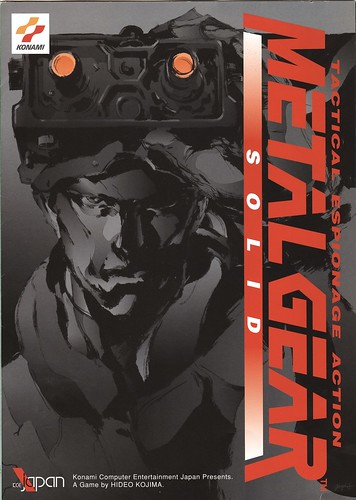
Cover

There was this cool fold out pamphlet about a game I had never heard of. Metal Gear Solid? What’s that? B-) Below are some scans I had made. If you click on the image, you can see a much larger version at higher quality so you can even read the text if you’d like. And some of the text is pretty funny. “It is 3D functions of the 32-bit machine realize the possibilities of this game to its fullest potential.”

Inside_M_Flap Inside_G_Flap

Pg_01

Pg_02

Pg_03
Note how this game is a “new expression of real time full polygon action!” B-)

Pg_04

Back

I hope you Metal Gear fans enjoy it.

Categories
Game Development Linux Game Development Marketing/Business

Why You Should Support Mac OS X and GNU/Linux

If you’ve been following my blog for some time, you know that I always encouraged development for multiple platforms and not just Windows. The common argument against doing so is that you increase your development costs and effort for a very small percentage of increased customers. Where’s the benefit?

Wolfire explains why you should support Mac and GNU/Linux platforms. When you’re an indie developer, especially one starting out, you’re a small fish in a big pond. You don’t have a huge marketing budget. You don’t have a massive sales force to help push you through retail. PC Gamer, IGN, and any of the large game review websites aren’t likely to cover your game. Having Mac and GNU/Linux versions of your game makes these obstacles less important, increases your visibility, and improves sales.

So what happens when your game is available for the supposedly negligible extra few percentage of people who play games? Websites such as The Linux Game Tome, LinuxGames.com, InsideMacGames.com, and even the official Apple Games site will cover your game and your company. Then sites such as SlashDot will cover it. That’s a lot of potential customers from a dedicated niche, people you couldn’t reach by releasing yet another Windows game!

Troy Hepfner, of My Game Company, said that releasing Dirk Dashing for GNU/Linux was a very good idea:

And I am so glad we tried a Linux version of one of our games – this has turned out to be a huge shot in the arm for our business!

33% of initial sales came from GNU/Linux, and while the total percentage of sales from GNU/Linux users has gone down relative to Windows and Mac users since then, it’s not an insignificant amount of income. Hepfner has said that he knows a number of his Windows sales came directly from people who only heard about his game from Linux-based gaming news. Again, supporting these other platforms can help an indie to stand out from a crowded Windows-only marketplace.

Wolfire says that supporting these supposedly negligible platforms can help you take advantage of vocal minorities and surprisingly dedicated fans to spread the word about your game.

To conclude, if you’re not supporting Linux and Mac OS X from a philosophical standpoint or for the fans, at least do it for the money. If you don’t support non-Windows platforms, you’re leaving a lot of cash on the table. I don’t know about you, but I’m not in a position to just say f— it to a large community of people who want to support us.

Bottom line: If you agree with the larger game companies and think that there is no benefit to supporting multiple platforms, you’re wrong. You are not running a large game company that can get millions of dollars in sales in the first month of release while ignoring everyone but the hardcore gamers. Having cross-platform ports available provide you with plenty of marketing opportunities which can increase sales greatly. With hundreds of games being released each year, you need to do something remarkable to make your game stand out. It’s still quite remarkable to support Mac and GNU/Linux users, so take advantage of it.

[tags] marketing, indie, cross platform development, sales [/tags]

Categories
Game Design Games Marketing/Business Personal Development

Back from Vacation

Last night I got back from over a week-long vacation. I visited friends in Des Moines, and it was very relaxing, aside from hurting my back and seeing the chiropractor four times. I walked around downtown Des Moines, visited the historic Capitol Building, went to a dueling pianos show, watched a couple of movies, danced at a nightclub, and otherwise had a great time.

Oh, and I learned how to play checkers.

I was in the library and passed the game section. There was a book on playing checkers. I thought, “Ok, I haven’t played that game since I was a kid, and I think I heard someone saying that it is as cerebral as chess. Let’s see why.” Did you know that the official rules of checkers REQUIRES you to jump your opponent’s piece if you can do so? I didn’t know this rule, and when I asked, it seems that most of my friends didn’t either! This one simple rule suddenly makes this otherwise child-friendly game really, really complicated.

Besides trying to figure out ways to make simple games more strategic by forcing moves the way checkers does, I spent a good amount of time figuring out my next move in life. I read a couple of books and articles on life purpose and business and wrote a bunch of notes. I took advantage of my time away from work obligations to think about what I want out of my life. I’ll have more to write about my decisions later, but suffice it to say that I don’t want life to force my hand because it might put me in a suboptimal situation.

It’s my move.

[tags] checkers, life purpose, business, game development [/tags]

Categories
Game Design Game Development Games Marketing/Business

Meaningful Play 2008

Gregg Seelhoff announced that he attended Meaningful Play 2008, an academic conference ” that explores the potential of games to entertain, inform, educate, and persuade in meaningful ways”, and he posted his notes.

  • Day 1: Want some good data on casual gamers and Flash game business models?
  • Day 2: Want some good data on 60+ year-old gamers as well as serious games?
  • Day 3: The wrap up, with some information about a panel on board games.

I’ve been thinking about the kind of games I wanted to make, and rather than create short-term sales product that will be thrown away within a week, I’d like to make games that matter. Games that stick around long after you’ve played them, like a good book or a good movie. I really liked the idea of an entire conference dedicated to meaningful play, and I hope I can attend the next one. There were some good nuggets of information that Gregg managed to report, such as who plays games at Pogo.com and for how long, but I especially liked reading the following on what kinds of serious games received good reviews:

An acceptable game (threshold 1) succeeded in the areas of technical capacity and game design. A good game (threshold 2) passed threshold 1 and, additionally, succeeded with aesthetics, visual and acoustic. For a game to be great (threshold 3), it had to pass both previous thresholds and also succeed in the final two areas of social experience and storyline (“narrativity and character development” is too long). Few games reached the final threshold.

Look at that! A prioritized list of what makes up a good game!

It’s unfortunate when you can’t play games because they are made for specific platforms, especially when there is always this emphasis on the ubiquity of Flash. Many of the games Gregg links to were Windows-specific, and they wouldn’t run in Wine. When so many of these games aren’t even meant to be commercially viable, is it still a valid argument that providing a port to other platforms such as Mac and Gnu/Linux would be pointless since having access to a few hundred thousand more players wouldn’t be worth it?

I would have liked to know more about Ian Bogost’s keynote, but Gregg provided some good notes for most of the rest of the conference. I have more than a few PDFs to download and read through.

[tags] meaningful play, game design, game development, serious games, casual games, conference [/tags]

Categories
Game Design Game Development Games Marketing/Business Personal Development

Now Is the Best Time to Make Games

Jeff Tunnell posts for the first time in a long time about how you shouldn’t fear the economy and should start your game business now. Yes, there is a lot of doom and gloom about how the economy is stagnating and people are worried about paying the bills.

But that just means there are less people willing to take the risk of starting their own businesses! Less competition means more opportunities for your business!

But how do you start? I wrote an article about Forming an LLC in Illinois, and running an LLC is much easier than running an S Corporation. If you don’t know the difference, there are plenty of resources online about the different types of business entities.

I also wrote about what an indie developer needs to know about copyright. Copyright laws can be quite complex, so it pays to know at least SOMETHING about them.

Not sure how to even start making games? I also wrote You Can Make Games, which describes how easy it is to get into game development, and the best part? It has gotten even easier since I wrote that article two years ago! With technology like PopCap’s framework (and TuxCap for people who want to recognize that there are people who use Mac and GNU/Linux), libSDL, and freely available Java and Flash web development tools, there should be nothing to stop someone with a computer, an idea, and a willingness to put some effort behind it from making a game.

There are great articles and other resources for running your game development business at GameDev.net. Advice can be found at the IndieGamer forums.

So what’s stopping you? And for that matter, what’s slowing me down?

[tags] indie, game development, video games, business [/tags]

Categories
Game Design Game Development Games Marketing/Business

Is Casual Mutually Exclusive with Hardcore?

Years ago, Nintendo Power’s 100th issue listed the best 100 games of all time. Besides Mario and Zelda games, Final Fantasy and Dragon Warrior, there was the game listed at #3: Tetris.

I remember that a lot of people complained that there is no way that Tetris could be ranked so highly in such a list. In fact, people still complain when they see Tetris listed very highly in Nintendo Power’s most recent update of the list with the top 200 games.

Tetris is a great game. It was probably the first financially successful game that caused other game developers to say, “Wait, I’m crunching for years at a time, and I could have made THAT?” So why all the animosity? Oh, right. It’s a casual game. It’s too simplistic to be considered among the best.

But is casual really mutually exclusive with hardcore? Are these words really describing two different types of games?

Earlier this year, Corvus wrote that casual games can be identified as such by how forgiving they are. If you only have 5 minutes in your busy schedule to dedicate to a game, you’ll play Bejeweled sooner than you’d play Starcraft. Trying to play Starcraft in 5 minutes would be an exercise in stress management. You can’t just stop when you have to leave, so your choice is to keep playing the map you’re currently on, ruining your schedule, or quit and lose your progress. Bejeweled much more forgiving in this sense.

In this sense the GameBoy game Wario Land 2 was much more casual in nature than many other platformers. In this game, Wario was unkillable, a departure from the typical Mario-based platformers. If you can’t kill or harm Wario, what can you do? Solve puzzles! If you’re not very dexterous, the game doesn’t punish you the way Super Mario Bros would. Again, it’s very forgiving. Contrast Wario Land 2 with Super Mario Sunshine, which gives you a limited number of lives, requires you to restart a level if you fail, and features enemies and obstacles that can kill Mario. Super Mario Sunshine is very punishing. The challenge comes in punishment avoidance.

Contrast Strange Adventures in Infinite Space against Sins of a Solar Empire, two very different games. One lets you play multiple games within a matter of minutes, while the other one requires a much larger time commitment. Actually, if you’ve ever played SAiIS, you’ll know that the game also requires a larger time commitment simply because you won’t notice that an hour has passed and that you’ve played hundreds of sessions. Still, the interface for SAiIS is point and click and dead simple. SoaSE might have a good interface for strategy fans, it’s just hard to fathom someone fresh to video games getting it as easily as they would with SAiIS. And how about the difference in game play? If you lose a space battle or otherwise fail in SAiIS, it’s not so bad. Just start a new game, just like you would if you won. Try again. The sting of defeat isn’t harsh because you probably lost and won many games in the time it took you to read this post. Losing in SoaSE, on the other hand, is a bit more harsh.

So maybe there is a difference between casual and hardcore games, but I still think that there are steps that a game developer can take to make any game more accessible. Developers should take steps to make the complexity more manageable through the interface at the very least. And if your game is punishing the player for taking certain actions or for failing, ask if it is really necessary to punish him/her that badly. Hey, Nintendo! Do we really still need a limit on lives for Mario games?

[tags] indie, casual game, game design [/tags]

Categories
Game Development Games Marketing/Business

Hollywood Video Games Suck

The brave and noble bloggers of the Round Table this month have written some great posts about film-to-game adaptations. I was originally going to write that games are usually just another brand-associated piece of merchandise, like the candy bar, the Happy Meal toy, and the coloring book, but some people covered it. I was going to write about how game developers can actually make a good game based on a movie, and demonstrate it with my memory of what people said about Beavis and Butt-head, but someone mentioned an even better example in the Chronicles of Riddick games. I noticed that people are putting a lot of the hate on E.T., a game which I loved playing as a kid, but as someone long ago already wrote about how good a game it is, I don’t think I have too much to add to it other than to say “Hey, if you didn’t play it, don’t knock it until you tried it!” I could write about the Charlie and the Chocolate Factory post-mortem I attended, about meeting a programmer who left the company after that project, and my experience with playing the game, but someone has already discussed how hard it is to make a game based on a movie while satisfying requirements from the publisher, the movie production house, and the estate of whoever owns the rights to the story, especially when the movie itself is on a short production schedule.

What will I write about? How bad games based on movies are bad for the industry’s public image and are possibly detrimental to its growth.

Yes, even a bad video game with a movie tie-in will sell more than a good video game without one would. I understand that the funding from those games can go into paying for good games to get made. It makes sense.

But what about Joe Hypothetical, the person who loved WALL·E, and just now bought the game? According to my latest issue of PC Gamer, the game is horrible. Now, maybe it just isn’t made for people who would read PC Gamer and so the review might be biased, but according to Metacritic, the WALL·E reviews are mixed. IGN’s reviewer loved it. But let’s say for (my) argument’s sake that the game sucked. What about Joe?

As much as Joe loved the movie and might wish the game was awesome, he might admit that it was horrible. So what’s Joe going to play next?

Well, nothing. If this big-budget game sucked, a game he paid upwards of $50 for, why would he pay that much again to play a game that was made without the backing of Hollywood? He’s not a glutton for punishment. Leave that kind of “fun” to the nerds. And so Joe won’t play games in general, he won’t pay for games, and will continue to be a non-gamer, which is of no benefit to the game industry as a whole.

Maybe it won’t be that bad. Joe might be one of those people who play casual games on portals to kill a few minutes here and there, and so maybe one game won’t spoil him completely. But it will sour him on the experience of paying the equivalent of 5 tickets to a movie for a game, enough to give him pause whenever any game is released, even if he might be interested.

Meanwhile, WALL·E sold over a million copies, so at least Hollywood got its take.

Take 2 and Rockstar Games get a lot of flak for making games that put the video game industry in a defensive position from morality critics, but what kind of message do other publishers send when they agree to release games by the movie’s release date, regardless of the quality of the game? I understand that there are pressures and requirements and that the developer is trying to make a good game out of a bad situation, but why would the publisher agree to allow games that look bad on the company and people involved? Is it really just because it is a lucrative position to be in?

Wait. I just read that question. Duh. If you are measuring your company on the quality of your games, then it would be absurd to release crap. But if you were measuring your company based on how many units you sold, then “quality of your games” isn’t decided by PC Gamer reviews. What reviews? People voted with their wallets, so clearly this game was of quality enough.

It’s just frustrating to think that opportunities are wasted and yet rewarded so much. I can’t see how it is good for the game industry overall if you have millions of people out there who think that games are nothing more than simple and frustrating diversions, especially when good games can be made with a bit more effort and a bit more push-back by the publisher.

[tags] video games, hollywood, marketing, business, game development [/tags]

Categories
Game Design Game Development Games Marketing/Business

The Complexity of a Casual Game

Since so many people seem to be surprised that Spore, a game that mixes all sorts of game genres into one game, didn’t create the ultimate experience for each of those sub-games, and Will Wright’s recent interview with MTV in which he claims that Spore was meant to be a casual game:

“I’d say that’s quite accurate,” Wright told me. “We were very focused, if anything, on making a game for more casual players. “Spore” has more depth than, let’s say, “The Sims” did. But we looked at the Metacritic scores for “Sims 2?, which was around 90, and something like “Half-Life“, which was 97, and we decided — quite a while back — that we would rather have the Metacritic and sales of “Sims 2? than the Metacritic and sales of “Half-Life.”

And one way of getting there is to present a narrower range of options than a hardcore player might be expecting?

“Yes,” he said. “Part of this, in some sense was: can we teach a “Sims” player to play an RTS [or Real Time Strategy game]? … I think the complexity we ended up with was toward that group.”

So reducing the range of options is one way to make a game more casual, but what options are we talking about? I think there are two ways in which you can look at a game’s complexity: input complexity and rules complexity.

With input complexity, the available interface options are limited. For a complex input scheme, look at NetHack. There is a command for drinking, and one for eating. One for putting on armor, and one for equipping weapons, and one for putting on a ring, and entirely different commands for taking them all off again! Attacking can use any number of commands to kick, throw, fire an arrow, zap a wand, or swinging your weapon. NetHack is definitely NOT a casual game, but look at FastCrawl for a more accessible game. Instead of requiring the player to know every function of every button, key, or icon, you limit the interface. Technically Tetris can be played with three functions: move left, move right, and rotate piece. It’s not a mindless game, though. You can employ various strategies at various stages of the game. There is complexity, but it is hidden behind a simple interface. This combination makes it an accessible game, as the success of the GameBoy with children and adults alike can attest to. For another example of a simple interface, see Fishie Fishie. From the creator’s page:

Yesterday I played a game that had three different buttons for “jump”. Three! I mean, really, what’s happened to the world? How am I supposed to keep an eye on the kids, stay up to date with current affairs, and remember which button to press when I want to esape the toothy maw of an airborne crocodile? In protest I built Fishie Fishie, a game you play using exactly one button.

Rules complexity deals with what’s happening in the game itself. If you’ve ever played the Buffy the Vampire Slayer board game, you know what I mean when it comes to complexity. The interface is simple and familiar enough: roll dice, move players, attack other characters. But then you have to keep track of hit points, goals, who is a vampire when, and yes, the current phase of the moon! And if you’ve never played Dungeons and Dragons, just keep in mind that choosing your character’s class, alignment, feats, skills, and armor is what you do BEFORE you start playing. If you’re playing a cleric, trying to turn the undead will result in moans from the other players since play basically STOPS until you do all the complex calculations to figure out how many ghouls at what strength you turned or destroyed. Now compare these rules to the “0 player” Game of Life. There are only four rules, and yet the ways these rules interact, the dynamics of the game, are rich and complex.

Buffy could have taken a lesson from the card game Fluxx. In Fluxx, the rules change constantly as you play since played cards can add, change, or remove rules. Even though you would think it would be too complex and only appeal to the geeky, in my experience it seems that everyone loves it. I think a key part of it is that the rules aren’t hidden away in a manual but right there on the cards in front of you! You can walk away from the game to get a snack while the rest of the players take their turns, and when you get back you know exactly what the state of the game is just by checking the cards. An otherwise complex game made casually accessible by its interface!

Perhaps Buffy fails to appeal to playing fans not because it is too complex but because this complexity is hard to understand just by looking at the game. Every time you pull the game out of the closet, you have to re-remember the rules before you start, and usually that means someone has to read the instructions, if they still exist. Throughout the game, you have to periodically consult the instructions to clarify what to do in certain situations. With Fluxx, you can just start playing.

So can you make a complicated rule-set accessible by limiting the interface? Can you reduce the rules of the game to a handful and make an otherwise complex game easier to grok? It seems that if the rules are simple, the interface can also be simple, but if the rules are complex, the interface doesn’t have to be. If you believe that reducing complexity is key to making a game more casual-friendly, I believe you can still make otherwise hardcore games more accessible by making the interface intuitive and simple.

[tags] indie, casual game, game design [/tags]

Categories
Game Development Games Marketing/Business Personal Development

It Took 4 Years to Make a Game in 10 Days

Anthony Salter has become disheartened when he sees what some game developers are able to create in 10 days for the TIGSource Demake Competition. When you see HouseGlobe, the demake of the award-winning space RTS Homeworld, in action, you’ll be in awe. 10 days?!

If you read the comments, though, you’ll see the secret.

We made House Globe in 10 days, yes, but this is what we had before we started:
– A DirectX/OpenGL engine with Lua scripting and sound/music support
– TCP/IP hand-shaking between instances of the said engine
– Tools for creating/loading textures to the game

What I mean is, like the previous posters said, if you have the tools you can really pick up pace. So please consider that it took us 4 years to make all these tools.

Most of the work over the 10 days was just creating art and sound and play-testing. The tech was already there, and the game was written on top of that tech fairly easily. Contrast the work of Oxeye Game Studio with how my Ludum Dare entries went (see my post-mortems for LD#11 and LD#12), and you’ll spot the difference right away. I’m still learning how to manipulate technology to do things that resemble a game, and OGS has already done that work over the last few years!

I think this example ties into the idea of the overnight success taking years of hard work, and it shows that I definitely need to stop letting things get in the way of my part-time game development if I hope to ever make other people look at my work and drop their jaws the way I did when I saw HouseGlobe.

[tags] demake, indie, game development, business [/tags]

Categories
Games Marketing/Business Politics/Government

Spore’s Reception

The Brainy Gamer writes about Spore and the rush to judgement against it. It seems that after all of the hype, the critics think the game is quite lame. Basically, it’s too simplistic for people who are used to playing games that need all 15 buttons on a controller (even though those same “hardcore” people would whimper if set in front of NetHack). Will Wright has said that Spore was meant to be more accessible. Essentially, Spore is a casual game that you didn’t find on Yahoo! games or PopCap.

As Anthony Salter said:

Will Wright has created the ultimate casual game.

That costs $50 and requires a pretty hot computer to play.

It’s this schizophrenia that is driving everybody crazy.

He likes the game. Mike Abbott likes the game, saying “Approaching Spore as a game with its own utterly unique agenda; and accepting, even admiring, its insistence that this experience be accessible to gamers and non-gamers alike – both are pivotal to understanding what Spore is all about.”

Do I like the game? I haven’t played it. Apparently Spore has some crappy so-called DRM solution attached to it, and it’s definitely not available for Gnu/Linux, so my choice is to boot up Windows AND suffer this DRM crap, or play a different game on my preferred system. It’s too bad. If things were different, I’m sure I would have liked Spore, too, but I refuse to pay for a steak dinner delivered on a garbage can lid.

[tags] spore, game journalism, drm [/tags]