Categories
Games

Games I Have Played: Kohan: Immortal Sovereigns

In November 2019, I was listening to podcasts in my car, and I was catching up on Three Moves Ahead, a fantastic podcast about strategy games. There was a 2012 episode in which the Kohan series was discussed, and it intrigued me.

Kohan: Immortal Sovereigns

I knew Kohan: Immortal Sovereigns was an older real-time strategy game, released in 2001 and ported to Linux-based systems by Loki, but I had a hard time finding a way to buy it to play on my Ubuntu system in 2019. It was only available on Steam if I didn’t want to try to get an old copy on eBay or something like that.

I don’t normally play Steam games when non-DRM versions of games exist, but as I really wanted to experience Kohan: Immortal Sovereigns myself, I will say that Valve’s Proton, a fork of WINE, made the game work seamlessly on my system. I mean, periodically it will crash inexplicably, losing progress on a mission I finished, but when it doesn’t crash, it runs seamlessly.

Well, mostly. Apparently any screenshots I took are missing, and I managed to get to a mission that I can’t start because the game crashes when I try, but by then I think I got a good sense of the flavor that the single-player campaign provides.

Kohan: Immortal Sovereigns did some interesting things differently from other RTSes of its time. I am not going to pretend to be an expert on strategy games of that era, though. Around that time I had just discovered PC gaming as a colleague introduced me to Total Annihilation, and I eventually found myself playing Starcraft with coworkers at the help desk I worked at. I eventually played one of my favorite games Original War, and I fell in love with Homeworld: Cataclysm. All this is to say that my experience with strategy games in general is fairly limited, and so I am trying to play catch up by playing older games.

In this case, I wanted to see for myself what the Three Moves Ahead panel described as an “evolutionary dead end” for strategy game innovations which somehow also has influence on future games such as Company of Heroes.

First Impressions

  • The voice acting is kind of awful.
  • The enemy AI is not only putting up a fight but kicking my butt.
  • Oh, I don’t create individual units, I create companies? Interesting.
  • The economy is a bit confusing.
  • The dragon looks awesome!
  • Oh, geez, run away from the dragon!
  • Oh, geez, the dragon is giving chase quite beyond where I expected it to run!
  • HOLY COW THE DRAGON’S FIRE-BREATHING ATTACK HAS A HUUUUUGE RANGE!
  • Ok, wait, so I just tech up to grenadiers and mow down my enemies?
  • Why are my unstoppable grenadiers getting decimated so easily by the enemy all of a sudden?

I had a really cool screenshot involving a dragon just incinerating entire companies, but I can’t find it now. You’ll have to take my word for it.

So what makes Kohan special?

Let’s start with companies. You don’t create individual units like you would in Starcraft or Total Annihilation. You create an entire company of units at once by assigning a set of units to the front line and two support units. Each company has a captain, who can be some generic anonymous person or a Kohan, one of the immortal sovereigns who have amnesia in the campaign’s story but still insist on leading people to war.

What might not be obvious is that an individual unit is more like a symbol of recruited soldiers. If you lose units to battle but at least one member of the company survives, you can resupply and eventually get back your full company. The only exception is that the death of a Kohan in battle turns them into a medallion you can activate for 50 gold back in town. What this means is that if the company somehow survived while the Kohan died, it now has a generic captain in charge, and you can resurrect your Kohan to lead a different company.

Which brings us to the concept of Zones. Each zone could have its visibility on the map toggled on or off.

Companies have a Zone of Control, which I always left visible because when ZoCs overlap with enemies, a battle ensues. You don’t micromanage the battle, as the units fight on their own. It’s actually very enjoyable to watch since the 2D artwork and animation is gorgeous. The only things you can do to influence a company in battle are flee to a specified location or flee in whatever direction your company captain randomly decides to go. There were multiple formations you can put your company in, and each influences the ZoC. The terrain also did so, although I never understood why desert terrain would shrink instead of expand your ZoC.

Your settlements aren’t just places where you can invest in upgrades or create your companies. If your company has hurt or killed units, being within the Zone of Supply will heal them.

There is also the Zone of Population, but that mainly shows where you already have influence and where you can’t build settlements. I almost never paid attention to it since I never built settlements.

Extending your Zone of Supply is actually a key strategic point of the game, one that the AI knows how to handle well. If you start to send your armies against your enemies but don’t build settlements and outposts along the way, your companies will have a long retreat each time they need to heal up. Instead, I’ve found success in some tough missions involved leapfrogging ahead with soldiers to fight off enemies while my engineers built an outpost, which extends the range of my domain’s Zone of Supply. As a bonus, those outposts field their own guards, which means I don’t necessarily need to worry about using one of my precious companies to play defense. Then my advancing armies can retreat a bit to heal up and ready for the next wave of attack.

If you leave a company idle, it eventually fortifies its position, which increases its defensive bonus. It can often tilt the tide of battle, especially if the enemy is making its way towards your capital city and you need time to create a new company to fend them off.

Other bonuses come from attacking or defending from certain terrain, so an entrenched company in the forest will have a much easier time defending against an attack than a moving company marching through the open plains.

When a company’s Zone of Control overlaps with an enemy building, a siege occurs. The building’s guards appear automatically, and the battle ensues. When a building is under siege, it can’t upgrade or build companies, and the Zone of Supply for that building is disabled for the length of the battle, which is another reason to have outposts nearby.

The economy is interesting. I understand when I’m short on wood or iron that it prevents me from creating a company, but at some point even though the number is negative I apparently produce enough gold to pay for it anyway? I think it makes sense, and fans seem to love it, but it was hard to know what caused deficits in certain resources (was it the fact that I have too may outposts or companies which require maintenance/upkeep costs?). I never felt like I knew exactly what to do to make the economy go a certain direction. I basically invested in making enough gold that it covered everything and hope I did it right.

The individual units and makeup of companies has some intricacy I didn’t see initially. I found cavalry to be frustratingly weak, but they did allow me to explore the map much more quickly. I thought that grenadiers were both very strong and very armored, and creating a company of them was an “I Win” button. Eventually I learned that there is a bit more of an elaborate rock-paper-scissors mechanic, and I found battles were more likely to be won if I had a combination of archers, pikemen, and others fighting together. Unfortunately, much like the economy’s complexity, I didn’t feel like I understood exactly what did well against what.

Diplomacy between factions you meet on any given map looks like it should be more intricate, but other than one map in which I tried to bribe someone into liking me, I didn’t see it used as anything but a status indicator. Yep, that enemy is at war with me. That ally is not. Maybe there was more planned for this feature?

I haven’t played multiplayer, but I imagine it is potentially a different game?

Summary

The battles are enjoyable to watch, especially when magicians attack each other with explosive fireballs and demons expire by going back to wherever they came from. Since you don’t control individual units and the companies fight on their own, you are free to work at a higher level of strategy. I found the focus on Zones and their interactions made the game both manageable and enjoyably complex. I really, really liked the dragons, even though they were an optional part of any map they were on and didn’t play much of a role other than as a provider of a danger zone and a potential reward if you decide to take them on. I wish I understood the economy and the unit interactions better, and unfortunately it is difficult to find any guides or tips online that might shed some light on these key things.

Overall, I really enjoyed my time with Kohan: Immortal Sovereigns, and I wish it was more stable to play so I could finish the campaign. I also want to play games such as Company of Heroes to see where some of these interesting ideas went, but I think I’ll play the rest of the games in the Kohan Warchest first.
Categories
Games General

Come See Toytles: Leaf Raking and Continent Race at 60 FPS Fest

GBGames will have a table at 60 FPS, “a festival for videogames, boardgames, and illustration” taking place tonight from 5:00pm – 9:00pm at Mainframe Studios, located at 900 Keosauqua Way, Des Moines, IA.

There are three floors to explore with over 70 studios full of talented artists and arts non-profits, a nacho bar, a photo giveaway, arcade games, board games, virtual reality, and more.

I will be showing off two games.

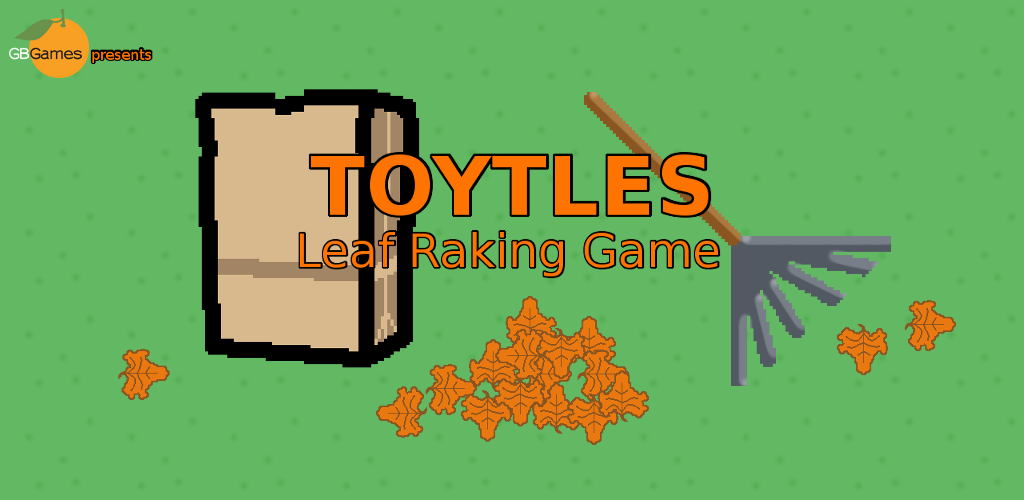
Toytles: Leaf Raking

One is my own leaf-raking business simulation game Toytles: Leaf Raking, which puts you in the role of a budding entrepreneur looking to earn enough money to buy yourself the Ultimate Item(tm)! It’s a game designed to teach responsibility and strategic thinking, currently available for Android and soon for iPhones and iPads.

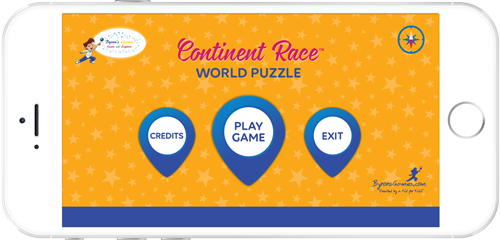
The other is a game I’ve been working on for two and a half years for Byron’s Games called Continent Race: World Puzzle. It’s a geography game in which you locate and place countries on a world map, earning stars along the way. It will be available for Android, iPhones, and iPads soon.

The story of Byron’s Games is incredible and inspirational, and I’m fortunate and honored to be part of their efforts to help other kids. An extended hospital stay and a passion for geography gave Byron the inspiration to help other kids learn and have fun — at the same time! Bryon’s Games also has a Continent Race board game which I’ll also have at the table. You can get the Continent Race board game and know that a portion of Byron’s Games profits benefit select children’s charities.

So if you’re in Des Moines, come see me at the Fest! I’d love to talk with you!

Categories
Games

Limiting Screen Time for Your Kids Isn’t Necessary?

When I was younger, my parents would tell me to turn off my Atari 2600 or my Nintendo because I was staring at the TV for too long. I remember one time in particular in which my father said something to the effect that it would ruin my eyes to play for so many hours at a time. I subconsciously rubbed my eye at that point, and he said, “Ah, hah! See?”

And I have felt self-conscious about rubbing my eyes after long sessions in front of the computer ever since.

But the main point is that I have always had this internalized idea that too much time playing video games or watching TV is bad (although it didn’t stop me from playing Civilization all night once…ok, a few times…I can stop taking turns anytime I want to!). There were health reasons, and there was also the idea that I should get outside into the fresh air more, or be more social.

As a game developer who is interested in creating entertainment that encourages curiosity, supports creativity, and promotes continuous learning, I would love to be able to watch my niece play the games I make and get not only real-time feedback but also help her on her journey to becoming a terrific person.

But when I visit, I find myself wondering if perhaps I shouldn’t contribute to even more of her screen time, as I almost invariably find her playing video games either on a tablet or on the computer.

If anything, my family is often getting her away from the computer to interact with people in the real world before she forgets how to do so. People like me, for instance. “Hey! I live over 300 miles away and only visit for a couple of days every few months. You could at least look at me once or twice!”

I know some people who use screen time as a reward for doing chores or good behavior, and taking away screen time is a punishment. By and large, their kids are not allowed to play games or otherwise use computers recreationally for more than so many hours per week.

But according to Christopher Ferguson of Stetson University, a recent study he led found that “there is only a negligibly small association between excessive screen time and higher levels of depression and delinquency among teenagers.”

Well, that’s good news. Playing too much Minecraft or Halo isn’t what leads your kids to becoming disaffected youth. Whew!

What’s more, Ferguson argues that since computers are so integral to society and how we live and work, preventing children from become familiar with modern technology is likely to prevent them from being able to participate in our increasingly fast-paced lives, which is the exact opposite of the result many parents might want when they limit screen time.

Funny, I’m pretty sure that was the argument I used to convince my parents to get me Mario Paint, which came with a mouse peripheral.

Naturally, our focus can shift from how long children play games to what games they are actually playing. I’m reminded of Steven Johnson’s Everything Bad is Good for You, which argued that today’s TV and video games are actually more challenging than they were decades ago, and so children watching TV and playing games today are essentially training themselves in decision-making and other important skills.

Even if too much screen time isn’t a real issue, I still might pry my niece away from games periodically, if only to be able to catch up and spend quality time together away from the screens. But the Ferguson’s study made me feel more comfortable letting my niece play games that teach responsibility and strategic thinking such as Toytles: Leaf Raking.

Of course, I also think a well-rounded video game education is in order, starting with the classics.

Let me dig out my Atari 2600…

Categories
Games General

Merry Christmas!

When I was younger, I loved the challenge of sneaking around the house during the holidays to find my Christmas presents before Christmas Day.

I like I think I was pretty good about it, too. I would sometimes find the already-wrapped boxes above the china cabinet or in my parents’ dresser.

Once I located the packages, I would slowly peel back the tape, being careful not to rip the wrapping paper. Then I would peek at what was inside, and after seeing the picture on a box or a name in big, bold letters, my curiosity would be satisfied. I’d replace the tape, and no one would be the wiser. Or at least I thought so. Maybe I believed I was sneakier than I really was.

One year, however, I went a little far. Well, ok, a lot far.

At that time, what had just been released for the N64 was The Legend of Zelda: Ocarina of Time.

I didn’t preorder it, so I didn’t get the cool gold cartridge, but I knew my mother had gotten me the game for Christmas.

But who could wait that long?

So I found the box, peeled back the gift wrapping on one end, sliced through the shrink wrap, opened the box, took out the game, and replaced it with another to ensure that the weight of the gift felt the same. I believe I used Body Harvest since I wasn’t playing that much at the time.

I think I played the game for two weeks before Christmas, and as far as I know, no one noticed that I was playing a game that I wasn’t supposed to have yet. When I opened my gift on Christmas day, I showed a lot of gratitude, and when no one was looking, I put Body Harvest back in my collection of games and continued playing Ocarina of Time from my last save point.

At some point, my family started double-wrapping my presents, which meant that I could no longer carefully peel back the tape and wrapping to see what I was going to get. I would just see more wrapping paper, and I wasn’t going to risk ripping it and giving away the fact that I had found the presents.

Today, my own home is preparing for the holiday. As of this writing, the stockings are stuffed, including the ones for the cats.

Christmas 2016 - Stockings Stuffed

Christmas 2016 - Cat Stocking

Hopefully Diego and Gizmo don’t sneak a catnip toy before the morning.

May you enjoy sharing tales with loved ones of the glories of Christmases long, long ago. Merry Christmas, and happy holidays!

Categories
Games Geek / Technical

Geek Out with Me: A News Feed for Sim City 4

If I love anything more than a good game, it’s people writing about their experiences with a good game.

The stories we tell about games are often more fascinating than the stories made for games.

I’m thinking of Fansy the Famous Bard of EverQuest, or a riveting story I can’t find now about a player in EVE Online who decided to go straight to nullsec space with nothing but the cheapest ship and see how long he could survive (if anyone knows which story this is, let me know. I’d love to find it and reread it again).

I’m thinking about great gaming moments like my first experience encountering The Beast in Homeworld: Cataclysm or the time I discovered how to trap a police officer in Lock ‘n’ Chase.

And now my friend Jim Boyd has created the Midlandia Internet Gazette, “an online news feed for the SimCity 4 region Midlandia, established in 2015.”

Midlandia as of December 2016 is comprised of 23 interconnected cities, with an overall population of 881,000. Among its highlights are an international airport, two Major League baseball teams, several universities, two movie studios, three television stations, and numerous radio outlets. Midlandia is a growing region, and is looking to break 1,000,000 in population by the beginning of 2017.

There are only a few posts as of this writing, but I look forward to reading about the development of Apia and the rest of Midlandia.

Categories
Games

Announcing: Toytles: Leaf Raking, Now Available on Google Play

Available now in the Google Play store, the leaf raking business simulation game Toytles: Leaf Raking puts you in the role of a budding entrepreneur looking to earn enough money to buy yourself the Ultimate Item(tm)!

Toytles: Leaf Raking

During the 90 days before winter, you’ll:

  • Seek out neighbors who need your services and turn them into paying clients.
  • Make key purchasing decisions, such as which types of rakes to buy and how many yard bags to keep in your inventory.
  • Balance your energy and your time as you seek to keep your clients happy without overextending yourself.
  • Visit the kitchen to ask your parents for their advice and wisdom.
  • Learn about personal responsibility and the importance of keeping your promises.

Pay attention to the weather forecast! You can plan your work around rainy weather and windy days, taking advantages of lulls to catch up on yard work for your clients.

Toytles: Leaf Raking

Seek out clients in your neighborhood, and keep them happy! After all, they’re paying you to clear the leaves from their yards.

Toytles: Leaf Raking

While your basic rake will get the job done, you’ll want to upgrade to tackle heavier leaf coverage more efficiently.

Toytles: Leaf Raking

Earn enough money to buy the supplies and rakes you need to keep your business going. You’ll visit the store regularly.

Toytles: Leaf Raking

Explore your neighborhood, but keep an eye on the time! You’ll need those hours to get your work done.

Toytles: Leaf Raking

Make plans and use strategy to earn enough money to buy the Ultimate Item(tm) and win.

Toytles: Leaf Raking

NO ADS, NO IN-APP PURCHASES, AND NO VIOLENCE

Have peace of mind with an ad-free, safe game that may inspire your own entrepreneur.

Get it on Google Play

Get your copy of Toytles: Leaf Raking today, and see if you have what it takes to run your own leaf raking business!

Categories
Games Marketing/Business

Published on Google Play? Kinda. Not Really.

After over nine months of development, I finally had a game I felt good about brave enough to release to the world.

My major goal was to release the app on the Google Play store first to get a sense of what the process is like and to get direct knowledge about the customers there.

I clicked Publish late in the evening of Saturday, October 22nd. Whew! A big step!

But now I’m in “Pending publication”, and while many unofficial resources mentioned waiting mere minutes to a few hours, I learned that Google changed its policy in 2015 to manually check apps. It still doesn’t take two weeks like it might on Apple’s App store, but it might take a little longer than it used to.

The status switched from “Pending publication” to “Published” the morning of Monday, October 24th. Woo hoo!

Leaf Raking Game - Published Sorta

Er, wait. Sorta.

For an entire day, and even now the next morning, October 25th, I still see “We’re sorry, the requested URL was not found on this server” when I click on the “View in Play store” link.

I keep finding all sorts of unofficial explanations about caching and how long it can be expected to take for listings to propagate through the system, but the only hint that it might take much time at all is in the Developer Console help article “Issues publishing apps” which asks if it “has been over 24 hours since published”, but then goes on to talk about search algorithm changes and reasons why apps might get filtered out on certain devices.

It doesn’t address a published app not actually being available anywhere.

It’s kind of difficult to feel good about finally publishing my project when I can’t point out any evidence to anyone. As a first-time publisher on Google Play, this experience is confusing and leaves a bad taste in my mouth.

According to someone on IRC, they had emailed earlier in the day and learned that there were some technical difficulties on Google’s end:

“Typically apps can take up to 24 hours to appear on the Play Store, however we are currently experiencing longer than usual delays across a large portion of our system. Our technical team is actively working on a solution and hope to have this issue fixed by the end of the day.”

So, we wait.

I find it confusing because when I self-publish on my own site, I don’t consider the game published until someone else can actually see it.

But this experience is teaching me about the process way more than reading about it ever would.

Categories
Games

Nah, I Think I’ll Still Call Games Art

No, Video Games Aren’t Art. We’re BETTER by Spiderweb Software’s Jeff Vogel is an alpha strike against…I guess people who talk about games as an art form?

While I don’t disagree with many of his points, I don’t think it ever really lands home the argument that games are somehow “SuperArt,” beyond mere art and evolved into something that is somehow more.

I love literature and theatre. I love great movies. Yet, I can’t remember any work of art, no matter how good, that consumed and drained me as much as the Cyberdemon in DOOM.

You could make the same argument about sex, which is also not something that someone would argue is art in the first place.

Arguing that games are financially doing well, incredibly culturally relevant, and published in great numbers is somehow arguing that games are doing great and don’t need to be forced to grow up and become art…as if someone is making this argument?

Artistic accomplishment? Creativity? Look up any Best Games list from 2014 or 2015. Video games are breaking new barriers in craftsmanship and artistic expression every year and turning profits while they do it.

I’ll bite. From PC Gamer’s 2014 list:

Game of the Year 2014: Alien Isolation, so basically Metal Gear Solid with horror? EGM’s quote according to the Wikipedia article: “”succeeds as a genuine effort to capture the spirit of the film franchise in playable form.” So a SuperArt form that is oddly derivative of the art it is supposedly beyond.

Best Singleplayer: Dragon Age: Inquisition, a sequel. It may be an awesome sequel, and perhaps they did some innovative work there, but it’s a sequel.

And 2015’s version of these awards went to Metal Gear Solid V and The Witcher 3. More sequels.

Sometimes I go to movies to see sequels, as well, but when gaming’s top offerings for the last decade boil down to space marines (to the point that Ubisoft publishes a game called “Space Marine”), World War II first-person shooters, and sequels to successful franchises, sports or otherwise, it’s hard to argue about how creative the game industry is. Even Minecraft, which don’t get me wrong, is incredible and not only offers a lot of ways to BE creative, but also involved quite a bit of creativity to implement, was originally based off of Infiniminer, and steals (and gives back) from Dwarf Fortress, among other games.

But then, Microsoft always liked to claim innovation with the caveat “for the first time on Windows…”

Listen, I don’t think anyone looks at certain popular films or novels as high art. Some of them are just candy, and candy sells well. So I don’t look to best of lists for innovation. I look to them for popularity. What’s everyone playing? Quite frankly, most everyone is playing sequels to games they already liked, overlooking some of the truly innovative work that is out there. That’s popularity for you.

No, I don’t think poorly of the game industry. I think what we do is amazing, and I have also argued against people like Roger Ebert who thought games can’t be art.

But when film was new, people thought it was a poorer form of theatre. Theatre was ART. Film? It was never going to live up to theatre’s ability to be art.

Then film came into its own. I’m sure people argued that film’s capabilities were so beyond theatre’s that art no longer was an appropriate term to describe it. Speculation on the future of film in its infancy leads to such flights of fancy.

Games are interactive. They pull you into an experience in an active way, which can be considered superior to the passive way a movie or book does it. Games can be elegantly well-designed. Games can do more than film, writing, sculpture, painting, or any number of art forms…in certain kinds of experiences.

But not all. It’s why people still buy books and watch films and go to museums. The fact that more people play games and more money is spent on games changes nothing.

When I write a game, I try to make you feel like you have power. Then I try to make you feel the awesome, terrifying responsibility of having power. When I force you to make a tough decision, for a brief moment, I can reprogram your brain and take your thoughts somewhere they’ve never been before. This is amazing.

It IS amazing.

It’s also not unlike art, which can take you out of your comfort zone and make you rethink your outlook on life. People cry at performance art. People have changed their careers and lives based on books they’ve read. And games have also changed people’s lives in meaningful ways beyond sweating and dopamine hits.

We haven’t begun to come to terms with the power we’ve unleashed with these toys, these addiction machines.

Oh, ok. We’re beyond art, but we’re nothing more than a drug?

It’s one thing to argue that games don’t need to worry about denigrating themselves by calling themselves art and being associated with the lower mediums.

It’s another to make that argument and then kick the legs out from that same argument by making it sound like the people behind games are nothing more than drug pushers looking to exploit those looking for their next high. “Video games are popular to the point of global invasion. Find me a human, and I will find a game that can addict them.” So, games are just an opium for the masses?

I hate it when a good game is described as “addicting.” Call it compelling. Call it irresistible. Call it riveting, spellbinding, or anything else your thesaurus can throw at it.

But don’t compare games to mere drugs. While some games might aim that low, many more don’t.

And as awesome as our medium is, art is art. We’re not “beyond art.” We’re just a different form of art. An awesome form of art, to be sure, but I’m still going to call it art.

Categories
Games Geek / Technical

Becoming an Accidental Fan

When I was a child, I had an allowance.

I had an interest in Archie comics, so sometimes my $2 per week would go towards an Archie Double Digest, but other times I would save up until I had enough money to buy myself a Nintendo game.

At the time, for you young ones who didn’t know, the games would go for about $50. If you do the math, that’s a long time to wait, but there was always birthday money, some of which I got to spend on what I wanted before the rest was thrown into savings for me, so it wasn’t always interminable until I could get my next game.

But as a child, and probably before I had Nintendo Power to tell me what games were being released, I didn’t always have a game in mind to buy. I just knew that by the time I saved up the money, I would go into the store with my parents and look at the walls of the video game aisle until I found something that looked like what I wanted.

I recall one time seeing a blue box with pock-marked fighter plane shooting through a hole in the sky with a space background behind it, guns blazing and everything. I thought it was an F-15 flight simulator that I had seen an ad for in a really old issue of Electronic Gaming Monthly.

I was a kid. I didn’t know what an F-15 was. I just knew it was a plane that shoots other planes, and that I wasn’t playing Top Gun at my friend’s house with its incredibly difficult carrier landing sequences. So I thought I was getting another cool shooty-plane game.

It turned out to be Thunderbirds.

I had never heard of Thunderbirds, but I remember really enjoying the game with its various ships in different environments. You only had so many in-game days to fight your way through your choice of different areas to defeat Hood’s plan to rain destruction on the world, and that extra layer of mechanics made an impression on me.

Then I discovered that the game was based off of a television show from the 60s involving marionettes who spoke and made their emotions clear on their faces using “SUPERMARIONATION!” Not to be confused with Super Mario Nation.

It was exciting for me to know that I can enjoy this world in another way, especially when I was in college and TechTV aired the series with a pop-up-video-esque bits of trivia about how the scenes were made or how the characters interacted.

When the Thunderbirds live-action movie was released, starring Bill Paxton and Ben Kingsley, in the summer of 2004, close to my birthday, I tried to arrange an outing to go see it. Unfortunately, when my birthday arrived, I found it was no longer in theaters, due to how terrible it was performing. I still haven’t seen it, although even knowing it is supposed to be bad and that the creator of Thunderbirds hated it, I still would watch it.

What’s even more disappointing was that at the time, Team America: World Police was being advertised, and when I first saw the trailer for it, I immediately thought, “Oh! They’re making a Thunderbirds movie!” And then it revealed it wasn’t Thunderbirds at all. I haven’t seen it, either.

But the point was that buying a game without any idea of what I was getting into was a gateway into a world I didn’t know existed. Every so often the theme music gets stuck in my head, despite the fact that it has been years since I played game or watched an episode of the show, and my favorite ship is still the Thunderbird 2.

I accidentally became a fan because of a somewhat misleading piece of box art.

Another game I bought with my allowance money without knowing what I was getting into was Wizardry: Proving Grounds of the Mad Overlord. I saw the skeletons with swords and the very cool looking dragon on the cover, and I thought, “Yep, I’ll get that.”

And then found that I didn’t understand how to play. At the time, I might have been 9 or 10 years old, and I was used to games in which you played them and tried over and over to get through. I had no concept of the idea of building up experience and exploring a maze, mapping it out manually as you went because it was too much to try to memorize.

It was years later when I gained a new appreciation for the game, and it became one of my favorite RPGs. At some point, I discovered used copies of NES and Super NES games in the series, and when I discovered Interplay had published The Ultimate Wizardry Archives, which includes the DOS versions of Wizardry I, II, III, IV (in which you play as the villain Werdna from the first game), V, VI, and VII. It also had Wizardry Gold, which was basically Wizardry VII prettied up for Windows.
What’s funny is that despite liking Wizardry and owning every game in the main series, most of these games I only played a little bit. I never finished the first one, and I thought I should do so before moving on to the next. So aside from trying them out, and being somewhat disappointed that the music and graphics from the NES version were missing from the DOS versions, I’ve made these games wait for me.

And then there was Wizardry 8. I remember reading that it was being made, and that Sir-Tech was looking for a publisher.

And then I remember reading that they couldn’t find a publisher.

And then it was years of periodically learning that they still hadn’t found a publisher. I remember one article claiming that while the game would be highly polished due to the extra time the developers have, the graphics engine was going to look dated by the time it found a way to be released.

And then it was released! And I got my copy!

And then I learned that Japan has a huge fanbase for Wizardry, partly because the original developers had the technical foresight to make it easy to translate the text of Proving Grounds. What it means is that the Japanese periodically continued to get new games related to that world, including an MMO, which lasted all of a month when it was available in the US.

Even today, I periodically look up Wizardry in case I learn any new bits of trivia. I enjoyed The Digital Antiquarian’s history of the Making of Wizardry and Jay Barnson’s Wizardry 8 playthrough complete with developer interviews. I remember finding out that there’s a We Love Wizardry album which recreates the NES music with an orchestra, which I am of course listening to right now.

Let’s be clear. I’m a fan of Wizardry, but I feel like I don’t have enough playtime with the series to be a huge fan.

But still. Because I thought swords and skeletons looked neat as a child, I got to become a fan ready to explore entire worlds. And get the theme music stuck in my head out of nowhere.

It’s funny, because today I would be afraid to admit that I bought and played a game sight unseen. With so many games, and so many reviewers, it seems strange to not at least ask someone about a game or to look it up before handing over my money on an unknown.

On the other hand, sometimes it is great to discover a gem on your own, and then to discover that there’s an entire collection of jewels to enjoy that come along with it.

Categories
Games

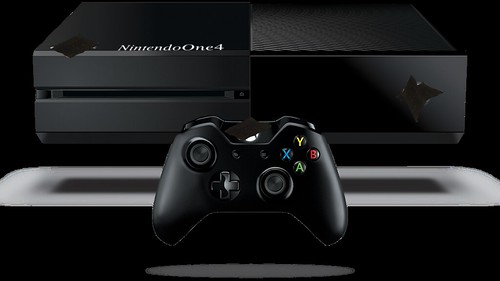
Nintendo Reveals Details, Pictures, and Official Name of NX

Nintendo hasn’t given away too many details about their upcoming console known as NX. Rumors abound, with speculation based on patent filings, and recently a few leaks about the NX controller turned out to be hoaxes.

Many expected Nintendo to make a formal announcement at E3 this June, but the company surprised fans with not only the announcement but the release of their new console through the What’s New section of Nintendo.com:

It is with great excitement that we introduce to you the NintendOne4, our most advanced home entertainment console yet!

In the past our systems have been designed around the kinds of games our designers would like to create, and we usually kept those systems a secret until we felt we accomplished what we wanted it to do. Sometimes, however, what we create isn’t always well received by our customers.

They were clearly referring to the disappointing reception of the Wii U, of which they recently denied rumors that they had stopped production on it. Many of their target customers were never clear on what the Wii U was and why they should have bought one.

The NintendOne4 surprised many analysts who expected yet another console that was more unique than what competitors were offering.

Instead, Nintendo has opted to put out a system that seems more inline with what a follow-up to an Xbox One or PS4 would look like.

We’ve designed this new system based on the enthusiastic feedback of our most passionate fans, and we think you’ll love the gaming experiences this new system allows for.

NintendoOne4

Nintendo of America’s Reggie Fils-Aimé was quoted as saying, “We’ve always been interested in what the fans want”, and that the company was moving in a completely different direction due to the needs and wants of a devoted following.

“We knew we had passionate fans, but there was this very small, core group of people we discovered who were super passionate about gaming. They’re kind of the gatekeepers of games in terms of their influence, and in fact, once we started hearing what they had to say, we realized that NX had to be completely different from what we were originally trying to do.”

When pressed about this group of fans and their influence, Fils-Aimé referred vaguely to a very small group involved in social media who coalesce around “some hashtag or another.” They’re Nintendo’s essentially free focus group, and they have been instrumental in the company making the strategic moves they did.

“We think it’s amazing that there is this tiny community of very vocal fans who can tell you exactly what they’re thinking and feeling at the drop of a hat. And we want them to know that Nintendo is listening to every word they say and taking it very seriously.”

He quickly changed the subject to speak excitedly about the NintendOne4’s launch titles.

“There are an unprecedented number of innovative and enjoyable games people can play right now, which is unheard of for a new console launch.”

Almost 300 games are available, and some surprising items in the list include Halo 5: Guardians, which was originally a Microsoft-exclusive title.

“Yes, we have some very interesting partnerships,” said Fils-Aimé, while gesturing with wagging fingers in the air.