Categories
Game Development Geek / Technical

More Game Mechanic and Algorithm Visualizations

Sometime back, I wrote about GameMechanicExplorer, which was a new site that allowed you to explore game mechanics interactively.

Seeing a new technique represented in a visual space can help make it easier to understand, especially if the math or algorithm is complex.

If you’ve ever done searches online for game development, you’ve probably come across Amit Patel’s website, which acted as a public set of bookmarks for various game development resources.

RedBlobGames 1

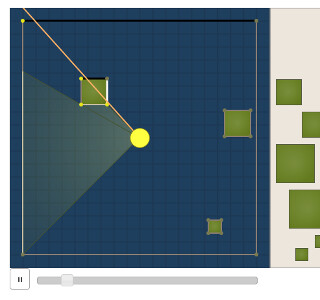
In the last year, he started posting interactive visualizations to explain topics such as lighting and visibility, A* pathfinding, probability, and using noise to make procedural generation look natural, among others.

RedBlobGames 2

I enjoyed his article on procedural map generation in the past, but being able to see (and hear) how noise works and learning about the different kinds of noise in one place is amazing.

In general, you can find a lot of great game development resources at Red Blob Games, but these new visualizations add a lot of value. Thanks for posting these, Amit!

Categories
Game Design Game Design Workshop Wednesdays

Introducing Game Design Workshop Wednesdays #GDWW

Recently I was sent a review copy of Game Design Workshop: A Playcentric Approach to Creating Innovative Games, Third Edition by Tracy Fullerton. Fullerton is the Chair of the Interactive Media & Games Division at the USC School of Cinematic Arts and won the IndieCade 2013 Trailblazer award, which is an award given annually “to a working game creator who has both made great contributions to the field of games and captures the independent spirit.”

I’ll have a review of the book itself published at a later time, but I’ll quickly highlight the vitals.

The book is split into three parts. The first part is all about game design basics. Terminology is defined, and games are broken down into formal elements, dramatic elements, and system dynamics.

The second part is about taking what you learned in the first part and putting it into practice. You’ll learn how to generate ideas, prototype them, conduct playtests, and refine the design until it is functional, complete, and balanced.

The third part focuses on working as a game designer in the industry, both in terms of job descriptions as well as what life is like working on a team. I note that going independent was given roughly a page in a 10-page chapter on getting you and your ideas into the industry.

I think the book overall covers a lot of ground, provides lessons as well as examples, and even features the wisdom and advice of many prominent game designers such as Richard Garfield, Josh Holmes, Jenova Chen, and Will Wright. I think this book is a great addition to my game design library.

Of course, merely reading a game design book won’t teach you game design anymore than reading an art book will teach you to be a painter.

You need to DO game design to become a game designer.

This book has plenty of exercises throughout its chapters to guide you through creating your own playable game designs. As Fullerton says in the introduction, “If you think of this book as a tool to lead you through the process of design, and not just a text to read, you’ll find the experience much more valuable.”

On that note, I’d like to introduce Game Design Workshop Wednesdays. Each Wednesday, I’ll take an exercise from the book and go through it myself, sharing what I’m doing. If you’d like to follow along at home, you can click on the link above to get your own copy through Amazon.

So join me next week as we learn and create games together. I’d love it if you left comments to share how you did on your exercises as well. Alternatively, if you would like to write your own blog posts, or tweet or otherwise participate on your own, use the hashtag #GDWW so we can all keep in touch.

UPDATE: Here are the links to exercises completed so far.

Categories
Games Geek / Technical General Politics/Government

Why Does Your Game App Need My Browser History and Photos?

Years ago, I started paying attention to the usage of so-called digital rights management (DRM) in games and made my purchasing decisions accordingly. I might have missed out on some major cultural impacts, but I wasn’t going to passively accept what I thought was a draconian form of copy protection. A form of protection that, by the way, doesn’t even work most of the time, so only legitimate customers get punished.

In practice, it meant not buying many major games. Spore is one very famous example, and I wrote a bit about it in this post about it’s reception in the market. Reading it today, I can see I was a bit angry about the DRM:

Do I like the game? I haven’t played it. Apparently Spore has some crappy so-called DRM solution attached to it, and it’s definitely not available for Gnu/Linux, so my choice is to boot up Windows AND suffer this DRM crap, or play a different game on my preferred system. It’s too bad. If things were different, I’m sure I would have liked Spore, too, but I refuse to pay for a steak dinner delivered on a garbage can lid.

Ooh, burn!

It was my attitude, and it still is today, partly because DRM is fundamentally flawed and partly because it’s a system that makes it easier to be a criminal.

But this post isn’t really supposed to be about DRM. Today, I find myself concerned about downloading free-to-play games on my smartphone that require bizarre permissions.

Recently, I was looking for a good strategy or simulation game to play on my Android smartphone. I found some that seemed promising and popular, and I found myself stopped when I clicked the install button because the requested permissions were ridiculous.

Why does this game need access to my browser bookmarks and history? Or why does that game need access to my photos?

Actually, it seems that Google’s API just doesn’t allow very fine-grained control of what is and isn’t allowed to be accessed by an app. According to this What’s on Dave’s Droid? post, if an app needs access to the state of the phone to know when to minimize if a call is coming in, it has to get that information from the same permission that gives it access to the identity of who is calling.

And this isn’t a new story. I’ve just only become aware of the problem myself.

I get that the permissions section can’t be too complex for the user experience. People don’t read EULAs as it is, and I’m sure many apps are perfectly safe, but is it weird that we’re being so trusting of apps by hoping that they don’t cross a line we’ve given them permission to cross? Especially in a world where we know we’re being spied on?

For now, I feel that I need to treat some apps just as I treated games packaged with so-called DRM. I’ll ignore the ones that ask too much or that are made by someone I have no reason to trust. Maybe I miss out on a gem, but I’ve survived without Sony’s rootkits and the pain of not being able to install a game I’ve legally purchased in the past. I think I’ll survive not playing a game that may or may not be compiling a list of my contacts and recording my location.

Categories
Game Development Games Marketing/Business

Controversy over 2nd Mighty No. 9 Funding Campaign?

Outraged Gizmo

Last year, comcept USA, LLC raised over $4 million for their 2D platforming game Mighty No. 9. Over 60,000 backers plus whoever contributed through PayPal are looking forward to this Mega Man-inspired project to get completed, and the development team has been periodically releasing their work to show how much progress has been made, such as this Mighty No. 9 work-in-progress video released last month:

It’s generating quite a bit of excitement, and as the developers realize that this game has a large and dedicated following, they decided to capitalize on it.

Announced at the 2014 Anime Expo, there is a new funding campaign:

More details about the announcement are at the Mighty No. 9 website, but the general idea is that the original funding is enough to make the game and it will still be made, but this new campaign is to fund bonus content. The first announced stretch goal is full English voice acting.

Apparently some people are outraged about this second campaign. People are complaining that producer Keiji Inafune is greedy. “You’ve already got $4 million, and now you want even more money?!” Some people have compared it to Exploding Rabbit’s Super Retro Squad, which met its very conservative funding goal easily, yet the developers were inexperienced and realized during its development that making games is hard.

But Mighty No. 9 is getting made. The people behind it know what they are doing and are fully-funded. The new campaign isn’t to help finish the game. It’s to add more bonus content to the game.

There is a very strange entitlement issue that some vocal Internet denizens seem to share. Kickstarter is a way to invest in something, and it’s entirely possible that it will fail. You contributing $5 or $500 does not mean you will get what is being made. A project may also turn out completely different than originally planned.

And when Mighty No. 9 is looking like it is well on its way to being exactly as advertised, the hostility lobbed at the developers for what some people misunderstand as greed is even more bizarre.

Making games in full view of the public is like being an umpire at a Little League baseball game in which all of the parents watching are drunk and boisterous and occasionally violent. Oh, and they don’t know how the game is played, yet have no trouble telling you how you are doing a terrible job in very colorful language.

Is it just business, though? Are people merely getting insight into what it is really like, now that funding is crowd-sourced? Or is it the nature of business on the Internet?

I imagine Bill Gates long ago learned to put a filter on the content he reads to keep his sanity. It’s hard to keep your finger on the pulse of the industry if you are going to read about how you are the Devil incarnate on a regular basis. I suppose before the Internet you just had to worry about a harsh opinion piece in the newspaper because most publicly-available forums were professional in nature.

Being an indie developer has appeal for many partly because you are not beholden to someone else. You have no boss but yourself. You have no constraints on your vision but your own. You have no deadlines but the ones you impose.

Yet, crowd-sourced funding puts you in this strange place. It enables you to not only do market research and connect with fans, but it can also give those fans a sense of ownership in your independent venture. And if the expectations aren’t clear upfront, there can be a lot of pain.

Categories
Games

Playing The Legend of Zelda: Wind Waker for the First Time

A few weeks ago I was at a friend’s place to play the new Mario Kart 8 for the Wii U around launch day. While waiting for everyone else to show up, I opted to start playing The Legend of Zelda: Wind Waker HD.

And it was gorgeous.

Last week I fell under the weather, and between bouts of rest and drinking plenty of fluids, I opted not to use Netflix to catch up on terrible movies my wife won’t watch with me and instead play a game, something I don’t do nearly enough on the Wii. I didn’t want to pull out Twilight Princess or Skyward Sword because both required motion controls and I didn’t feel I had the strength necessary.

So I got out my copy of Wind Waker, the non-HD Gamecube version, got out the Wavebird so I could play from the couch, and settled in.

I haven’t played it in years. I still had the save file with my then-girlfriend’s name on it, and my own save file which didn’t have much progress in comparison. I deleted both, and I started a fresh game.

Even in non-HD, it’s a beautiful game. I remember people hating the way it looked because they wanted something more realistic, but the emotions communicated on Link’s face when he fears he is disappointing his grandmother or when his sister is captured are evocative. When you are hiding in a barrel and avoiding the lumbering moblins in the Forsaken Fortress, it’s like playing out a cartoon. And I’m convinced that when the Deku Tree reveals the Koroks, it has to rank up there as the cutest introduction to an Ewok-like race since Star Wars VI: Return of the Jedi.

The world feels like a place to explore, and as you sail around, you see islands in the distance that appear to seamlessly come into view as you approach. There are hints that despite the people not leaving their islands that they know each other, and I’m looking forward to returning to my home island to see if I can do some match-making.

There’s a lot of noise out of the recent E3 about a new “open-world Zelda game” for the Wii U, but Wind Waker seems pretty open to me already.

I was having fun, and it was like the game was being seen with fresh eyes.

And then, when I came upon a volcano island I don’t remember ever seeing before, it dawned on me: I haven’t actually played this game.

Remember my then-girlfriend’s save file? Yeah, she was the one who played it. I watched sometimes, and occasionally she would hand me the controller to help her get past some dexterity-based puzzles, but I somehow thought that I had experienced this game when I hadn’t.

So, Wind Waker is my current obsession. Aside from World Cup soccer, that is.

I want to document the game design elements I notice. For instance, I liked the way you get challenged by one of the children of Outset Island to jump across rocks, which helps teach you, the player, how to handle jumping in a safe way.

I’m looking forward to playing Wind Waker again, for the first time.

Categories
Games

New Video Blog of Indie Games on IndieGameADay.com

Mike Rose, UK editor of Gamasutra, recently launched IndieGameADay.com, a video blog of new indie games.

Each day, there’s a video of Mike recording himself playing an indie game. For instance, here’s one of his session of Haunt the House: Terrortown:

I love these spotlights on the indie game development scene, and I hope he’s able to keep it up. As of this writing, he’s got about a week’s worth of posts. To navigate the site a bit easier, you should click on the menu icon at the top, then click on the monthly Archive to see all posts for that month at once.

There’s also a weekly roundup which is a playlist of the videos for the past few days so you can consume them all at once.

Categories
Games Marketing/Business

An Inspiring Indie Story: Team Football’s Licensing Deals

Team Football Logo

With the World Cup happening this month, there are bound to be some soccer games made to take advantage of the attention it brings. While most will be terrible, and many will be nothing more than “swipe to take a penalty kick” games, a few will be good.

Of course, without the official FIFA license that EA has locked in until 2022, even good soccer games will have a hard time getting noticed without something unique to offer, such as zombies or combat or familiar faces such as Nintendo’s Mario or Capcom’s Mega Man. Otherwise, it seems only Konami has a serious contender in terms of official licenses. It probably isn’t likely that other publishers, let alone independent game developers, will be able to negotiate a deal to offer any official content in their own games.

No one told indie studio Team Football, who managed to secure the official license to England national team for their game Official England Football (which is only available in England). The small startup also managed to work out a licensing deal with France, Japan, China, and Brazil, and Official Brazil Soccer is supposed to be available around the world, although I couldn’t find it at the time of this writing on my Android tablet.

Many aspiring indie developers start out realizing that games don’t appear fully-formed, that someone had to make the games in the first place, which means it is possible that they can make games. Suddenly, they are excited by the possibility, and some get burned when they bite off more than they can chew.

Eventually, they stop deluding themselves into thinking they can make the the best MMO RPG/FPS/RTS EVAH! They internalize the lesson that they need to be “realistic.” The common advice is to cut down on your scope, to recognize that you can only do so much by yourself and with your limited resources.

But being realistic is also a good way to sell yourself short. You may have the capability to achieve something fantastic, but if you assume you can only accomplish something mediocre, you’ll stop before you should.

Granted, some indies have access to different levels of resources. Some managed to save up hundreds of thousands of dollars, others inherited, some borrowed, some are leveraging income from their day jobs, and some are struggling to make ends meet. Some have a team of talented individuals, others toil away in solitude.

Team Football benefited from Birmingham’s Entrepreneurs for the Future incubator, funding from Creative England, and some good contacts in the industry.

But they showed what’s possible if you go out and chase after what you want. An indie game development studio with official licenses for their sports games is able to stand out among the crowd, and in a heavily-saturated market, getting that attention is precious.

Are you setting supposedly-realistic expectations for yourself, or are you imagining what’s really possible?

Categories
Games Marketing/Business

Advertising Your Game on YouTube

YouTube Channels

A few years ago, I read that search engine optimization (SEO) wasn’t just a way to make sure Google and Yahoo! can find your website. iTunes is also a search engine, so if you had a podcast, you know where your content needed to be listed.

Similarly, YouTube is a search engine. Are you optimizing your marketing efforts there?

You have two opportunities here: leverage existing channels and publish your own.

Leveraging Existing Channels

There are quite a few channels focused on games, and some of these channels have dedicated viewers.

In the article Advertising Through YouTubers, Kevin Harwood makes the case for introducing your game through one of these influential channels by endorsing them so they review and play your game for everyone to see.

I was a bit turned off by the “let me show you the numbers” part of the article:

It would be completely within reason to pay $250 per video made and commission four 20-minute game play videos.

100,000 viewers

$1000

even if only .5% of the viewers go forward and purchase your game for $30 on Steam (you earn only $20)

You have earned $40,000 in revenue

No this is not a “get rich quick article”. I’m simply showing the ROI on a basic initiative like this.

Now, this article was not published years ago. The race to the bottom in game pricing has already occurred. Most indies are not selling their game for $30 on Steam, and I’m sure a 0.5% conversion is one of those things that doesn’t just happen.

Still, I don’t think the basic principle is off. YouTube videos are bite-sized content that your prospective customers are actively searching for. The same may or may not be said for your game’s website. If you can do more than merely send a link to a channel’s owner, you have a better chance of your game getting featured and in a positive light.

Harwood suggests incentives to encourage the reviewer to play the game with a goal of achieving some level. It would be terrible if your intricate strategy game was reviewed by someone who didn’t seem very invested in trying and misunderstood some key aspect of it. Saying something like “If your playthrough gets past the Cow Level, you can get three free copies of the game to giveaway to your viewers” means that your exciting and awe-inspiring Cow Level has a better chance of being featured than if you merely hope the reviewer gets that far and discovers it.

Obviously you can’t control how other people will enjoy your game, and if you pay to get your game endorsed, there are even laws governing disclosure. See the FTC’s 2013 PDF dotcom Disclosures: How to Make Effective Disclosures in Digital Advertising.

The goal isn’t to deceive people into thinking that an influential reviewer loves your game. The goal is for the influential reviewer to give your game a fair chance, and you want to put in some work to make sure that your game is shown in the best light.

If you do nothing but spam emails to these video reviewers, having no relationship with them in the first place, you are just another faceless game developer. It is random chance if your game is reviewed in the first place, and if it is, who knows how the reviewer will play it.

Imagine if a game such as Mario Kart 8 was reviewed by someone who didn’t know that you can use the items that you pick up on the track. That is, this person picks up banana peels, or mushrooms, or a boomarang plant, but didn’t know to press the button that actually makes use of them. One of the key features of the game is completely ignored in the review, and suddenly the game looks somewhat flawed and confusing.

So no, getting your game featured on popular YouTube channels is not a guaranteed way to make your game popular. You still have work to do, and Harwood has some creative ideas for making it work out well for everyone involved.

Publishing Your Own

If, on the other hand, you want to make your own videos to similarly take advantage of YouTube as a search engine, there is a separate article on how to make videos for games by Alconost co-founder Kirill Kliushkin you would want to see.

My favorite piece of insight was how scripts are timed so that voiceovers are matched to on-screen events. I also really appreciate how the entire process is purpose-driven. The first question they ask is “Why do you need a video?” and the process flows from the answer.

Kliushkin covers teasers vs trailers vs in-game video intros, scripting and storyboards, and the importance of professional-quality voiceovers, among many other topics. Even if you plan on hiring someone else to make the videos for you, this article seems like a good primer on the basic things you need to keep in mind to create the right video for your marketing needs.


Categories
Marketing/Business Personal Development

Video of My Talk On The Importance of Purpose, Mission, and Vision

NOTE: I presented an updated version of this talk on April 18th, 2017: Get Energized and Stay Motivated with Slides from my April 18th IGDA Des Moines Presentation.

On May 29th, I gave a lunch and learn presentation at StartupCity Des Moines titled Playing the Long Game: The Vital Importance of Purpose, Mission, and Vision to Your Business.

It was a post mortem of sorts. I’m running this business part-time as I have a day job again, but I ran GBGames as a full-time independent game developer from 2010 to 2012…poorly. There were some major lessons I learned about running a business, and the idea was that by sharing the cautionary tale of GBGames, other business owners could benefit from my experience.

If you couldn’t make it to my presentation, don’t worry! There’s a recording uploaded at http://youtu.be/jtsE6lGp-Pw: Awwwww, it’s no longer up and the video has been lost. B-(

Trust me, though, it was awesome.

I also uploaded the slides with notes in a few formats:

The presentation itself is about 35 minutes long, and then there was some quality question-and-answer time with the audience. The energy I got talking about the impact I wanted to have in the world really brings home the point I was making about the importance and benefits of having a clear purpose, mission, and vision.

It was a great experience, and my talk was well-received. I hope you get some value out of it.

Categories
Game Development Marketing/Business Personal Development

Reminder: Come to My Lunch and Learn Presentation on May 29th

If you can make it, please come to my Lunch and Learn post mortem about my time running GBGames full-time on Thursday. I hear it will be a good one.

Playing the Long Game: The Vital Importance of Purpose, Mission, and Vision to Your Business

Gianfranco Berardi will share the major lessons that can be drawn from his experience running an independent game development business full-time.

He’ll explain what happened between the time he delivered his two weeks’ notice to his day job in 2010 until 2012, when a lack of funds forced him once again back to part-time business owner status. See how a lack of strategic planning resulted in a business with no focus and a business owner feeling out of his depth. More importantly, learn how doing the hard work of identifying your Why, How, and What pays off both immediately and in the long-term.

WHEN:
May 29th, 2014 at noon

WHERE:
StartupCity Des Moines
317 6th Ave, Suite 500, Des Moines IA, 50309
p: 515-868-0473
e: info@startupcitydsm.com

It’s a free event, and I’d love to see you there. Register for it at https://tikly.co/-/2510.