Categories
Game Design Games Marketing/Business

Plants vs Zombies: How Did PopCap Do it?

It’s almost 9:30 PM as I write this post. The significance of the time is that it is hours after I expected it to be. The reason: I’ve been playing the demo of PopCap’s Plants vs Zombies and didn’t notice the passing of the hours.

If you’re a game developer, the first question on your mind is probably “What did PopCap do so right?” It’s bizarre. Tower Defense games were last year’s Big Thing. They’re old hat now. Everyone made their own Tower Defense game variation to the point that it was becoming its own genre. So how did PopCap take what is essentially a played-out game mechanic, theme it with zombies and plants, and create it’s fastest selling game that is being talked about all over the Internet?

Well, it’s PopCap. I’m sure they prototyped a lot of really bad implementations before hitting on the finished version.

But the game has zombies and cutesy plants. How didn’t this game simply fail at trying to appeal to everyone?

The game was conceived by George Fan, who is also the creator of the IGF award-winning Insaniquarium. So that’s where he went off to! There’s a few interviews with him, although they aren’t terribly in-depth. GameArena and Hobbit Hollow Games managed to discuss the game design and development with Fan, but I would have liked a bit more info. Gamasutra managed to report that the first prototype of the game was completed three years ago in an analysis of Plants vs Zombies.

Three years! No wonder there are so many modes to the game! I bet there were a number of winning prototypes, and the decision was made to include them all. And again, I ask, how did this not fall on its face as trying too hard to be all things to all players?

I have a feeling that the game was being tweaked and changed all the way up until it was finally released. While most players might not notice it, I think the game looks slightly unfinished, as if a few more weeks (!!) of polish would have made it perfect. Sometimes it seems like an animation is missing or a color is off. One complaint I’ve seen online is that the later plants can sometimes be pretty pointless.

On the other hand, what IS in is fantastic. The variety of zombies and plants is amazing. The first time I saw a Dancing Zombie, I was cracking up long enough to distract me from collecting sunshine. It almost cost me the level. The entire game is rich in detail. The plants dance and move, the zombies fall apart as they get destroyed, and the game mechanics even change every so many levels! Suddenly, instead of planting seeds, you’re bowling for zombies or hitting them with mallets as they pop out of graves!

There’s humor, interesting character designs, and a regular reward schedule. The game is pretty active. While most Tower Defense games only let you purchase and place towers, Plants vs Zombies lets you collect sunshine as a resource. Regularly. You’re constantly clicking somewhere on the screen. At the end of most levels, you’re given a new plant, and the next level might introduce a new zombie type. So each level, there is something new to see. And again, the game changes significantly every so many levels. Instead of being able to pick and choose your plants based on resources, you might have a conveyor belt of pre-chosen plants with which to fight off the zombie horde. Instead of planting seeds, you might bowl the Wall-Nut into them.

So even if you are a regular Tower Defense veteran, somehow you won’t get bored by how easy the game is. There’s just too much to do and see! Is the insane variety of everything the secret to the game’s success? Do you want to keep playing just to see what’s next?

Apparently Plants vs Zombies appeals to both casual and non-casual players equally. It’s very easy to get into, and it is very easy to stay in. Like all Tower Defense games, it’s a resource management game. Before a level starts, you can choose which seeds to carry into battle with you. You only have so many slots, so you’ll find yourself choosing between the option of slowing zombies with snow peas or destroying many of the undead with the cherry bomb. When you plant a seed, there is a reload time before you can plant another of the same type (one of those things which intuitively doesn’t make sense outside of the fact that it is a game), so while you might not want to plant a peashooter until you know where the next zombie is coming, guessing correctly means you had enough time to plant a second one before it shows up. Some zombies use props to try to protect themselves or circumvent your defenses. The pole vaulter will jump over the first plant it sees, so the Wall-nut that should be protecting your weaker plants isn’t as effective. The snorkeling zombie can’t be hit by normal shots unless he is out of the water. I know I’ve planted lily pads specifically for this guy to chew on just so my peashooters can take him out as he rises to chow down. Failing that, squashing him with squash was another cheap and effective way to deal with him.

If anything demonstrates my claim that a game can be made more casual by making it more accessible, Plants vs Zombies is it. It does so many things right while providing so much of it to the player in a manageable way. The entire experience is fun and enjoyable.

As an indie, I take heart knowing that a fantastic game like this can be made by a small team, can use what would otherwise be considered an old game mechanic, and set a new standard that appeals to a wide cross-section of players. I hope I can learn more about the day-to-day development of this project. Was it three years of focused development, or was Fan’s team working simultaneously on other games at the same time? Was PopCap getting nervous that this game was taking too long, or were they fully backing the project, giving it as much time as it needed to be good? What can an indie game developer learn from the development of this game? When will we see the Plants vs Zombies post-mortem?

Categories
Geek / Technical Politics/Government

Another Abuse of the DMCA

Jay Barnson of Rampant Games reported on yet another abuse of the DMCA. This time, the abusers are car manufacturers.

Modern cars are equipped with computers, which means repairs and auto work now require more than just hitting your engine with a hammer. It seems that in order for non-dealership service shops to fix your cars, they need to circumvent the encryption of your engine.

And of course, according to the Digital Millenium Copyright Act, circumventing “technological protection measures” is a felony.

The DMCA was passed under the impression that artists and authors would produce more creative works since without these protections they had no incentive in the modern age. What we’ve seen is security researchers barred from discussing research on computer security, which also discourages said research in an age when we need such research the most. What we’ve seen is Wal-mart, Best Buy, and a number of other major retail companies use the DMCA to prevent comparison shopping websites from posting uncopyrightable prices. What we’ve seen is the removal of public domain works from sites such as The Internet Archive. For a list of abuses as of 2003, see the Electronic Freedom Foundation’s list of abusive DMCA subpoenas and takedown demands.

The DMCA doesn’t require the accuser to demonstrate proof. No judge needs to be involved to allow overreaching takedown powers. If the accuser sends a notice to an ISP, the ISP needs to take steps immediately or be found at fault and liable for damages. If you upload a video you made to YouTube, and Viacom or 20th Century Fox sends a DMCA notice to YouTube accusing you of uploading THEIR content, you can defend yourself…after the fact. Most likely you will find that your video has been removed, even if it was completely original and under YOUR copyright. Imagine if Microsoft or EA managed to get your game removed from your servers by sending a DMCA notice to your ISP.

And now apparently the DMCA is being used to lock-in service work for car dealerships. Seriously? In this case, it doesn’t even involve a copyrighted work! It also discourages hobbyist car mechanics from tinkering with their cars. It’s disgusting.

So apparently after the DMCA gives all of these absurd powers away, we need laws to patch up specific abuses. Researchers can do research under an exception. If you’re blind and want to be able to listen to ebooks? You need an exception. Now there is a Right to Repair Act on the way to allow people to take their cars anywhere they want for service. Where’s the Right to Repair Act for everything else?

The public loses again.

Categories
Game Development Personal Development

Thousander Club Update: May 18th

For this week’s Thousander Club update:

Game Hours: 576 (previous three years) + 118.5 (current year) = 694.5 / 1000
Game Ideas: 775 (previous three years) + 10 (current year) = 785 / 1000

Ugh. Another slow week. And actually, the increased numbers represent two weeks. I’m doing a horrible job of focusing on game development. On the other hand, I’m doing a great job of focusing on other aspects of my life, so lulls are to be expected. I just fear that this lull is taking longer than it should.

[tags]game, game design, productivity, personal development, video game development, indie[/tags]

Categories
Geek / Technical Marketing/Business Politics/Government

Simplifying Copyright for the Modern World

Thanks to Scott Macmillan of Macguffin Games, I learned about an article by Cory Doctorow called Digital Licensing: Do It Yourself.

Doctorow suggests a fascinating idea: self-service licensing. Let’s say you create a game, and someone wants to create plush toys of the characters and sell them online. Technically, it’s illegal unless they get your permission. Disney, for instance, would want you to negotiate an agreement with their expensive lawyers…which requires you to hire your own expensive lawyer. Unless you’re a huge manufacturer and intend to sell to hundreds of thousands of customers, it’s not worth the expense and effort.

But you’re an indie. You don’t have an army of lawyers on staff. Your staff might consist of just you, in fact. So if someone wanted to make a plush toy out of your video game characters, and you had no problem with people doing so, even for commercial gain, but wanted to make sure you were protected, what could you do?

Your options used to be sticking your head in the sand, risking the dilution of your trademark, giving permission but worrying about what legal rights you might accidentally give away, or preventing people from making what are essentially derivative works without your consent. But why not just give them consent? After all, it isn’t your core business, and they’re taking all the risk. Wouldn’t it be nice if you could make an agreement with them without having to negotiate over the course of weeks or months?

Doctorow suggests some general wording that covers your obligations to your own trademarks and rights while also allowing others to understand what they can and cannot do and how you expect to be paid from their profiting off of your works.

The key part is simplicity:

Complexity is your enemy here. Two or three sentences are all you want, so that the idea can be absorbed in 10 seconds by a maker at three in the morning just as she embarks on an inspired quest to sculpt a 3D version from your logo using flattened pop-cans.

The secret to simplicity here is in the license fee, the payment schedule, and the enforcement regime.

What’s exciting is that such simplified, self-service licensing opens up potentially multiple market research opportunities! Someone can make plush toys and determine if they sell well WITHOUT you needing to invest in it. They carry the risk, and you can earn royalties if it works out for them. Someone else can do paper-craft, or craft some earrings, or create a movie, or make a painting, or any number of possible derivative works, carrying all the risk of seeing if there is a market for these things, and if it turns out that there is, you always have the option of doing something bigger with them.

Without self-service licensing, you have to dictate everything yourself. You need to prevent everyone from doing fun crafty things based on your work, but you also only have so much time to dedicate to your own business, which means less time to do anything that could potentially create new markets based on your work.

When I was younger, I drew pictures of Super Mario Bros characters. I tried to sell them at a garage sale and also at a shopping center. Now, keep in mind, I was a child trying to sell pictures I drew, and I had no idea that I was infringing on Nintendo’s copyrights and trademarks. Nintendo wasn’t going to do anything to me because they didn’t even know I existed. But if I had done it today, you could imagine that I would be using eBay or some website, which means the entire world could find me. Suddenly, my personal little craft is just that much more dangerous. Nintendo could shut me down if they wanted to. A lot of the creators of Nintendo-themed woodwork and art are only getting away with it because Nintendo hasn’t pointed their legal team at them. But if Nintendo had a self-service license, it would simultaneously protect their trademark while also allowing fans to create and sell crafts on a small scale. My Nintendo-themed drawings could be sold, legally and without harm, and Nintendo gets a small cut of any revenues I get.

Now, Nintendo might not care too much about the relatively small amount of money that would come their way through such a system, but what about you? Do you have fans that would love to create works based on your game? Wouldn’t it be nice if they were given a simple, safe way to do so? One that would give them peace of mind that they wouldn’t get sued by your company on a whim, and that also lets them kick back some extra money towards you?

And even if self-service licensing doesn’t appeal to you (although I would strongly suggest reading Cory Doctorow’s article to see a much better explanation since it might change your mind), the idea of simplifying your licenses in a Creative Commons way would only help. Copyright is confusing, and most people don’t know what it is, let alone why they should pay attention to your EULA. Why provide 37 sections of legalese when you could tell them what you expect in 4 plain-language sentences?

Categories
Geek / Technical Marketing/Business Politics/Government

2008 Global Software Piracy Study

The Business Software Alliance, which is made up of mainly larger software companies and claims to be the “voice of the world’s software industry and its hardware partners on a wide range of business and policy affairs”, sponsored research by IDC. Their findings were released in the 2008 Global Software Piracy Study.

I take issue with a few parts of the 25 page report. For one thing, there is still a claim that every illegally downloaded piece of software corresponds to a “loss” for a software vendor. The report itself uses quotes around the word “loss”, which indicates to me that even the IDC can’t just outright claim they are real losses. A simple mental exercise will demonstrate how false it is. Do you know someone who downloads software illegally? If not, pretend you know someone who has downloaded hundreds of games, productivity software, and office software illegally. Now, tell me, if this person had to pay for each and every piece of software, would he or she have the money to do so? Most likely, the answer is no. Software isn’t like a physical product that can be returned, such as a car, so if this person were to be caught, I have a hard time believing that uninstalling the illegal software would restore these supposed “losses” to the software vendor.

The way they legitimize the claim that each pirated copy is a loss? By showing a strong correlation between piracy rates and the strength of the software industry in a country. Except I don’t think anyone doubts that losses occur overall, which is all that correlation shows. You could look at it as each pirated copy of software contributes to the whole, and the whole correlates with a weak software industry, but it is hardly a 1:1 causation.

But what’s even more bizarre is how software piracy “losses” seem to go up or down depending on currency exchange rates! Yes, the BSA claims that because the USD went down, piracy “losses” went up. Can we use triple quotes on that word?

It is fascinating to see how Russia, China, and even Brazil are lowering their piracy rates by a large margin, which corresponds with job increases, although it isn’t clear if there is a causation one way or another in those cases. It seems that developing countries are the ones where the largest increase in software piracy is occurring.

There is a section in which the study lists factors that help to lower piracy. A couple of these factors are described using words like “have been paying off” to indicate that we should expect that such factors were being used and were measured in their effectiveness. Most, however, use words like “will lower piracy” or “can have an impact”, which indicates to me that these are more wishful thinking and not necessarily based in any numbers. Most telling: one of those latter factors is Technical Advances, specifically Digital Rights Management (DRM).

At the end, the BSA lists their blueprint for reducing piracy. Most of the items are about stronger copyright laws and better and heavier enforcement of the laws. I’m not so sure I like a group of the larger, multinational software companies dictating how copyright laws should work better for them and less for smaller indie shops and micro software vendors, or for citizens at large. We live in a world where thousands of unique videos are created and uploaded to YouTube every minute. People create and have the protections of copyright, and haven’t had to worry about stricter enforcement, and I fear that stricter enforcement will be like trying to hold onto water more tightly. The bigger companies will survive if people are pushed to pirate software and other media more often, but the smaller companies and individuals might not. The BSA doesn’t have as much to lose, or “lose”, as the smaller companies do, yet they act as everyone’s voice. It worries me.

The one item I agree with and would love to push for: increase public education and awareness. Except I don’t like where the BSA’s focus lies. They seem to want to focus on educating the public about how valuable software is so that they won’t pirate it. They want to inform people that they should only obtain software legally. Basically, let’s teach the “consumers” how to consume the right way.

I want to see more people understand what copyright law is and how it helps them as creators. Again, more people create more new copyrighted works per minute today than they did decades ago. And most probably don’t even realize they own the copyright! Why? Because copyright law isn’t set in a single statute. It’s distributed through court case decisions, and only larger companies that can afford expensive lawyers can even hope to wield copyright effectively. It’s way too confusing for the average person, even though the average person is holding more copyrights than they know what to do with. THAT’s why there is a perception that copyright is a tool used by big business. Because only big business can hope to understand it well enough to use it! I think if more people understood how THEY can wield copyright to their advantage, they’ll respect the copyrights of others. If the BSA wants to treat smaller copyright holders as if they don’t count as anything but the general public of years ago, they shouldn’t be surprised when there is some grumbling from public’s ranks. We’re creators, too. You don’t hold a monopoly on copyright law. It’s ours, too, and it is not there to protect you or your business models.

Efforts by the Creative Commons to simplify copyright licenses is more of what I would like to see software developers do. I’d also like to see more focus on smaller companies and the effect of illegal downloads on THEIR bottom lines. Most people don’t care about the “billions” of “losses” that they can’t comprehend. They care about Joe Software Developer, who they see shopping with them at the grocery store. Let’s see his face in interviews, rather than some guy in a suit representing Microsoft, Apple, and Adobe.

If you would like to learn more about what copyright is and how it affects you, please see my article on What an Indie Needs to Know about Copyright

Categories
Games Geek / Technical Marketing/Business

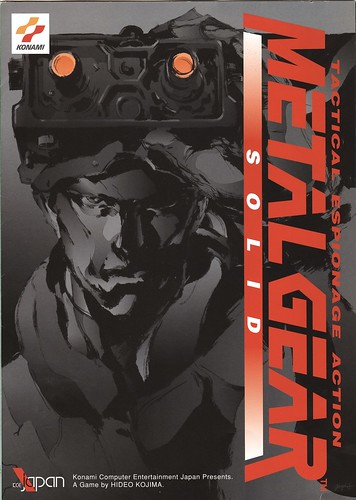
Blast from the Past: Metal Gear Solid Pamphlet

I’ve been playing Metal Gear Solid with some coworkers, and we’ve been having fun making fun of a lot of the silliness: Genome soldiers are genetically engineered to be the best except for the side-effect of extreme myopia. And an inability to store long-term memories of the fact that someone just shot at them. Or how Snake is a trained mercenary but didn’t think that maybe he should have recognized what a sniper’s laser sight looks like instead of letting Meryl get shot multiple times.

Anyway, somehow I remembered something from years ago. In 1997, back when the Nintendo 64 was still new, I found a bunch of addresses for video game developers. Some were even located nearby (this was back before most of them left Chicago)! So I wrote a bunch of letters, printed off of a dot matrix printer on my Apple II c+, asking them if they had any games they planned to produce for the N64. I made sure to let them know about games they had created in the past that I liked.

A number of the letters came back. The addresses I had for Acclaim, Nexoft, and Taito were no longer valid and the forwarding time had expired. Oh, well.

Koei sent me a newsletter, the Koei Connection, Vol 4, No 1. It included information about P.T.O. II, Heir of Zendor, Dynasty Warriors, Ark of Time, Sign of the Sun, and VirtuaPark – The Fish. They had a section to answer player questions, and I learned that I could order games directly from Koei. You could get Romance of the Three Kingdoms 3 for PC DOS 3.5 for only $19.95! B-)

But the coolest response was from Konami. I received a large envelope. In it was a letter:

Dear Gianfranco

Thank you for your interest in Konami. We do have several games coming out for the N64 such as International Superstar Soccer 64 and Goman 5 (Legand of the Mystical Ninja). Lets not forget NBA In the Zone ’98 the first 5 on 5 Basketball game for the N64. The possibility of having Metal Gear 64 has even me getting goose bumps. All that and the new Castlevainia on the Playstation it’s going to be a great Fall. If you have any other questions, feel free to contact us here at (847) 215-5100.

All grammatical and spelling mistakes are preserved.

There was a P.S. “Keep on playing!” Quotes were preserved as well. B-)

So what was in this big envelope? A poster for International Superstar Soccer 64. A sell sheet photocopied to list Vandal-Hearts, Contra: Legacy War, Suikoden, NBA In the Zone 2, and Crypt Killer. “The Justifier Light gun for the Sony Playstation available now!” And the reason why I remembered it all:

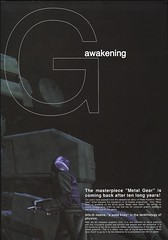
Cover

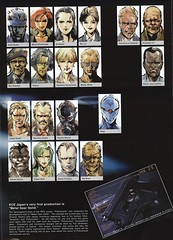
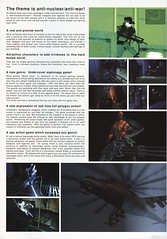
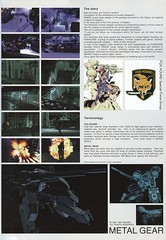
There was this cool fold out pamphlet about a game I had never heard of. Metal Gear Solid? What’s that? B-) Below are some scans I had made. If you click on the image, you can see a much larger version at higher quality so you can even read the text if you’d like. And some of the text is pretty funny. “It is 3D functions of the 32-bit machine realize the possibilities of this game to its fullest potential.”

Inside_M_Flap Inside_G_Flap

Pg_01

Pg_02

Pg_03
Note how this game is a “new expression of real time full polygon action!” B-)

Pg_04

Back

I hope you Metal Gear fans enjoy it.

Categories
Games Geek / Technical Personal Development

The Best Resignation Letter Ever

Thanks to @juggernautco, I learned about A Message for 2K Australia, the best resignation letter from an indie game developer ever. Apparently from the creator of ROM Check Fail and Fishie Fishie, it’s a fantastic way to tell your day job that you’re moving on.

Good luck, Farbs!

Categories
Game Design Game Development Geek / Technical Linux Game Development Personal Development

Ludum Dare #14 Final Results Are In

Congratulations go to mrfun, dessgeega, and rob for their top three placement overall!

I managed to pull my second gold medal out of the Food category, and I seemed to have a respectable showing in the Journal category as well. As expected, I did pretty badly in the remaining categories, although it seems some people liked the graphics, even if there wasn’t much to see. B-)

To see the full set of rankings for all categories, check out the Ludum Dare website.

Categories
Games Geek / Technical

My New Urban Dead Blog

I was looking for a persistent browser-based game (PBBG) I could play for a few minutes per day, something involved but that wouldn’t require much in the way of a time commitment.

The week before I was talking to some coworkers at the Day Job about World War Z: An Oral History of the Zombie War by Max Brooks. I was talking about the movie, and we got to discussing zombies in games.

I remembered a game I had looked into some time ago called Urban Dead. It’s a text-based zombie MMO. You can choose between being a survivor or a zombie, and the setting is the aftermath of a zombie outbreak. Every character in the game is controlled by a real player. There are NO non-player characters in the game! Thousands of people are actively playing it, and the world seems fairly expansive. The wiki seems to be as much a part of the game as anything else, and it seems that the players have really put a lot of effort into mapping out the suburbs, detailing items and weapons, and helping new players get acclimated to the game.

I chose to be a survivor, and there are various classes I could choose as well. Instead of being a soldier or a scientist or a police officer, any of which have some useful skills, I chose to be a plain ol’ Consumer. My only skill in the game at the start: when I loot a mall, I can pick the store instead of letting it be random chance.

So why be a Consumer? I thought it was more realistic. I’ll play the role of an everyday civilian who finds himself in the middle of a nightmare world in which zombies walk the earth. And it seems I’m not alone, since a large number of people also pick that class, even though the Urban Dead wiki indicates that it is a “broken” class. Essentially, I’ve just made it very hard for myself to gain experience and level up.

But I’m already having fun, even with my limited abilities. In fact, even more fun is that I’ve decided to document my adventure. I created a new blog, GBGames’ Urban Dead Blog, and it’s been enjoyable telling my character’s story from his point of view. I hope it entertains you as well.

Categories
Game Development Personal Development

Thousander Club Update: May 4th

For this week’s Thousander Club update:

Game Hours: 576 (previous three years) + 117.5 (current year) = 693.5 / 1000
Game Ideas: 775 (previous three years) + 10 (current year) = 785 / 1000

Not too much to report this past week, although I did manage to get a little development in. Not as much as I would like, but it also feels rather aimless right now.

[tags]game, game design, productivity, personal development, video game development, indie[/tags]